
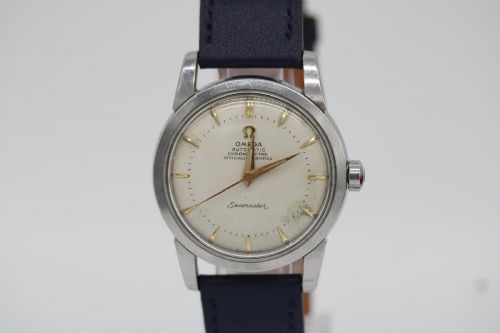
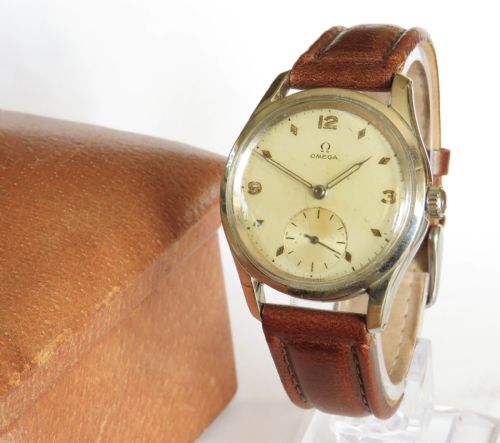
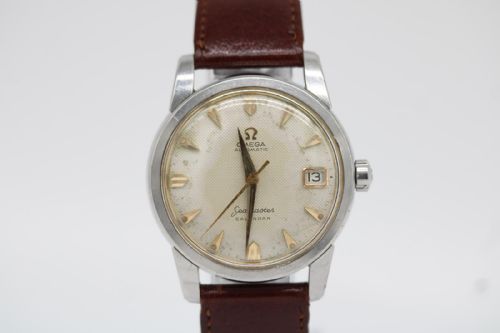


1950s Omega Watch
A 1950s omega watch is a mid-century timepiece offering precision engineering and enduring style.
1950s Omega Watch
A 1950s omega watch represents a period of significant mechanical development in Swiss watchmaking. Buyers seek these pieces for their reliable movements and classic proportions that suit daily wear or formal occasions.
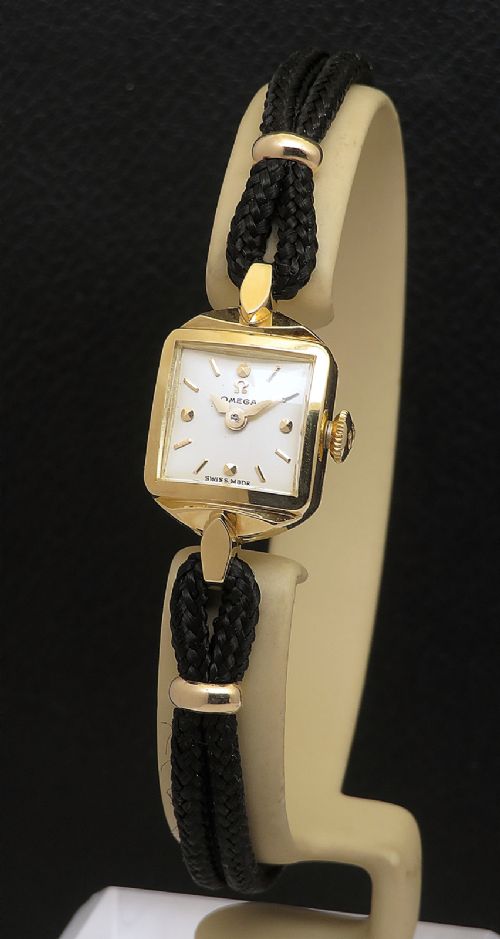
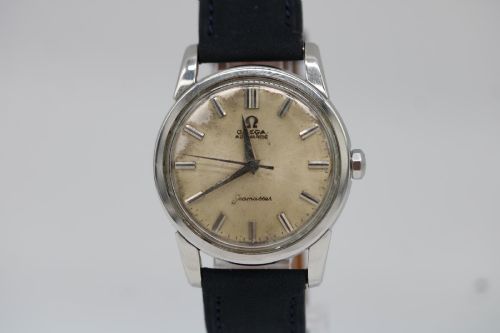
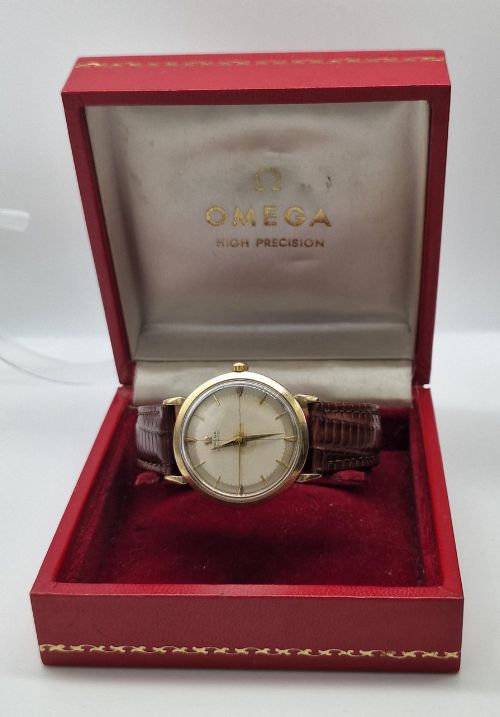
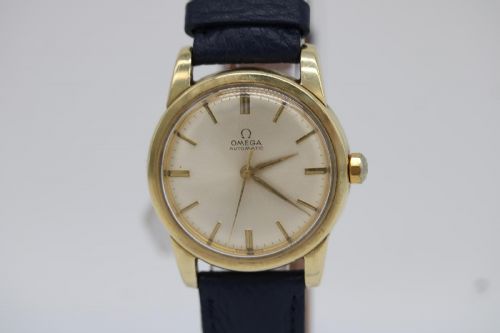
The wristwatches found in this selection span the decade, including robust Seamaster models and delicate ladies cocktail pieces. Gents dress watches in solid gold or gold plate appear frequently alongside automatic and bumper automatic movements.
How they were made
Cases utilise metals such as stainless steel, gold plate, gold-filled, 18ct gold, and 9K gold, paired with acrylic or glass crystals. Dials often feature textured finishes like honeycomb patterns, secured within mid-century case designs.
Movements rely on mechanical ingenuity, encompassing standard manual-wind calibres, automatic systems, and early bumper automatic mechanisms. These internal components sit within housings constructed during the mid-century modern era.
Listings feature movements ranging from manual-wind calibres to automatic and bumper automatic systems.
What varies in quality
The distinction between tiers rests upon the precious metal content of the case and the complexity of the movement. Solid 18ct gold or 9K gold construction and specialised calibres elevate a piece above standard gold-plated equivalents.
The preservation of original dial details and case geometry dictates the overall calibre of the watch. Original textures, such as honeycomb dials, and unpolished cases denote superior examples from this period.
Omega
The 1950s Omega Watch Glossary
- Automatic
- A self-winding mechanical movement that uses a weighted rotor to power the mainspring during wrist movement. This system became standard for many mid-century dress and sports watches.
- Bumper automatic
- An early form of automatic movement where the rotor swings back and forth within a restricted arc, striking springs that bounce it back. Collectors prize this mechanism for its distinctive tactile feedback on the wrist.
- Calibre
- The specific manufacturer's designation for a particular watch movement design. Knowing the calibre helps identify the exact technical specifications and production era of the piece.
- Gold-filled
- A manufacturing method where a thick layer of solid gold is mechanically bonded to a base metal core. This provides greater durability and gold content than standard gold plating.
- Seamaster
- A water-resistant watch line introduced by the maker to offer robust performance alongside traditional dress aesthetics. These models form a major part of the mid-century inventory.
1950s Omega Watch: Frequently Asked Questions
What is a bumper automatic movement?
A bumper automatic is an early self-winding mechanism where an internal weight swings through a partial arc rather than a full circle, hitting springs to reverse direction.
This movement type provides a distinct physical sensation on the wrist when the rotor strikes its bumpers, marking it as a distinct mechanical stepping stone in the decade.
How do I identify a Seamaster model?
Seamaster models typically feature water-resistant case designs and distinct case back stampings or reference numbers. They bridge the gap between durable sports watches and elegant dress pieces.
These versatile wristwatches appear frequently in stainless steel and gold-plated variants throughout the decade.
Are these watches suitable for daily wear?
Most pieces function well for regular use provided they receive appropriate mechanical servicing and protection from moisture. Mid-century designs offer robust stainless steel or solid gold housings built for longevity.
Care should be taken with acrylic crystals and vintage leather straps to preserve their condition during routine rotation.
What distinguishes solid gold from gold-plated cases?
Solid gold cases utilise precious metal throughout the entire structure, whereas gold-plated or gold-filled versions apply a gold layer over a base metal core. Solid 18ct or 9K gold offers enduring material value and distinct weight.
Plated and gold-filled variants provide the warm appearance of gold at a different tier of manufacture.