


1940s Gold Jewellery
1940s gold jewellery delivers bold forms and substantial gem-set designs shaped by mid-century styles.
1940s Gold Jewellery
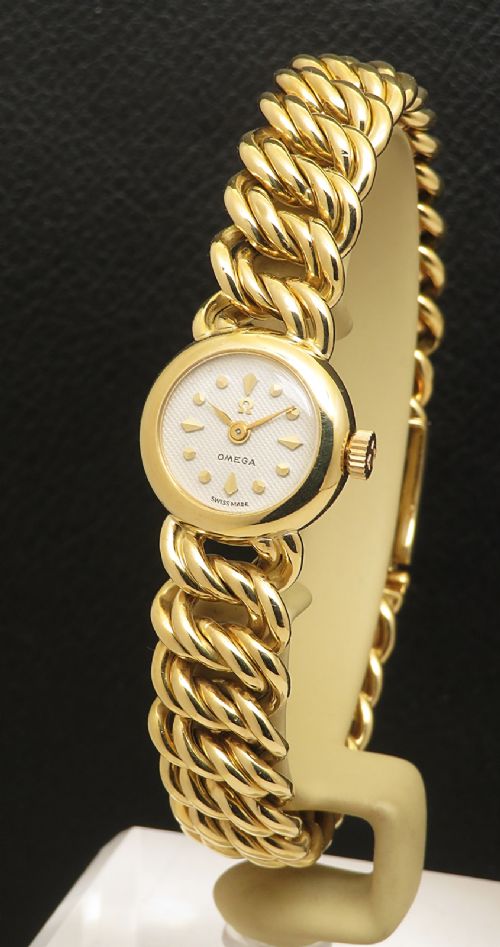
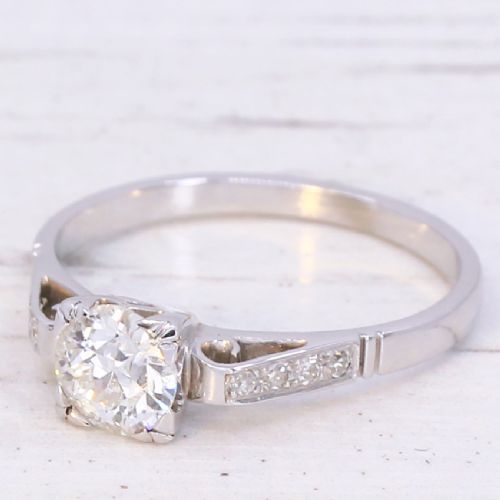
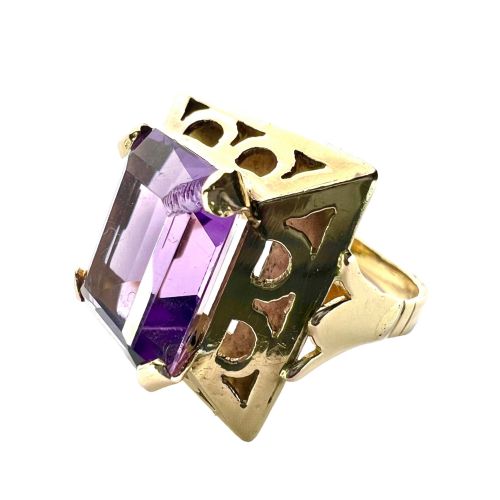
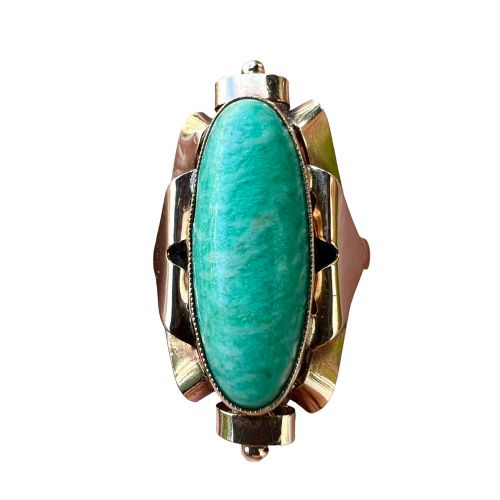
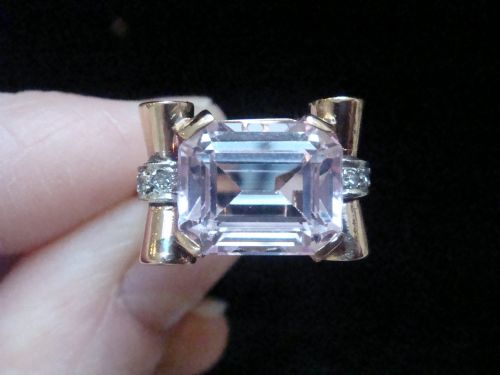
When searching for 1940s gold jewellery, buyers encounter striking items from a period defined by Retro, Art Deco, and Mid-Century aesthetics. The forms span robust cocktail rings, substantial bracelets, ornate brooches, and diamond engagement rings.
Yellow gold, rose gold, and white gold serve as the primary foundations for these pieces. Gemstones such as diamonds, rubies, sapphires, aquamarines, and amethysts frequently anchor the design.
The selection on this page leans heavily toward rings, earrings, and pendants carrying distinct period character. Pieces often exhibit substantial weight and volumetric shaping that reflect the design priorities of the decade.
Materials and Construction
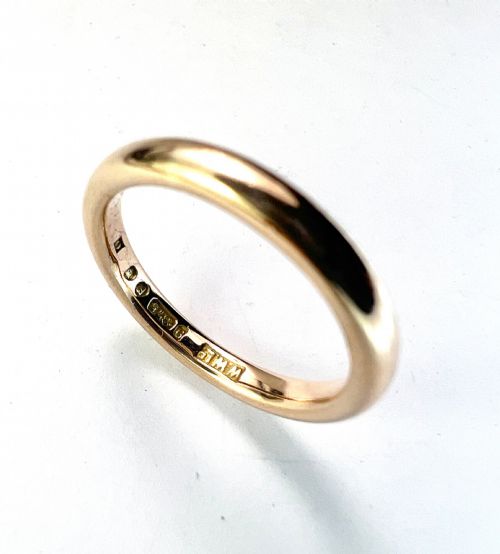
Makers utilised 14ct and 18ct gold alongside platinum to mount large central gemstones and intricate diamond pavé clusters. Rose and yellow gold alloys provide the warm tones typical of wartime and post-war production.
Tank-style architecture appears frequently, translating heavy machinery aesthetics into sculptural gold ribbons and dimensional cocktail pieces. Gemstones are secured in claw settings, bezels, or flush mountings designed to showcase old cut diamonds and coloured stones.
Current listings feature pieces spanning the 1930s to 1950s, incorporating platinum, 14ct gold, and 18ct yellow or white gold.
Assessing Quality
Quality in these pieces depends upon the scale and clarity of the central gemstones, ranging from heavy aquamarines and tourmalines to finely matched rubies and old cut diamonds. The substance of the gold work itself, particularly in dimensional tank rings and heavy bracelets, dictates the build standard.
Design execution separates standard commercial output from exceptional examples featuring complex multi-stone arrangements or signed maker provenance. The integration of supporting melee diamonds around principal stones further defines the upper tier of the range.
C'est Laudier·Omega
The 1940s Gold Jewellery Glossary
- Tank ring
- A bulky, sculptural jewellery style originating during the 1940s, characterised by stepped gold work resembling military tank treads. These rings typically feature large central aquamarines, rubies, or diamonds flanked by channel-set or pavé diamond accents.
- Old cut diamond
- A diamond cutting style prevalent before modern brilliant cuts, featuring a smaller table, higher crown, and open culet. These stones display distinctive light dispersion under candlelight or lower ambient lighting.
- Cocktail ring
- A large, showy ring designed to draw attention during evening wear, frequently set with oversized semi-precious or precious stones. Examples from this era often incorporate massive citrines, kunzites, or amethysts.
- Trロジー ring
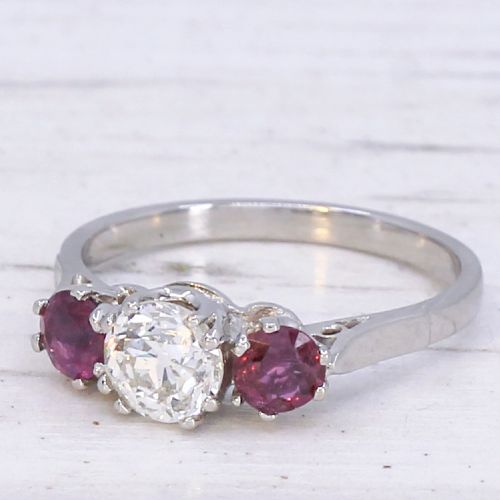
- A three-stone ring traditionally symbolising past, present, and future, commonly configured here with a central diamond or ruby flanked by two matching gems. These settings utilise old cut stones secured in claw or platinum gallery mounts.
- Paste
- A heavy, transparent glass material cut and faceted to imitate gemstones. In period pieces, paste provides vibrant colour without natural stone inclusions.
1940s Gold Jewellery: Frequently Asked Questions
How do I care for 1940s gold jewellery?
Clean these items gently using warm water and a soft brush, avoiding harsh chemical dips that can damage softer gemstones like pearls, garnets, or paste. Store pieces individually in fabric-lined boxes to prevent scratching between the gold settings and harder diamonds.
Inspect the claw settings periodically to ensure principal stones remain secure, particularly in heavy cocktail rings and bracelets worn with regularity.
What defines Retro style jewellery?
Retro style encompasses the bold, sculptural designs produced during the 1930s and 1940s, heavily influenced by machine age aesthetics and tank architecture. These pieces favour generous quantities of yellow and rose gold over the delicate platinum work of earlier decades.
Gemstones are frequently oversized, featuring emerald cuts, large aquamarines, and calibre-cut rubies arranged in dimensional, overlapping ribbons.
Are old cut diamonds different from modern stones?
Old cut diamonds possess hand-cut facets with smaller tables and deeper pavilions, producing a distinct pattern of light return compared to modern round brilliants. Each stone is unique due to the manual cutting process utilised by period lapidaries.
These diamonds often appear softer in bright modern lighting while glowing warmly in dim environments.
Can I wear a vintage engagement ring daily?
Engagement rings from this period are robustly constructed in 18ct gold or platinum, making them suitable for daily wear when given appropriate care. Selecting designs with secure bezel or low-profile claw settings minimises snagging on clothing during routine activities.
Have a professional jeweller check the prongs and band thickness annually to ensure the setting holds the diamond securely.