



1930s Wardrobe Cabinet
A 1930s wardrobe cabinet brings geometric design and striking veneers to a bedroom, offering substantial storage with distinct period character.
1930s Wardrobe Cabinet
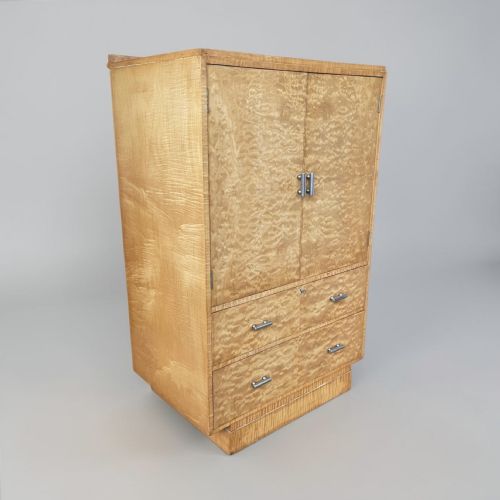
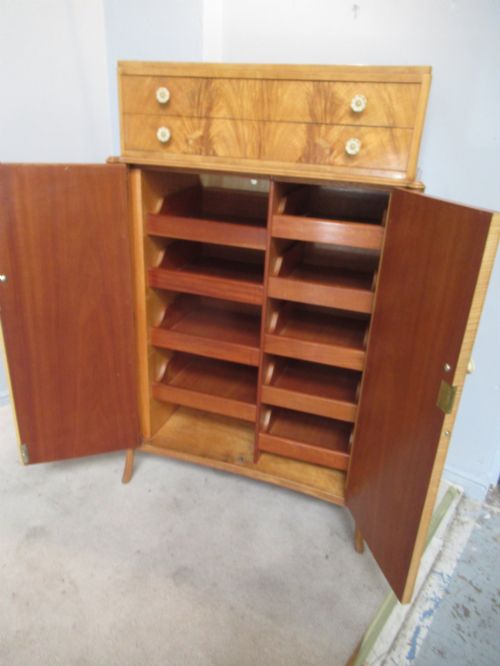
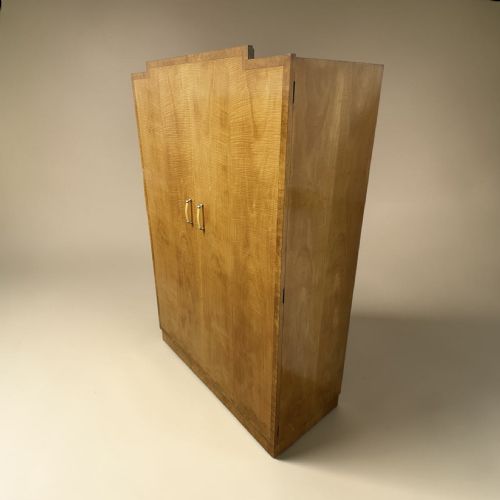
A 1930s wardrobe cabinet spans tallboys, compactums and double wardrobes shaped largely by the Art Deco style alongside British institutional and Swedish Grace influences. These pieces provide vertical storage solutions through compartments, drawers and hanging spaces designed for twentieth-century domestic needs.
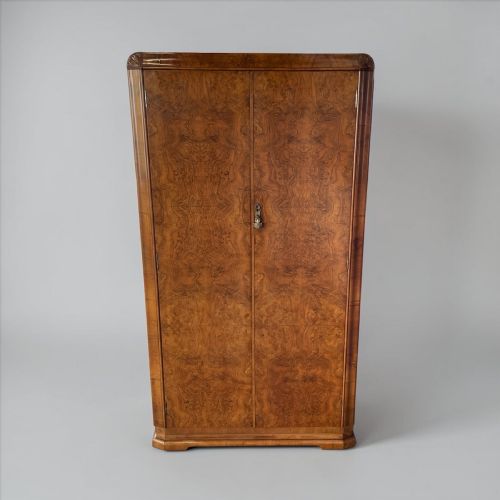
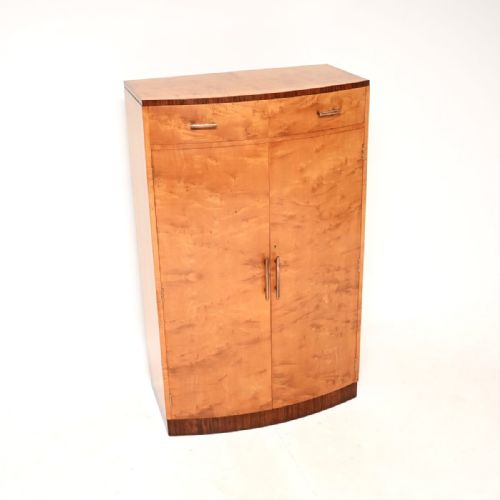
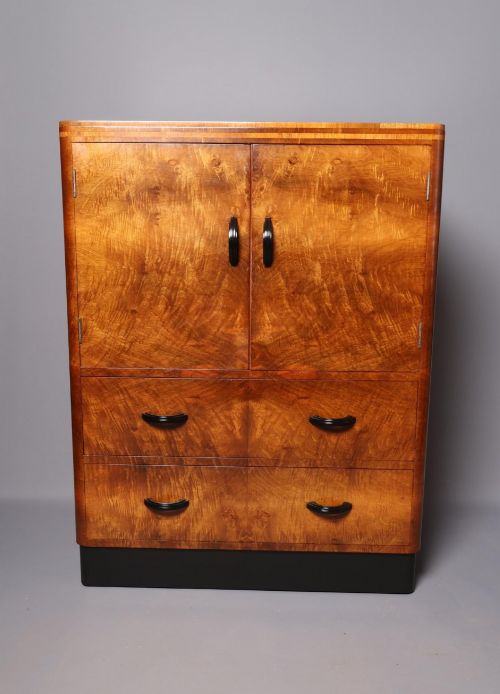
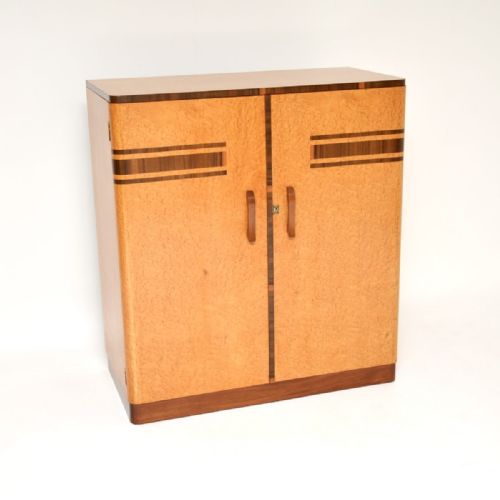
The selections here range from compact birch cabinets to large walnut compactum wardrobes bearing satin birch, pale mahogany, maple and oak. Many examples combine utility with decorative grain patterns, particularly in walnut and birds eye maple.
Most items date from around 1930, with occasional pieces extending into the 1940 decade, reflecting the predominant interwar output of British and continental workshops.
How they were made
Cabinet makers utilised carefully selected wood veneers such as burr walnut, birch and birds eye maple laid over sturdy carcases to create striking surface patterns. Solid timbers like oak and mahogany also form the primary structure and drawer linings of these large storage items.
Hardware details in brass and Bakelite provide functional contrast to the wooden surfaces, appearing on handles, hinges and locking escutcheons. Construction techniques combined traditional joinery with veneering methods typical of interwar furniture production.
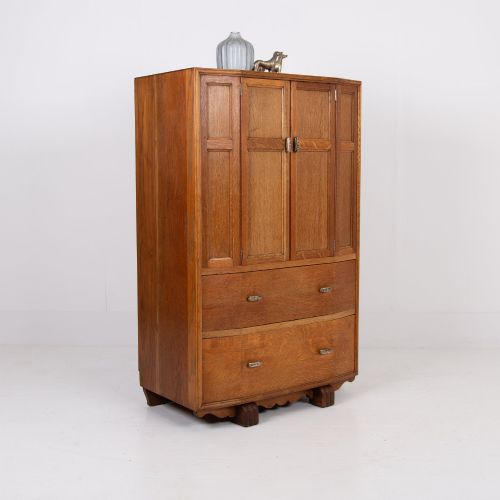
A solitary school cupboard sneaks in among the bedroom wardrobes, proving that institutional storage also knew how to dress up.
What varies in quality
The hierarchy among these cabinets rests on the choice and matching of veneers, where book-matched burr walnut or figured maple elevates a piece above plain timber construction. Artisans who aligned grain patterns across multiple doors and drawers achieved a visual harmony that distinguishes finer examples.
Proportion and attribution also separate standard production items from workshop pieces designed by notable makers or architects. The integration of specialised internal fittings like sliding trays, shelving and tailored compartments indicates a higher tier of original manufacture.
Heal's·Harry and Lou Epstein·Otto Schulz for Boet
The 1930s Wardrobe Cabinet Glossary
- Compactum
- A large fitted wardrobe combining hanging space with internal drawers, shelves and shoe compartments in one unified piece of furniture.
- Tallboy
- A case piece standing taller than a standard chest of drawers, often featuring cupboards above or beside the primary drawer sections.
- Veneer
- A thin layer of decorative wood applied to a stable underlying timber base to create patterned surface designs without heavy solid costs.
- Bakelite
- An early synthetic thermosetting plastic utilised for door handles and fittings during the interwar period.
- Book-matched
- A technique of placing adjoining veneer slices so that they mirror each other, creating symmetrical patterns across cabinet doors.
1930s Wardrobe Cabinet: Frequently Asked Questions
What is a compactum wardrobe?
A compactum wardrobe combines multiple storage functions into a single large cabinet, integrating hanging space with internal drawers and shelving.
This multi-compartment design allows garments and linen to be stored efficiently within one footprint.
How do tallboys differ from wardrobes?
Tallboys are generally narrower and taller than standard wardrobes, combining vertical drawer stacks with enclosed cupboard sections rather than full-length hanging space.
They serve rooms where floor space is limited but vertical capacity is needed.
What woods are typical for these cabinets?
Walnut, birch, maple and oak appear frequently, often enhanced by decorative burr walnut or birds eye maple veneers.
These timbers reflect the popularity of figured grain patterns during the Art Deco period.
How do I style a 1930s cabinet at home?
These cabinets work well as focal storage points in modern bedrooms, contrasting against neutral walls to highlight their geometric lines and figured wood grains.
Their substantial presence makes them suitable for hallways and dressing rooms as well as sleeping quarters.