
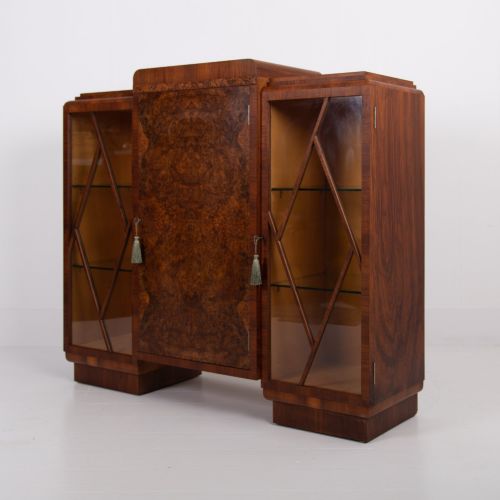


1930s Walnut Vitrine
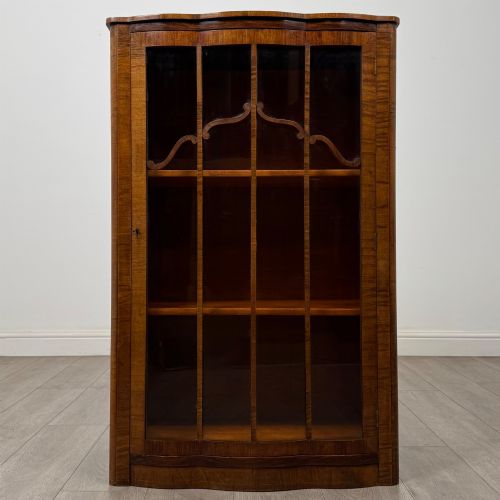
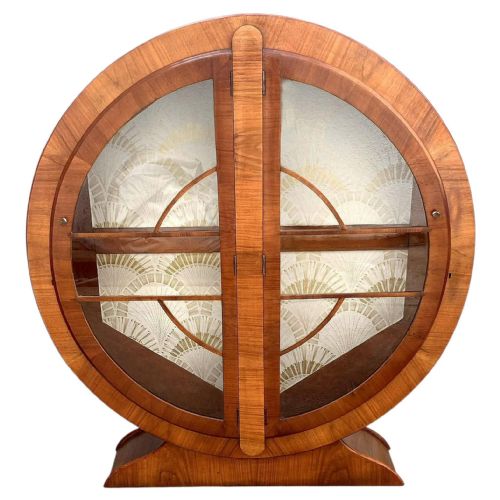
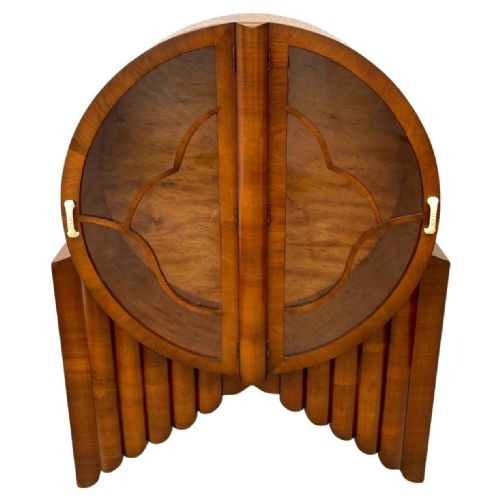
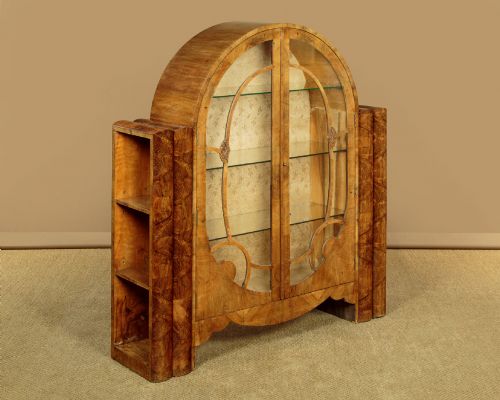
A 1930s walnut vitrine brings geometric symmetry and figured grain to a room while holding china and glass behind curved or leaded panes.
1930s Walnut Vitrine
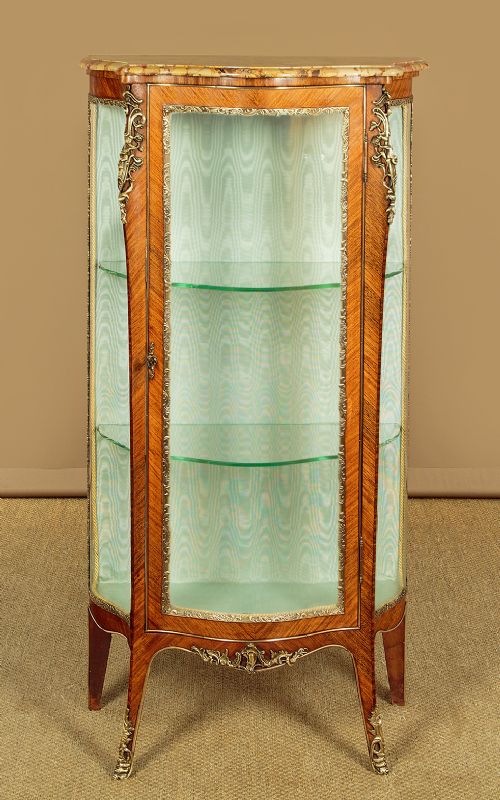
A 1930s walnut vitrine functions primarily as a display cabinet for collectibles, china, and glassware. Most examples encountered here belong to the Art Deco style, though occasional Edwardian pieces also appear.
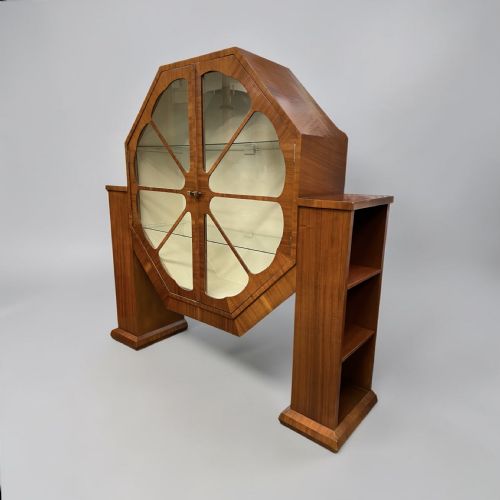
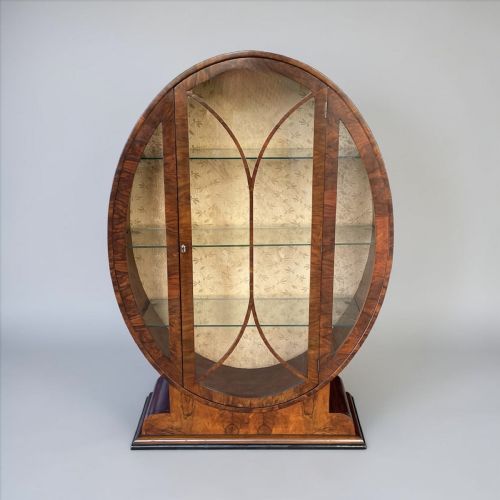
The forms vary beyond the standard rectangular box. Cabinetmakers shaped these pieces into circular, oval, hexagonal, octagonal, clove, and rocket silhouettes.
Origin points span English and continental workshops. Alongside dedicated display cabinets, buyers will find related hybrid forms such as glazed bookcases and corner units.
Materials and construction
Cabinetmakers relied heavily on walnut and burr walnut veneer laid over solid foundational timbers, often introducing contrasting woods like sycamore or maple for interior details.
Glazing takes multiple forms, utilising plain glass as well as leaded panels. Metal fittings typically consist of brass hardware.
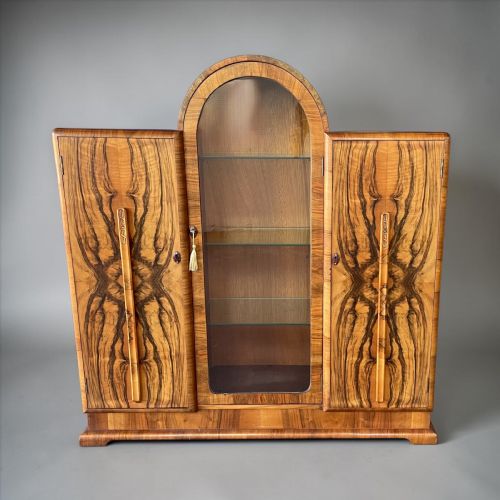
Surface finishing highlights the natural figuring of the timber, allowing the swirling grain patterns of the burr walnut to define the visual presence of the cabinet.
Current listings feature walnut alongside contrasting sycamore, maple, fabric, brass, and lead.
Distinctions in quality
Quality rests upon the selection and matching of the veneer. Cabinets featuring symmetrical burr walnut or figured grain across curved surfaces demonstrate superior cabinetmaking skill.
Unusual structural geometries elevate a piece. Hexagonal, octagonal, circular, and specialised forms like the clove or rocket shape demand advanced joinery compared to standard right-angled carcasses.
Attribution to documented makers or specific regional workshops distinguishes certain pieces. Signed or branded examples carry distinct markers of workshop origin.
Rurka·Maurice Adams·Epstein
The 1930s Walnut Vitrine Glossary
- Vitrine
- A glass-fronted cabinet designed for displaying fine objects or porcelain. The term derives from the French word for glass.
- Burr walnut
- A prized wood veneer showing knotted, swirling grain patterns formed from tree growths. It provides decorative movement on cabinet doors and panels.
- Art Deco
- A design style spanning the 1920s and 1930s characterised by geometric shapes, streamlined forms, and stylized motifs. It dominates the aesthetic of these cabinets.
- Leaded glass
- Small panes of glass held together by strips of lead cames. This technique creates decorative geometric patterns across the cabinet door.
1930s Walnut Vitrine: Frequently Asked Questions
What fits inside a circular vitrine?
Circular and curved cabinets suit smaller decorative objects, porcelain, and glassware. The curved panes wrap around the interior shelves.
Items must be scaled to fit the depth of the circular footprint and the spacing of the internal glass or wooden tiers.
Are these cabinets strictly Art Deco?
The majority of the pieces align with the Art Deco aesthetic of the 1930s. Geometric silhouettes and figured veneers define this primary group.
Occasional pieces from the Edwardian period also surface, sharing similar glazed display functions but utilising different stylistic detailing.
How do I identify a corner vitrine?
Corner cabinets are engineered with angled backs designed to fit directly into the junction of two walls. This layout maximises floor space in smaller rooms.
The front glazed door opens to reveal wedge-shaped interior shelves tailored for corner placement.
What is a rocket cabinet?
A rocket cabinet is an uncommon colloquial term for a vertically proportioned display vitrine with a tapering or streamlined silhouette. The shape echoes early aviation and space-age motifs.
These tall, slender pieces combine curved glass with figured walnut veneers to create a distinct focal point.