


1930s Walnut Headboard
These 1930s walnut headboard pieces bring unmistakable Art Deco geometry and warmth to a bedroom.
1930s Walnut Headboard
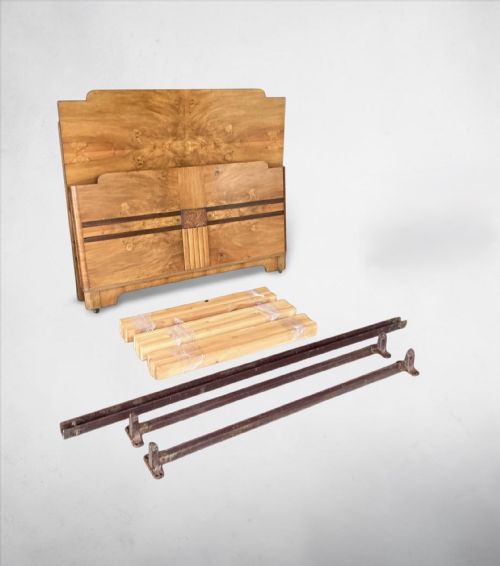
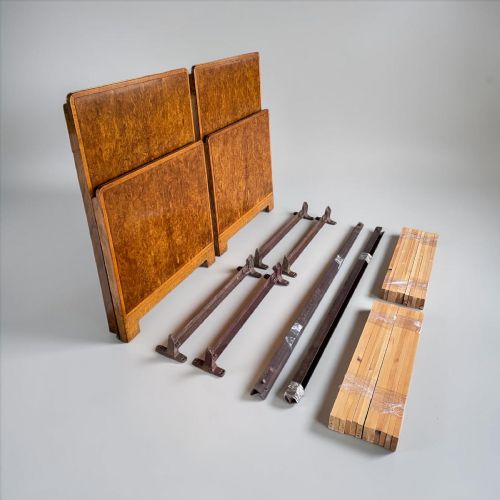
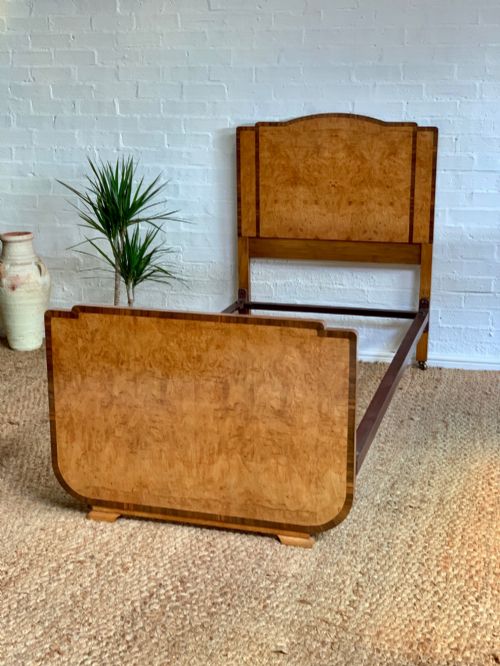
When you search for a 1930s walnut headboard, you encounter bedroom furnishings shaped by the Art Deco movement. These items often appear integrated with matching bedside tables or as parts of dismantled bed frames and full bedsteads.
The prevailing style relies on clean architectural lines, occasional curves, and fan shapes typical of the period. Pieces originate primarily from the nineteen-thirties, with some examples dating from the nineteen-twenties.
Single and double sizes dominate the selection, sometimes accompanied by integrated cabinetry or associated nightstands. French examples also feature in the available range.
Evaluating Quality and Construction
Quality rests upon the selection and matching of the wood veneer across the face of the board. Highly figured burr walnut and symmetrical grain layouts distinguish superior examples from plain timber surfaces.
The integration of fitted bedside cabinets or attached tables alters the complexity and desirability of the piece. Craftsmanship shows in the execution of curved woodwork and the preservation of the original polished finish.
Several headboards arrive with their original bedside tables still clinging on for dear life.
Waring & Gillow England
The 1930s Walnut Headboard Glossary
- Art Deco
- A design style characterised by sleek geometric shapes, stylised motifs, and modern materials popular during the interwar period. It influences the overall silhouette of these bedroom pieces.
- Burr Walnut
- A specialised wood cut from a tree growth, producing intricate, swirling patterns that decorators prize for decorative panels. It provides intense visual texture on headboard surfaces.
- Veneer
- A thin layer of superior wood glued to a base timber carcass to create a decorative surface without excessive weight. Walnut and satinwood veneers define the aesthetic of these items.
- Bedstead
- A framework supporting a mattress, which in historical listings often includes the headboard, footboard, and side rails. Many listed items originate as parts of larger bedstead assemblies.
- Satinwood
- A durable timber with a golden sheen used to create contrasting tones in dual-colour furniture. It frequently appears alongside darker walnut elements.
1930s Walnut Headboard: Frequently Asked Questions
How do I attach an old headboard?
Many period headboards were originally designed as part of an integrated bedstead or came with attached bedside cabinets that anchored the piece.
Modern fixing methods may require bespoke brackets to secure the timber structure safely to a standard wall or separate bed frame.
Are these headboards freestanding?
Certain examples feature attached bedside tables or cabinets that provide stability and support, meaning they do not rely solely on wall fixings.
Items salvaged from larger bed frames might need additional hardware or modification to stand securely without the original side rails.
What is figured walnut?
Figured walnut refers to timber displaying natural grain distortions, such as ripples, swirls, or burrs, which create distinctive patterns across the wood.
Cabinet makers arranged these grain patterns symmetrically to produce decorative focal points on the face of the furniture.
How do I clean walnut veneer?
Dust the surface regularly with a soft, dry cloth to prevent dirt accumulation on the polished wood and delicate veneer layers.
Avoid chemical polishes and excessive moisture, using only slightly damp cloths followed immediately by a dry buffing if necessary.