
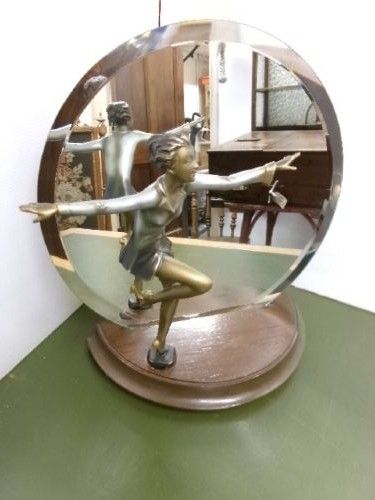

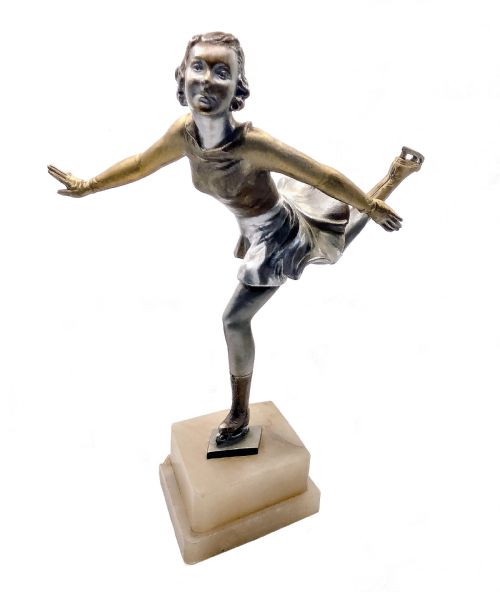





1930s Spelter Female Figure
These 1930s spelter female figure sculptures and lamps capture the rhythmic movement and confident style of the interwar decades.
1930s Spelter Female Figure
A 1930s spelter female figure presents the dynamic human form cast in zinc-based alloy, heavily reflecting the dominant Art Deco aesthetic of the period. Buyers seeking these decorative objects encounter dancers, ice skaters, nudes, and mother-and-child groups modelled with stylised grace.
Most examples originate from France and take the form of standalone figurines, practical table lamps, pin dishes, or table lighters. Figures frequently stand mounted upon heavy bases of onyx, marble, or alabaster to anchor the softer alloy sculpture above.
How they were made
Foundries cast molten spelter - an economical zinc alloy often containing lead and tin - into moulds to create the intricate shapes of dancers and ladies. Artisans then finished these metal castings with cold paint, metallic patination, or polychrome decoration to simulate bronze or highlight garments.
Makers paired the finished metal figures with functional elements like opaline glass lamp shades or mounted them directly onto turned plinths of natural stone such as onyx and marble. Wood and alabaster also appear as foundational bases, providing sturdy support and contrasting textures to the metallic surfaces.
Listings demonstrate that spelter female figures from the interwar period frequently combine with onyx, marble, and opaline glass.
What varies in quality
The sophistication of the surface finish and the quality of the mounting base separate standard production from finer work. Pieces associated with named sculptors or integrated thoughtfully with materials like carved onyx and opaline glass demonstrate higher artistic ambition.
Josef Lorenzl·Geo Maxim
The 1930s Spelter Female Figure Glossary
- Spelter
- A zinc-based alloy commonly used as a cost-effective alternative to bronze for decorative sculptures and lamps. It takes patination and cold paint well, though it is softer and more brittle than bronze.
- Art Deco
- The dominant design style of the interwar period characterised by stylised forms, geometric patterns, and sleek lines. Figures from this movement favour dynamic poses and modern motifs.
- Cold Paint
- Paint applied to a metal sculpture after casting without subsequent firing in a kiln. This decorative technique adds colour to garments and hair but remains vulnerable to flaking over time.
- Onyx
- A banded variety of chalcedony used extensively for the heavy plinths and bases of Art Deco figures. Its natural striations provide a polished, decorative contrast to the matte spelter above.
- Pin Dish
- A small shallow tray designed for holding pins or small trinkets, frequently incorporated into the base design of figural desk accessories. These functional pieces combine utility with decorative sculpture.
1930s Spelter Female Figure: Frequently Asked Questions
Were these figures mounted on stone?
Foundries frequently mounted spelter figures onto heavy bases of onyx, marble, or alabaster to provide stability and visual weight. These stone plinths complement the metallic finish and anchor the dynamic poses of the dancers.
Screws running through the underside of the base typically secure the metal casting in place.
Are these lamps original?
Lamp conversions and alterations are common among figural pieces that incorporate lighting elements or glass shades. Examining the wiring, fittings, and the connection between the figure and the lamp components helps determine originality.
Many pieces began as pure sculptures or functional objects before receiving electrical fittings during the period or later.
How do I spot a reproduction?
Examine the crispness of the casting details, the weight of the metal, and the ageing of the surface finish. Modern copies often lack the sharp definition of interwar casting and may feature unconvincing patination.
Genuine pieces display authentic wear consistent with age across both the metal alloy and the mounting stone.