




1930s Round Side Table
These pieces for a 1930s round side table bring practical surface area and distinct period geometry into a room.
1930s Round Side Table
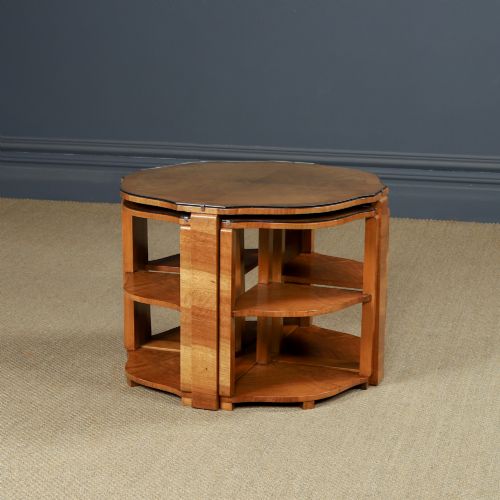
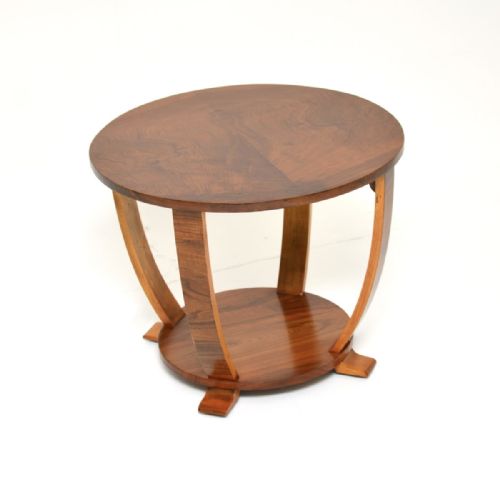
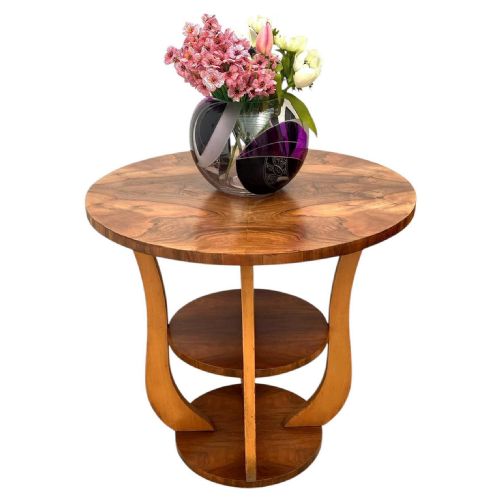
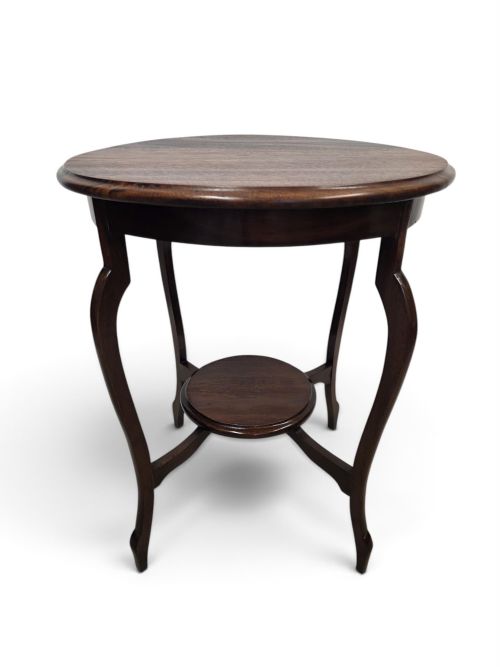
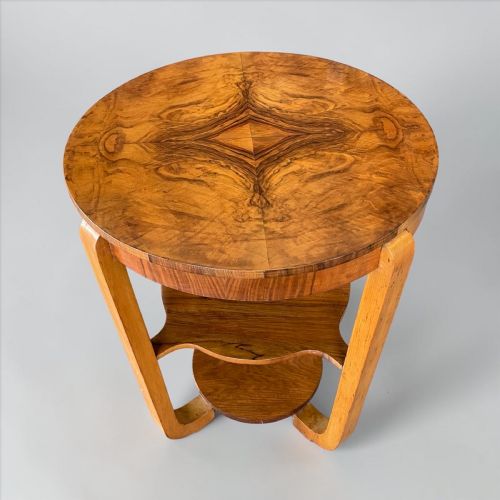
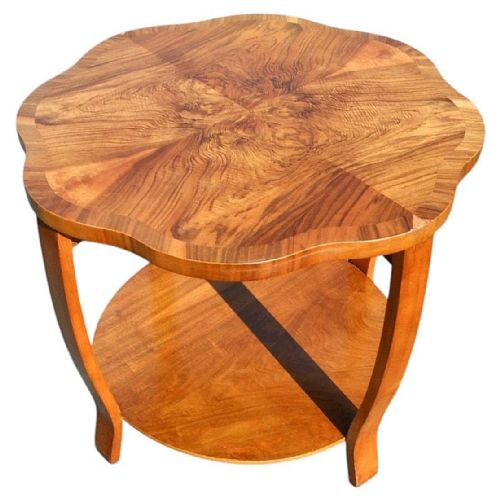
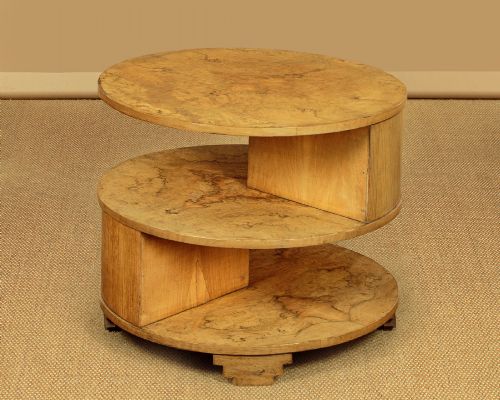
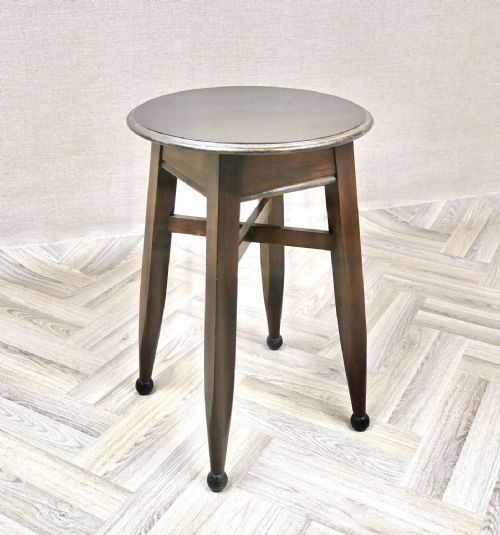
A 1930s round side table typically takes the form of an occasional table, coffee table, or compact bedside cabinet designed with geometric clarity. You will frequently encounter walnut and burr walnut veneers shaped into circular tops, often accompanied by multiple tiers or matching nests.
Makers from this era produced designs ranging from English and French occasional pieces to Italian drum-shaped cabinets and Scandinavian satin birch examples. Many of these circular designs double as lamp tables, pub tables, or metamorphic card tables intended for flexible use in smaller domestic spaces.
How they were made
Construction relies heavily on timber frames finished with decorative wood veneers such as figured walnut, burr walnut, birds eye maple, and rosewood to create striking grain patterns across circular tops. Artisans also integrated contrasting materials like glass, marble, and chrome to achieve the characteristic modern aesthetic of the period.
Multi-tiered structures and drum shapes demand precise joinery and careful application of veneer to curved surfaces. Metal elements such as chrome tubing provide structural support while reinforcing the clean lines typical of the style.
Materials paired with wood include glass, marble, and chrome, reflecting the diverse manufacturing approaches of the period.
What varies in quality
Quality depends greatly on the choice and placement of wood veneers, where symmetrical grain alignment across a round top elevates a piece significantly. Superior examples display thoughtful combinations of contrasting timbers like walnut and maple, whereas simpler versions rely on plain oak or standard finishes.
The integration of secondary materials dictates the tier of the piece, distinguishing standard timber constructions from sophisticated combinations featuring inset marble, glass, or polished chrome. Engineering complexity, such as metamorphic mechanisms or multi-tiered tiers, also separates standard occasional items from high-end examples.
The 1930s Round Side Table Glossary
- Veneer
- A thin slice of figured wood applied to a stable core timber to display decorative grain patterns. This technique allowed makers to utilise expensive woods efficiently on large circular surfaces.
- Burr walnut
- A knotted growth timber yielding complex, swirling grain patterns highly prized in cabinet making. It creates rich visual movement across round table tops.
- Art Deco
- A design style characterised by sleek lines, geometric shapes, and modern industrial materials. It dominates the aesthetic of circular tables from this period.
- Occasional table
- A movable, multi-purpose small table designed for specific, intermittent tasks rather than permanent placement. They appear frequently as coffee, lamp, or side variants.
- Metamorphic table
- Furniture engineered to transform its shape or function, such as a card table that adapts for alternative uses. These pieces showcase clever mechanical joinery.
1930s Round Side Table: Frequently Asked Questions
What is a 1930s round side table used for?
These tables provide compact surface space for lamps, drinks, or decorative objects within a living room or bedroom. Their modest circular footprints allow them to fit easily beside armchairs or sofas.
Multi-tiered versions also offer additional storage shelves below the main top for books or small items. Some specialised variants function as dedicated bedside cabinets or card tables.
How do I identify a 1930s table?
Look for characteristic geometric forms, circular silhouettes, and the widespread use of figured walnut or burr walnut veneers. The integration of chrome, glass, or contrasting maple banding often points directly to this period.
Construction details typically avoid heavy Victorian carving in favour of clean, streamlined profiles. Many examples also feature multiple tiers or drum-shaped bodies typical of the era.
Where were these tables made?
Makers across England, France, Italy, and Scandinavia produced these circular designs during the interwar years. British and French workshops frequently utilised rich figured walnut, while Scandinavian makers favoured lighter birch timbers.
Italian examples often took distinct drum shapes suitable for bedside placement. Each region applied local timber preferences to the overarching modern aesthetic.
Can I use a coffee table as a side table?
Many low circular tables from this period served multiple functions, often described interchangeably as coffee, side, or occasional tables depending on their height. Their proportions generally suit placement next to seating furniture.
When selecting a piece for a specific spot, check the height relative to your chair or sofa arms. Lower models function well as central coffee surfaces, while taller variants suit lamp table use.