


1930s Pendant Lamp
A 1930s pendant lamp brings direct downward illumination and strong period geometry into a room, offering immediate architectural focus.
1930s Pendant Lamp
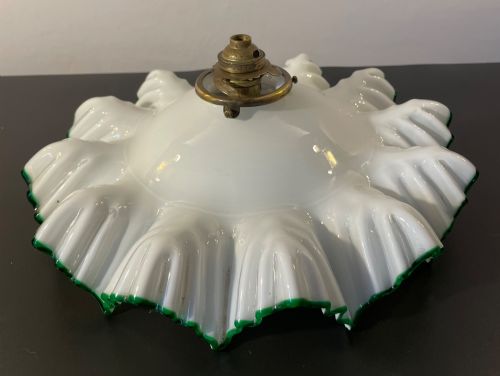
A 1930s pendant lamp encompasses ceiling-hung fixtures, hanging lights, and plafonniers designed primarily during the interwar period. These pieces span streamlined geometric forms and functional illumination intended for domestic and grander hallways alike.
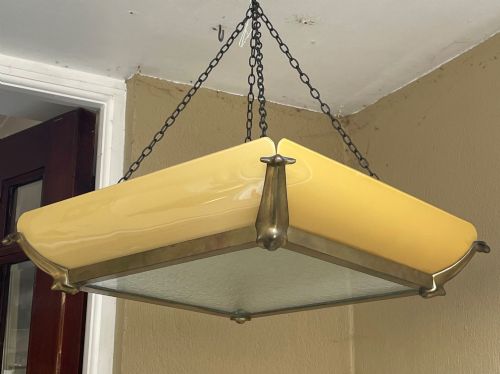
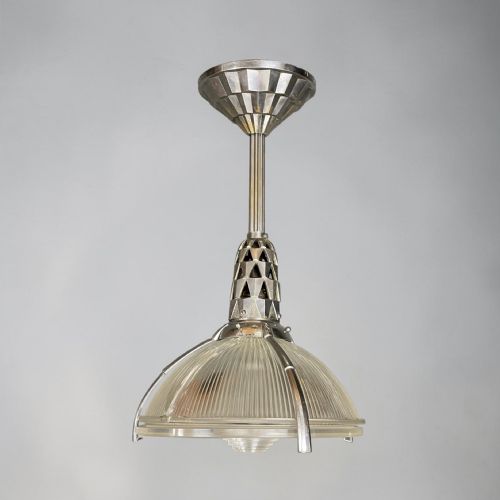
The dominant style visible in this selection is Art Deco, appearing alongside occasional French Country, Dutch Revival, and Highland Lodge influences. Buyers will frequently encounter brass, chrome, and wrought iron frameworks supporting moulded, frosted, or opaline glass shades.
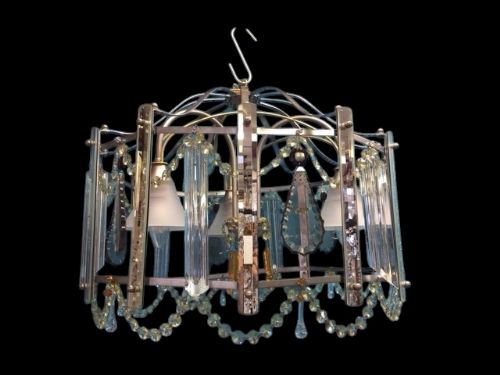
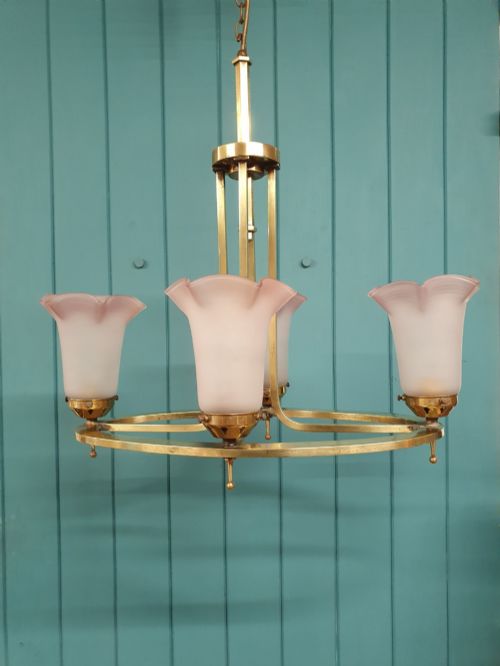
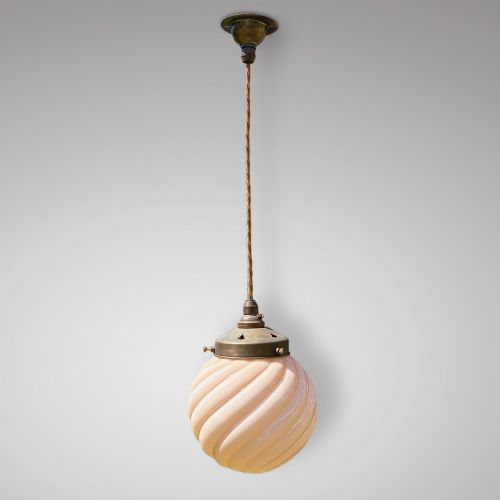
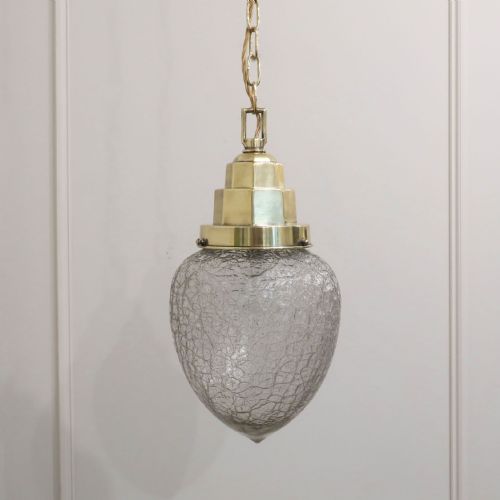
Formations range from single-bulb pear-shaped and fish scale opaline pendants to substantial multi-light chandeliers and enclosed hall lanterns. The physical presence of these fixtures relies heavily on suspended chains, rods, or direct ceiling mounts.
Materials and construction methods
Metalwork utilises brass, copper, steel, chrome, and bronze to form the structural skeletons, brackets, and suspension fitments of the lamps. These metals are cast, spun, or forged into rigid geometric shapes characteristic of the period.
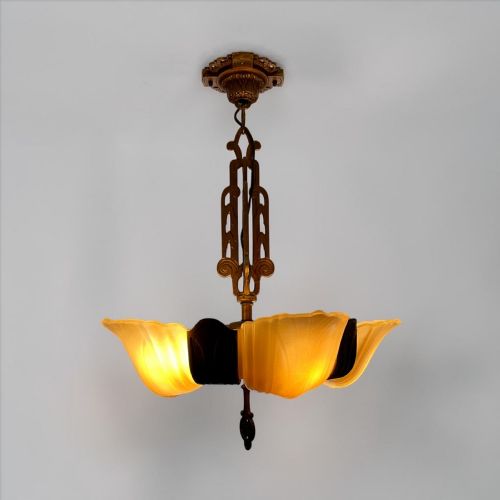
Glass components rely on specialist techniques including acid-etching, crackle glass texturing, and slip shade moulding. Opaline and frosted finishes are applied to soften the light emitted from the internal bulbs while diffusing glare evenly across the room.
Deer antler and fish scale glass bring unexpected natural textures into the metallic geometry of the 1930s lighting repertoire.
Distinguishing quality in period lighting
Quality rests in the weight and purity of the materials, visible in thick, evenly blown opaline glass or heavy cast bronze and brass frames rather than thin pressed metal. Superior execution shows in the crispness of etched crystal patterns and the precise integration of metal fitments to glass shades.
Design complexity also separates standard utility fixtures from masterworks, evident in multi-tier slip shade configurations, intricate wrought iron scrollwork, or specialised forms like clam shell and fish scale shades.
Émile-Jacques Ruhlmann·Jean Gauthier
The 1930s Pendant Lamp Glossary
- Plafonnier
- A bowl-shaped ceiling light mounted flush or closely suspended against the ceiling. This form directs illumination upwards and outwards through decorative glass.
- Slip Shade
- A moulded glass panel that slides into a metal frame to form the bowl or shade of a ceiling light. These are typical of American and European Art Deco lighting design.
- Opaline Glass
- A milk-white translucent glass that diffuses light softly without harsh hotspots. It appears frequently in period pendants and globes.
- Chandelier
- A branched hanging light fixture designed to hold multiple bulbs. These fixtures distribute light across wider spaces using arms radiating from a central stem.
- Hall Lantern
- An enclosed hanging light designed specifically for narrow entranceways and corridors. They often feature protective metal frames enclosing glass panes.
1930s Pendant Lamp: Frequently Asked Questions
How do I hang a 1930s pendant lamp?
Suspension typically relies on matching chains, metal rods, or ceiling caps connected to the primary structural frame of the fixture. Professional electrical installation ensures the weight of the metal and glass is safely supported by the ceiling joists.
Height adjustments should position the base of the pendant at an appropriate clearance for foot traffic or furniture placement below.
What rooms suit a pendant light from this era?
Hallways, dining spaces, and high-ceilinged living rooms benefit most from the direct downward illumination and strong decorative presence of these fixtures. Compact plafonniers and smaller globe lights work effectively in more modest spaces.
Larger multi-light chandeliers and lanterns provide ample ambient illumination for central rooms without overwhelming the surrounding interior architecture.
Are replacement glass shades difficult to find?
Original period glass shades are specific to their mounting frames and specific makers, making exact matches hard to source if broken. Inspecting the integrity of the glass before acquisition is essential.
Most fixtures retain their matching original components, from crackle glass bowls to moulded opaline plates.