



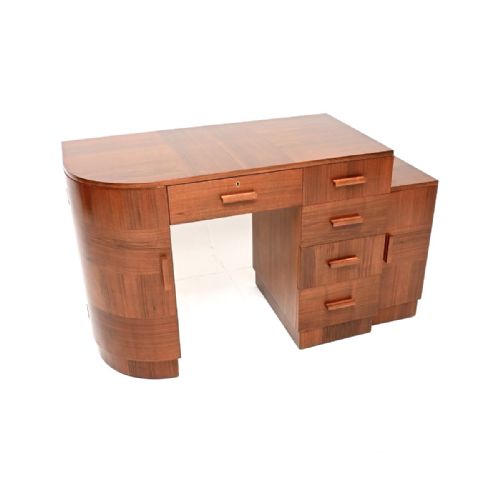
1930s Pedestal Writing Desk
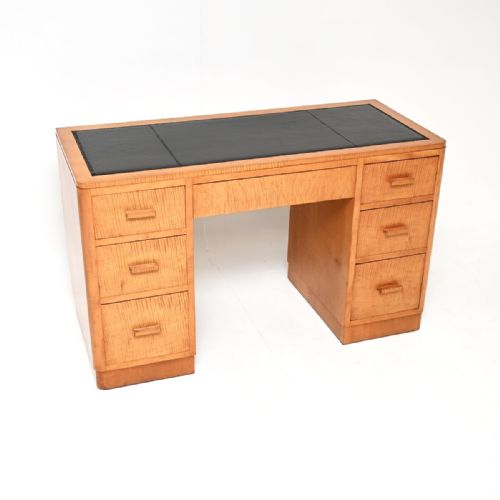
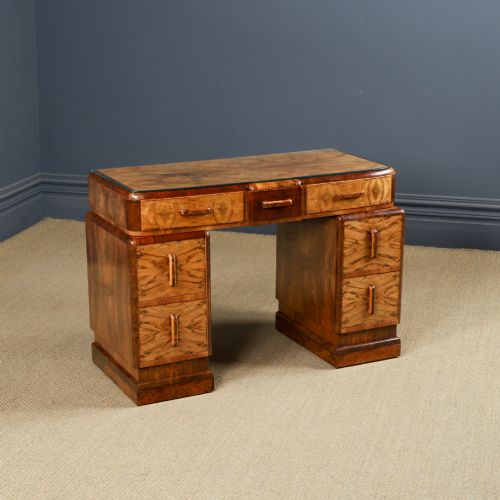
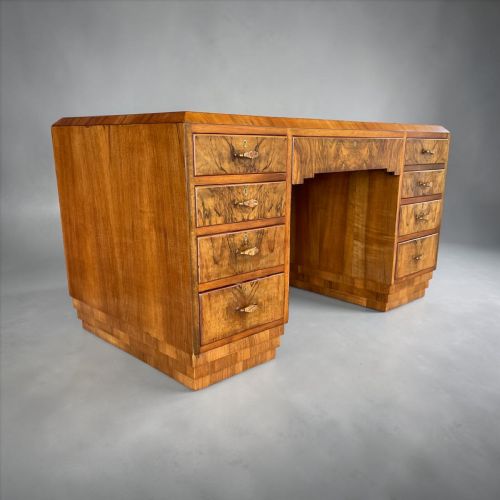
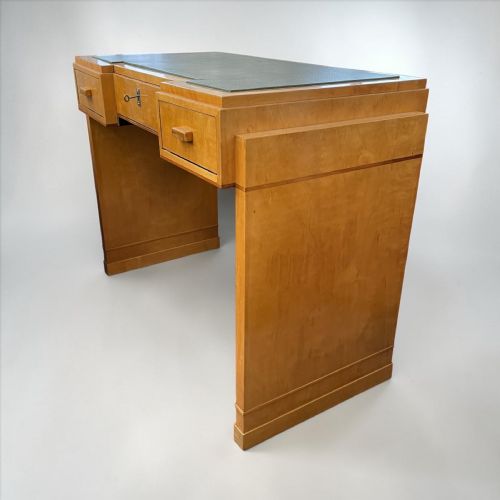
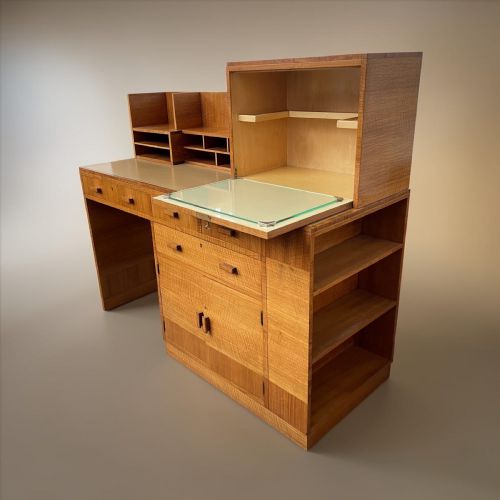
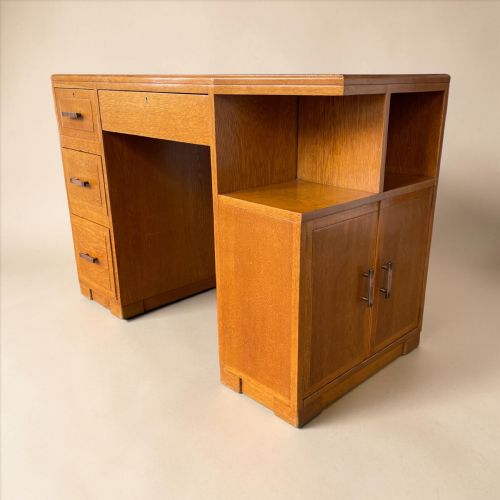
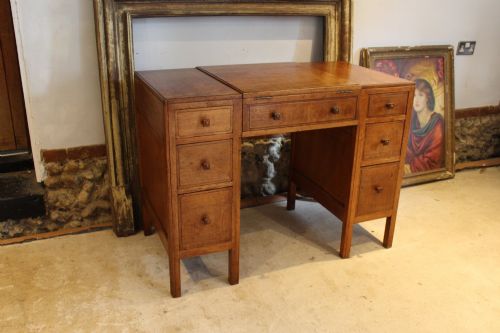
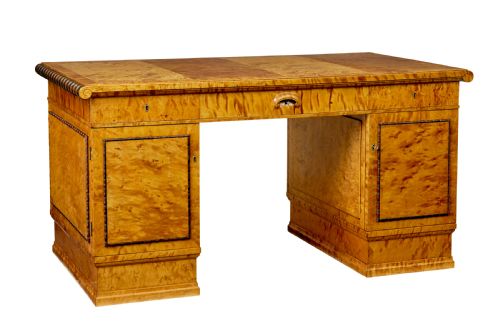
A 1930s pedestal writing desk offers a robust workspace defined by period character and practical storage, serving as a commanding centrepiece for a study.
1930s Pedestal Writing Desk
A 1930s pedestal writing desk brings together the architectural lines of the period and the functional demands of a home office or study. These pieces frequently appear from the 1930 and Edwardian periods, carrying the strong influence of Art Deco design.
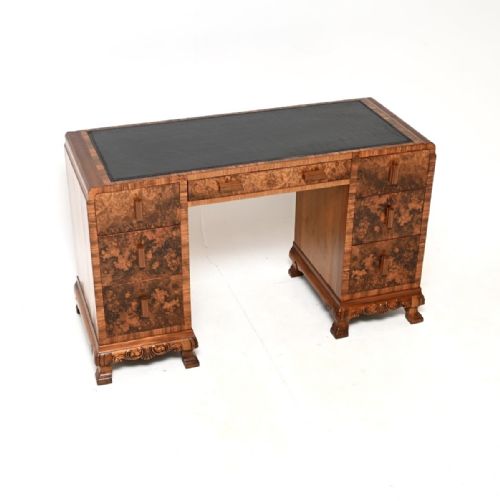
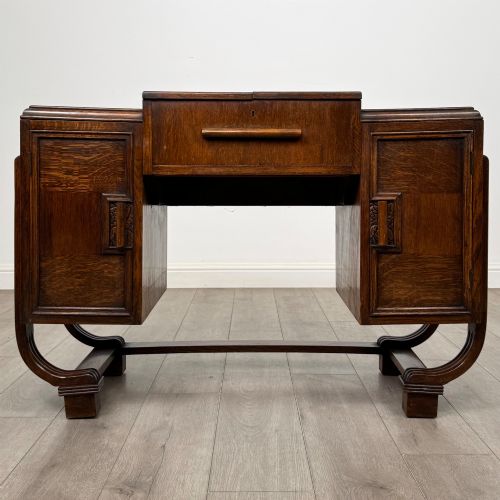
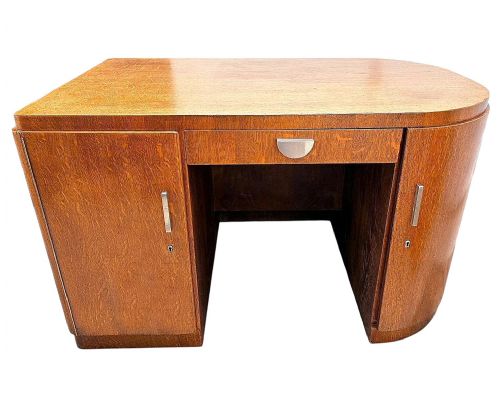
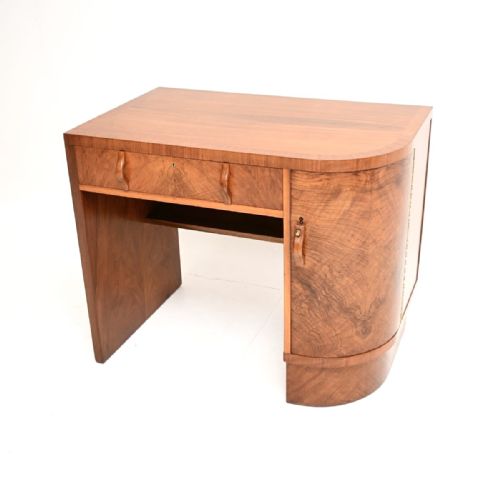
Buyers encounter forms varying from compact writing desks to substantial office desks and two-sided D-end tables. Many examples incorporate pedestals flanking a central kneehole, often paired with contrasting top surfaces.
Origins span English workshops and French studios, with stylistic touches reaching into Arts and Crafts and Modernist idioms. The resulting selection provides diverse options for domestic placement without sacrificing period integrity.
Materials and construction
Construction relies heavily on timbers such as walnut, burr walnut, oak, satin birch, and rosewood, frequently applied as veneers over solid wooden carcases. Cabinetmakers made extensive use of figured grain patterns to create visual rhythm across flat drawer fronts and pedestals.
Inlaid or inset leather writing surfaces provide a durable, textured top for daily use, while brass and metal hardware furnish structural support and handles. Glass elements and contrasting woods like ebony macassar occasionally appear to punctuate the design.
Joinery techniques reflect traditional cabinetmaking adapted to geometric Art Deco and modernist forms. The application of polished finishes highlights the natural variation of the wood.
One exceptional compact model arrives equipped for campaign use, proving that even interwar executives occasionally packed their desks for travel.
Factors of quality
Quality rests upon the selection and matching of timber veneers, where symmetrical grain alignment across multiple drawers signals superior cabinetmaking. Desks utilising burr walnut, figured walnut, or satin birch demonstrate higher ambition than plain secondary woods.
The integration of secondary materials, such as finely tooled leather inserts and substantial brass or metal fittings, separates standard utilitarian pieces from workshop productions. Maker attribution and labelled pieces elevate the standing of a desk within the period.
Heal's·Betty Joel·Maurice Adams·Étienne Kohlmann
The 1930s Pedestal Writing Desk Glossary
- Pedestal desk
- A form featuring two supporting columns of drawers flanking a central kneehole space. This arrangement provides ample storage while maintaining a balanced, symmetrical façade.
- Burr walnut
- A prized timber harvested from growths on walnut trees, displaying intricate, swirling grain patterns. Cabinetmakers sliced this wood into thin veneers to cover large flat surfaces.
- Art Deco
- A design movement spanning the interwar years characterised by sleek geometric shapes, stylised motifs, and modern industrial materials. It dominates the aesthetic of these desks.
- Veneer
- A thin layer of superior wood glued to a base of more stable secondary timber. This technique allows craftsmen to utilise striking grain figures economically.
- Kneehole
- The central recessed space beneath the desk top designed to accommodate the user's legs while seated. It separates the left and right pedestals.
1930s Pedestal Writing Desk: Frequently Asked Questions
What defines a 1930s pedestal writing desk?
These desks combine twin pedestals of drawers with a central writing surface, built primarily during the interwar decades. They reflect the geometric sensibilities of Art Deco design through clean lines and figured timber veneers.
Craftsmen utilised materials like walnut, oak, and satin birch to create functional office furniture that doubled as decorative focal points. The format prioritises both surface workspace and enclosed storage.
How do I care for a leather top?
Leather writing surfaces require gentle cleaning with a slightly damp cloth, avoiding harsh chemical cleaners that strip the finish. Regular conditioning helps maintain suppleness and prevents cracking across the hide.
Keeping the desk away from direct sunlight preserves the colour of both the leather insert and the surrounding wood veneer. Blotting spills immediately protects the porous material from staining.
Where were these desks made?
Production was centered primarily in English workshops and French design studios during the 1920s and 1930s. Notable London firms and individual designers contributed significantly to the output of modernist office furniture.
Regional variations appear in the choice of secondary timbers and the strictness of the geometric ornamentation. European pieces often embrace bolder contrasts in exotic woods.
How do I distinguish Art Deco from Edwardian examples?
Art Deco desks display streamlined geometric forms, symmetric waterfall edges, and striking veneer patterns like burr walnut or satin birch. Metal and glass accents frequently complement the polished wood surfaces.
Edwardian desks tend to retain heavier traditional proportions and more conservative ornamentation rooted in earlier revival styles. The transition between these eras appears in transitional pieces bearing traits of both periods.