




1930s Office Furniture
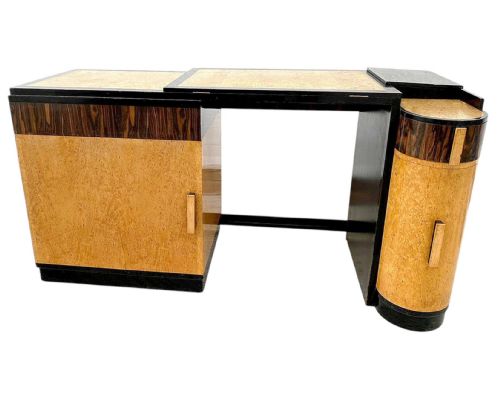
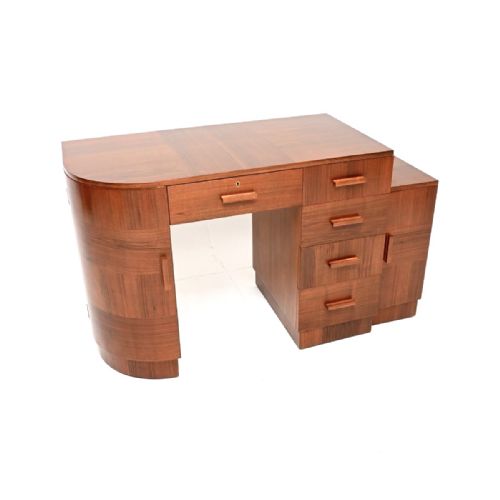
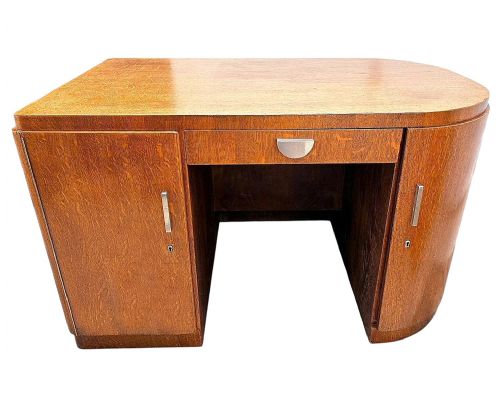
These pieces of 1930s office furniture bring striking Art Deco lines and robust British institutional utility into the modern workspace.
1930s Office Furniture
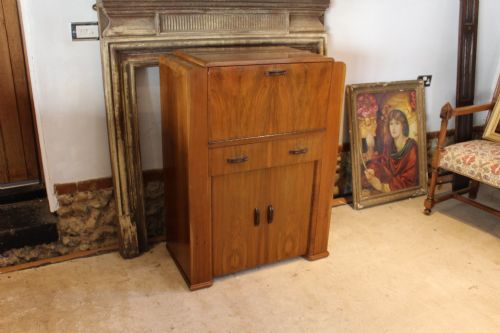
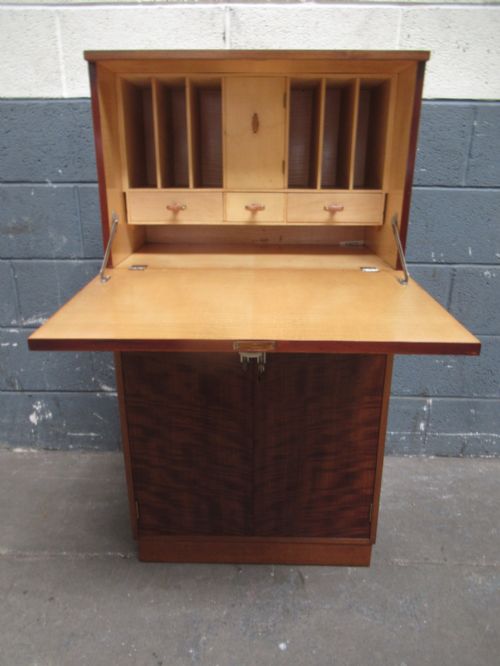
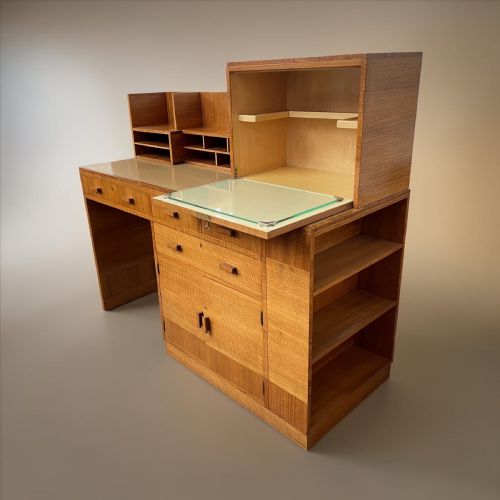
When you look for 1930s office furniture, you are examining a distinct intersection of modernist design and heavy working-class or institutional purpose. The category is dominated by pedestals and writing desks, alongside functional filing cabinets and bureau bookcases.
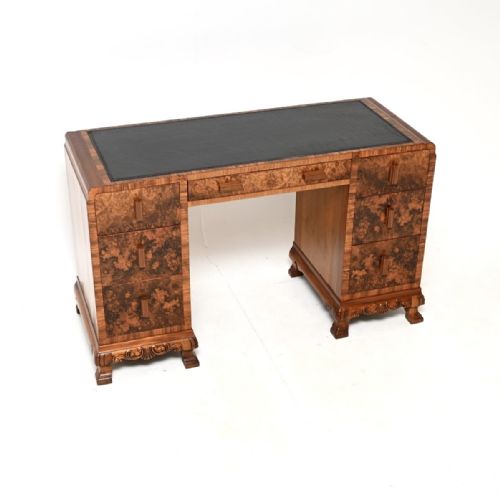
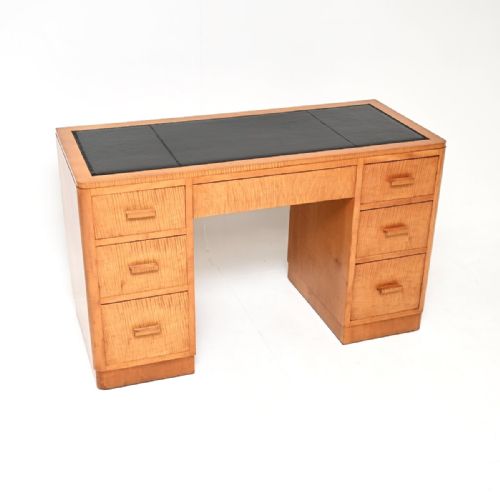
You are most likely to meet desks built with prominent pedestal configurations, often featuring integrated leather writing surfaces. These forms reflect the muscular corporate and scholarly ambitions of the interwar period.
The objects stem from English workshops and institutional commissions, spanning the late 1920s into the 1930s. They combine architectural gravity with the sleek curves characteristic of the period.
How they were made
Cabinet makers utilised timber selections such as oak, walnut, burr walnut, and satin birch, often applying figured veneers to large flat surfaces. Leather inserts were commonly stitched into the top writing panels to provide a durable working plane.
Metal and chrome elements appear as structural or decorative accents, marrying traditional woodworking techniques with early industrial metalworking. Tambour fronts on filing cabinets relied on precise slatted wooden construction running in secret grooves.
1930s Office Furniture Retail Price Guide 2026
Typical asking prices for 1930s office furniture among the pieces listed under this phrase on Sellingantiques today, from the lower quarter to the upper quarter. They describe what is for sale here now, not the wider market.
A school cupboard from Highgate stands ready to store centuries of detention slips.
What varies in quality
The distinction between standard commercial pieces and the top of the range rests on the ambition of the design and the pedigree of the maker. Master workshops employed superior timber selection, such as highly figured burr walnut and exotic satin birch, matched across drawer fronts.
Execution of secondary details, from the precision of tambour mechanisms to the quality of integrated maker labels and hardware, separates run-of-the-mill institutional items from signed studio pieces.
F.H. Marshall & Co Glasgow·Heal's·Betty Joel·Maurice Adams
The 1930s Office Furniture Glossary
- Pedestal desk
- A heavy freestanding desk supported by two pedestals containing drawers or cupboards. These forms provide substantial storage flanking the central kneehole.
- Tambour front
- A flexible shutter formed of narrow strips of wood glued to canvas, allowing smooth operation around a curve. This mechanism conceals interior filing compartments.
- Burr walnut
- Timber taken from a growth deformation on the walnut tree, yielding complex, swirling grain patterns. Cabinet makers prized this veneer for high-status surfaces.
- D end
- A desk end finished in the shape of a semi-circle or D, allowing placement against a wall or use as a freestanding station. This profile softens the rectangular geometry of the piece.
1930s Office Furniture: Frequently Asked Questions
How do I care for leather top desks?
Leather surfaces require occasional gentle cleaning with a damp cloth and specialised conditioner to prevent cracking and preserve suppleness. Avoid harsh chemical cleaners that strip the original dye and finish.
Keep these desks away from direct sunlight and extreme temperature fluctuations to protect both the leather insert and the underlying timber substrate from warping.
Are tambour filing cabinets practical for daily use?
The slatted wooden shutters run in tracks that can accumulate dust and minor obstructions over decades of use. Regular gentle cleaning and occasional waxing of the runners keep the action smooth.
While robust enough for office tasks, the internal dimensions match historical filing formats rather than modern hanging folders without adaptation.
How do I distinguish 1920s pieces from 1930s designs?
Pieces from the late 1920s often retain heavier traditional proportions while introducing early modernist symmetry and geometric detailing. By the 1930s, forms embraced cleaner curved lines and unadorned surfaces.
Material choices also shifted, with chrome accents and exotic veneers becoming more prevalent as the Art Deco movement matured into the 1930s.
Will these desks fit modern office chairs?
Historical kneehole clearances were designed for chairs of a different ergonomic standard than contemporary office seating. Check the floor-to-underside clearance before pairing with a modern adjustable chair.
Many pedestal desks offer ample width, but the fixed height of the writing surface may require careful selection of seating to ensure comfortable knee clearance.