

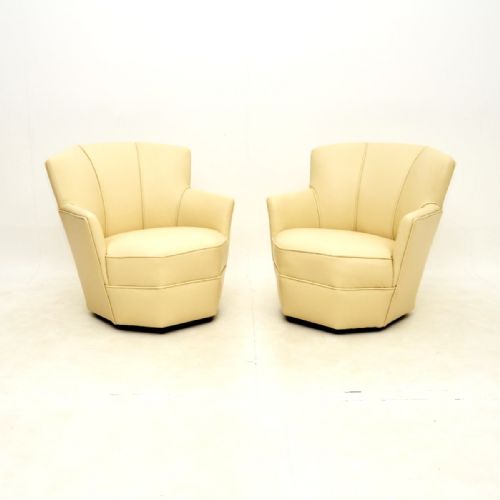
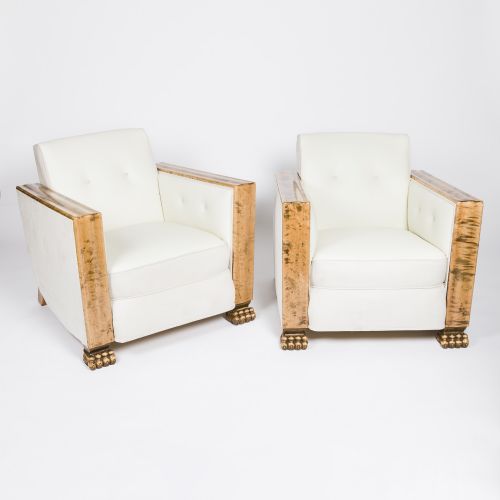


1930s Leather Club Chair
A 1930s leather club chair offers deep comfort and strong period character, making it the anchor piece of a room.
1930s Leather Club Chair
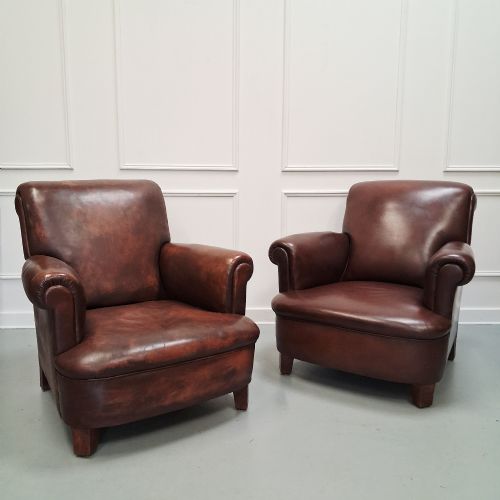
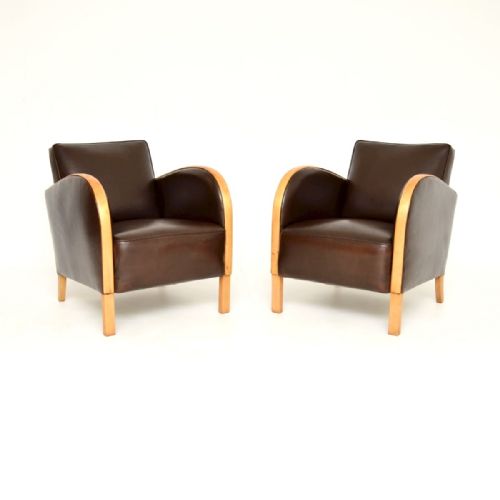
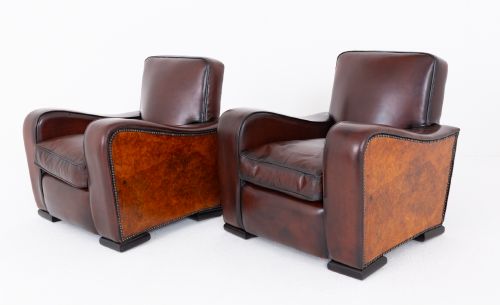
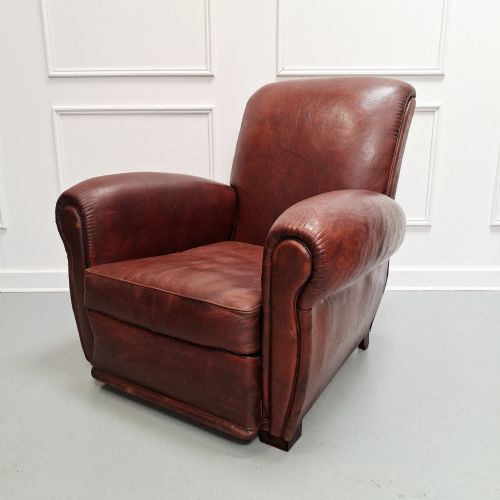
A 1930s leather club chair is a sturdy, low-slung seat built for heavy daily use, often appearing in pairs or as part of larger lounge suites. These pieces draw heavily on French and Swedish Art Deco design, alongside English library styles and Georgian revival interpretations.
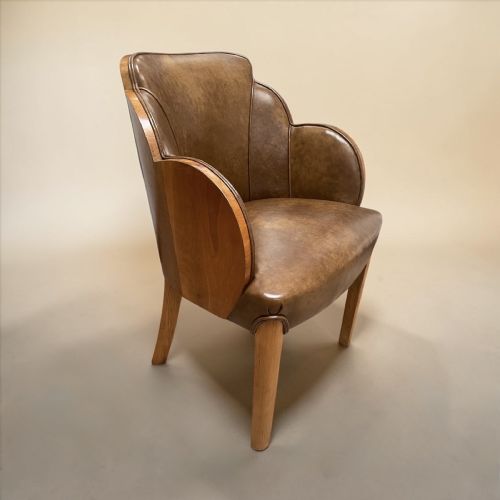
Buyers will encounter single armchairs, matching pairs, and occasional variants alongside specialised seating such as desk chairs, bridge chairs, and miniature apprentice pieces. The dominant forms rely on generous proportions and rounded silhouettes, particularly the distinctive cloud chair design.
Originating largely from the interwar decades, these chairs combine domestic comfort with the sleek, modern lines favoured by designers of the period. They serve both as functional seating and as strong focal points within an interior scheme.
How they were made
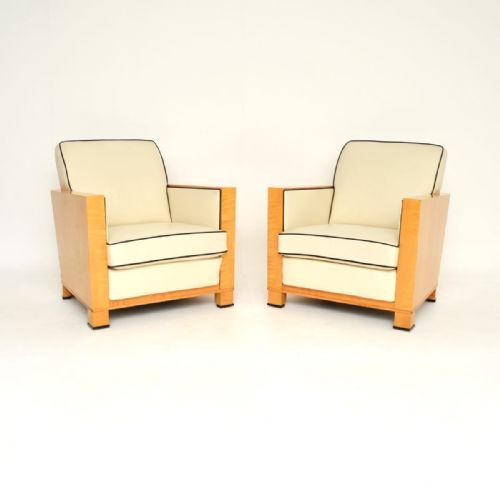
Makers constructed the internal frames of a 1930s leather club chair using solid timbers such as walnut, oak, and general hardwood timber. Exposed wooden elements frequently incorporate burr walnut and satin birch veneers to provide decorative grain patterns.
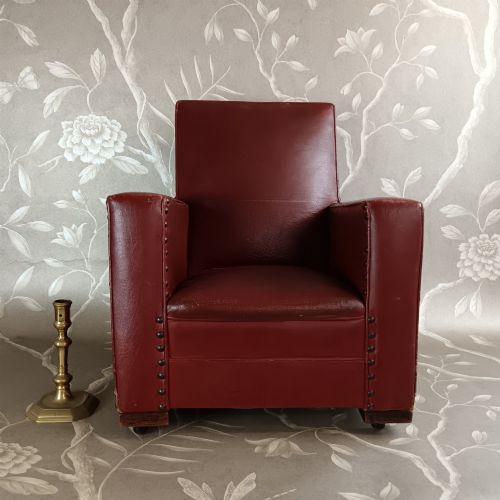
Upholstery relies on heavy-grade leather, often seen in caramel tan, oxblood red, cigar brown, and antique green finishes, occasionally complemented by button-back detailing. Metal and brass components appear in structural fastenings, hardware, and specific chair mechanisms.
Traditional joinery and sprung upholstery techniques ensure durability, while specialised frames such as the cloud chair utilise rounded padding to achieve their voluminous profiles. Cabinetmakers and workshops applied meticulous hand-finishing to both the woodwork and the leather hides.
What varies in quality
Quality in a 1930s leather club chair rests primarily on the integrity of the internal wooden frame and the grade of the leather hide used. Superior examples maintain firm structural support and upholstery that retains its original spring tension.
The choice of decorative woods also dictates distinction, with finely figured burr walnut and satin Birch veneers marking out more ambitious workshops. Furthermore, attribution to known makers elevates a piece above anonymous workshop production.
Hille·Harry and Lou Epstein
The 1930s Leather Club Chair Glossary
- Art Deco
- A design movement prevalent in the 1920s and 1930s characterised by sleek lines, geometric forms, and modern materials. It heavily influences the silhouette of these chairs.
- Cloud chair
- An armchair style featuring rounded, bulbous upholstered arms and backrests that resemble soft cumulus clouds. This form is particularly associated with prominent interwar makers.
- Burr walnut
- A highly figured wood veneer taken from the growth growths of walnut trees. It provides intricate, swirling patterns on the exposed wooden sections of the chair frames.
- Bridge chair
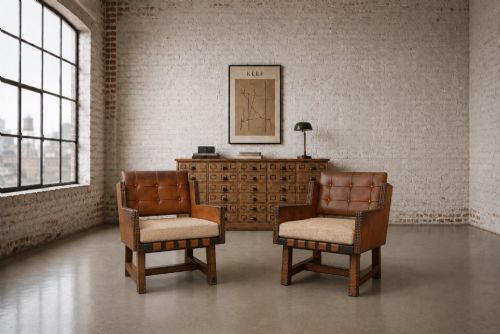
- A compact, light armchair originally designed for card games and domestic gatherings. These pieces typically feature slender wooden frames and smaller footprints.
- Satin birch
- A pale, lustrous timber used for decorative veneers on Scandinavian and continental European seating. It offers a bright contrast to darker leather upholstery.
1930s Leather Club Chair: Frequently Asked Questions
How do I identify a 1930s club chair?
Look for heavy wooden frames combined with thick leather upholstery, often displaying characteristic Art Deco geometric lines or rounded cloud profiles. The presence of traditional hand-stitched detailing and period timbers helps confirm the era.
Compare the proportions against known styles from the archive to verify whether the piece originates from French workshops or English makers.
Are these chairs comfortable for daily use?
These pieces were originally engineered for heavy domestic lounging, featuring deep seats and supportive sprung interiors designed for sustained relaxation. Their low-slung posture provides an ergonomic sit suited to modern living rooms.
Restored examples maintain this original comfort while ensuring the internal webbing and padding remain supportive.
What maintenance does vintage leather require?
Vintage leather benefits from regular conditioning with appropriate balms to keep the hide supple and prevent cracking over time. Keeping the material away from direct heat sources preserves the natural oils in the leather.
Gentle dusting with a soft cloth prevents surface grit from wearing into the grain during daily use.
How do I style a club chair at home?
A single club chair works well as a reading seat in a study or paired with a matching sofa to create a defined conversation area. The strong wood and leather textures anchor neutral spaces effectively.
Consider matching the wood tones of the chair legs with existing room furniture to create a cohesive interior scheme.