




1930s Enamel Jewellery
These 1930s enamel jewellery pieces combine geometric metalwork with vibrant fused glass to deliver that unmistakable interwar look.
1930s Enamel Jewellery
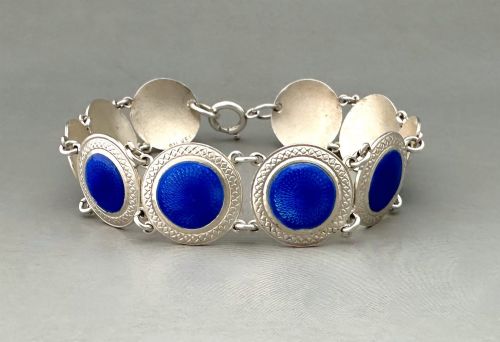
When you search for 1930s enamel jewellery, you encounter accessories defined by the sharp lines of the Art Deco style and the industrial modernism of the period. The selection on this page centres heavily on gents cufflinks, link bracelets, and detailed brooches.
Makers utilised various base materials ranging from sterling silver and solid gold to chrome, silver plate, and metal. Vitreous enamel and glass provide the strong colour fields that give these wearable items their striking visual character.
How they were made
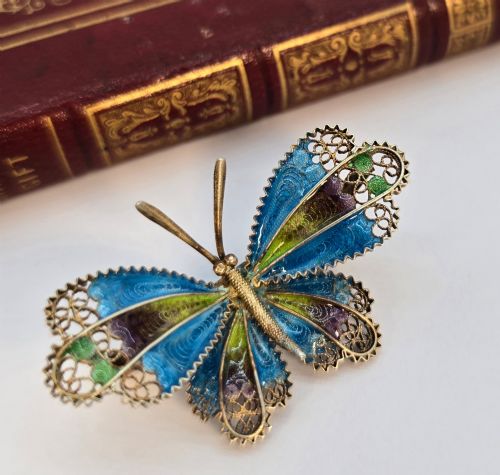
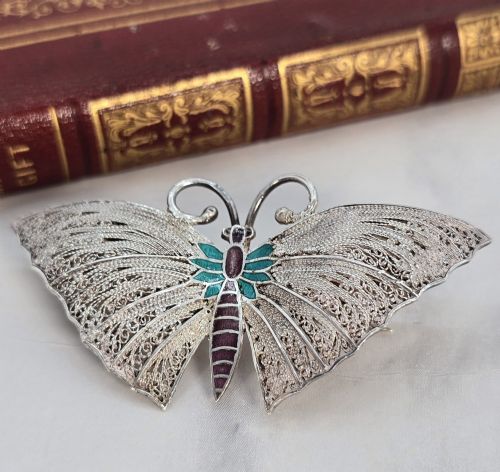
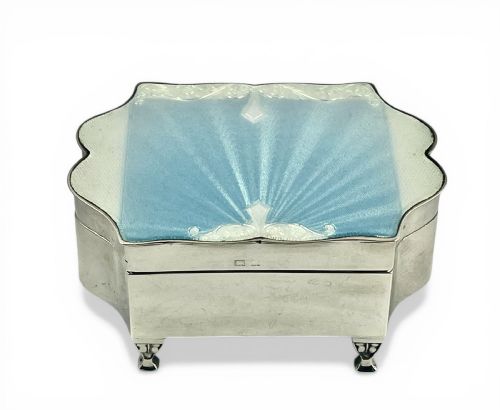
Craftsmen applied powdered glass onto metal bases, firing the pieces at high temperatures to fuse the vitreous enamel into smooth, durable coloured surfaces. Many silver pieces incorporate delicate filigree wirework or engine-turned guilloche engraving beneath translucent enamel layers.
Industrial manufacturing also shaped the decade, particularly in German workshops where chrome and chromium plating were combined with geometric enamel plaques. Cufflinks and bracelets often relied on sturdy mechanical links and bezels to secure the decorative enamel elements.
Current listings span periods from 1920 to 1940, with the vast majority concentrated tightly around 1930.
What varies in quality
The standard of 1930s enamel jewellery shifts according to the precision of the metalwork and the complexity of the enamelling technique. Pieces featuring solid sterling silver or 18ct gold foundations naturally occupy the higher tier compared to chrome or silver-plated alternatives.
Execution matters just as much as materials, separating standard production items from masterworks by known designers such as Jakob Bengel. Uniformity in the enamel surface, crisp geometric alignment, and sophisticated guilloche patterns distinguish superior pieces.
Jakob Bengel·Smiths Sectric
The 1930s Enamel Jewellery Glossary
- Guilloche enamel
- A decorative technique where an underlying metal surface is engraved with intricate geometric patterns beneath a transparent layer of enamel.
- Vitreous enamel
- A material made by fusing powdered glass to a metallic substrate through high-temperature firing, creating a smooth and lasting coloured finish.
- Silver gilt
- Silver that has been coated with a thin layer of gold on its exterior surface.
- Silver filigree
- Delicate jewellery work formed from fine twisted threads of silver soldered together in openwork patterns.
1930s Enamel Jewellery: Frequently Asked Questions
What metals were used?
Makers utilised sterling silver, silver plate, chrome, and 18ct yellow gold as structural foundations for these items.
Industrial pieces frequently relied on chromium and base metals to achieve their modernist aesthetic.
How do I spot Art Deco pieces?
Art Deco design shows through symmetrical geometric patterns, sharp lines, and industrial influences rather than flowing floral motifs.
Enamel sections often display contrasting black, green, and blue blocks set against polished chrome or silver.
Were these made for men or women?
The period produced significant quantities of both ladies and gents accessories, with cufflinks and tie pins forming a large portion of men's items.
Bracelets, brooches, necklaces, and pendants catered primarily to women.
How should I clean my items?
Glass and vitreous enamel surfaces respond best to gentle wiping with a soft, damp cloth without harsh chemical immersion.
Silver mountings can be maintained using a mild polishing cloth while taking care to avoid abrasive contact with the enamel.