


1930s Dressing Stool
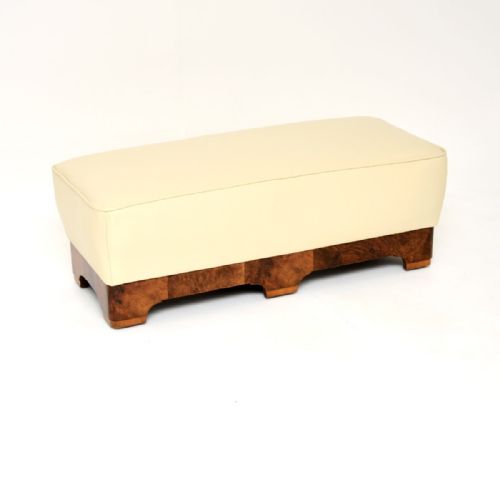
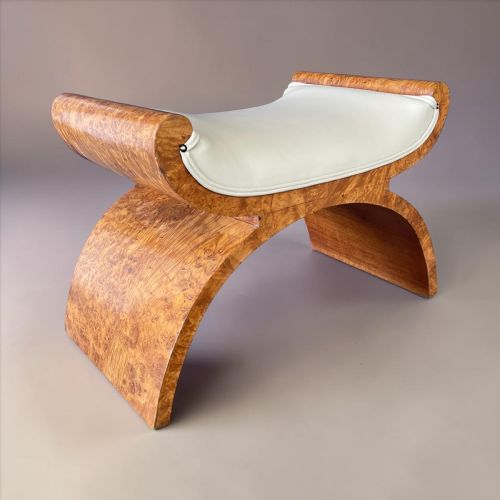
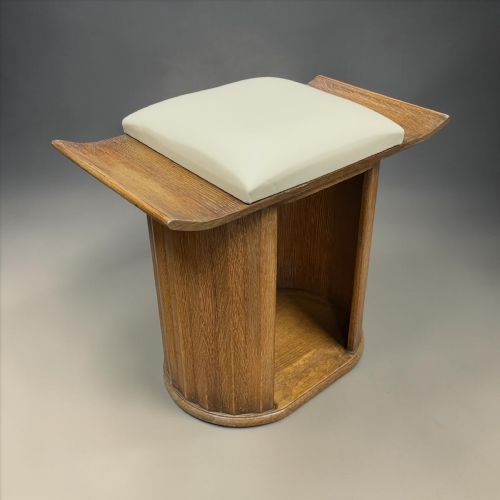
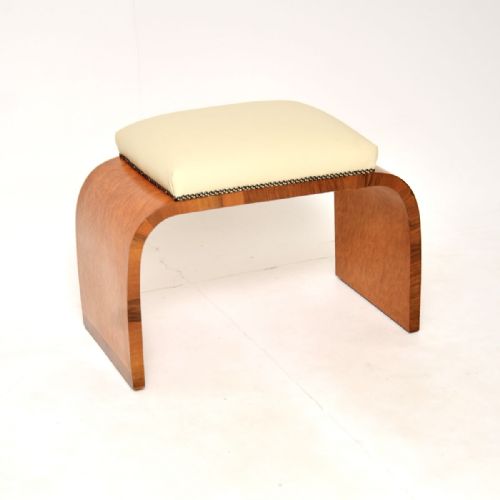
A 1930s dressing stool brings unmistakable period character to a bedroom, combining practical seating with striking decorative form.
1930s Dressing Stool
A 1930s dressing stool is a low seat designed to accompany a bedroom vanity, frequently appearing in forms that reflect the dominant design movements of the era. Buyers seeking a 1930s dressing stool will encounter pieces ranging from streamlined geometric shapes to revivals of earlier classical styles.
The most common examples on this page are Art Deco designs, often constructed to complement matching dressing tables. These items frequently incorporate clever internal storage compartments beneath the seat, serving both a functional and an aesthetic purpose in the bedroom.
While the vast majority of these pieces originate from the 1930 period, variants span from the 1920 decade onwards, including regional British workshops like the Cotswold School and specialised makers. Forms vary from simple rectangular frames to drum-shaped bodies and paired French painted seats.
Materials and construction
Makers of the period utilised a rich palette of timbers, prominently featuring burr walnut, figured walnut, oak, sycamore, and birds eye maple. These woods were frequently selected for their striking grain patterns and finished with polished surfaces that accentuated the natural figuring.
Upholstery played a central role in the construction, utilising leather, velvet, and various fabrics, sometimes updated with new flowery top covers. Metal elements occasionally appeared within the structural framing or detailing to complement the polished wood bodies.
Listings feature woods including oak, walnut, burr walnut, and sycamore alongside leather, velvet, and metal.
Assessing quality in period seating
The distinction between standard examples and the finest pieces often lies in the choice and matching of veneer. Elaborate timbers such as burr and figured walnut require expert handling to create symmetrical patterns across curved or drum-shaped surfaces.
Attribution to notable workshops or specific designers elevates a piece significantly. Construction integrity, the seamless integration of storage compartments, and the preservation of original leather or fabric upholstery further separate mass-produced items from high-end commissions.
Harry and Lou Epstein·B. North and Son·Rowley Gallery
The 1930s Dressing Stool Glossary
- Art Deco
- A design style characterised by sleek geometric shapes, streamlined forms, and modern industrial materials. It dominated decorative arts throughout the interwar period.
- Burr Walnut
- A specialised wood grain obtained from the burl growth of a walnut tree, prized for its swirling, intricate patterns. It was frequently used for veneering high-end furniture.
- Cotswold School
- An English Arts and Crafts movement centered around traditional woodworking techniques and honest construction methods. Pieces from this tradition emphasise visible craftsmanship and material integrity.
- Drum Shaped
- A circular furniture form resembling a drum, often incorporating internal storage accessed via a lifting seat. This shape is particularly associated with compact Art Deco bedroom pieces.
1930s Dressing Stool: Frequently Asked Questions
How do I identify Art Deco style?
Art Deco furniture relies on clean lines, symmetry, and luxurious materials like burr walnut and leather. The forms are often streamlined, avoiding excessive ornamentation in favour of bold geometric shapes.
Pieces from this movement frequently incorporate contrasting veneers and polished surfaces. Drum shapes and curved silhouettes are also common hallmarks of the aesthetic.
How do I care for leather upholstery?
Original or period leather requires gentle cleaning with a soft, dry cloth to remove dust. Avoiding direct sunlight prevents the hide from drying out or fading over time.
Applying a suitable leather conditioner helps maintain the suppleness of the material. Care should be taken around polished wooden frames during any maintenance.
What is birds eye maple?
Birds eye maple is a figured variation of hardwood timber that displays small, swirling patterns resembling tiny birds eyes. It was utilised by cabinet makers to create decorative surfaces on high-end furniture.
The distinct figuring is a natural occurrence in the wood grain, enhanced through careful polishing. Pieces utilising this timber stand out for their pale, speckled appearance.