

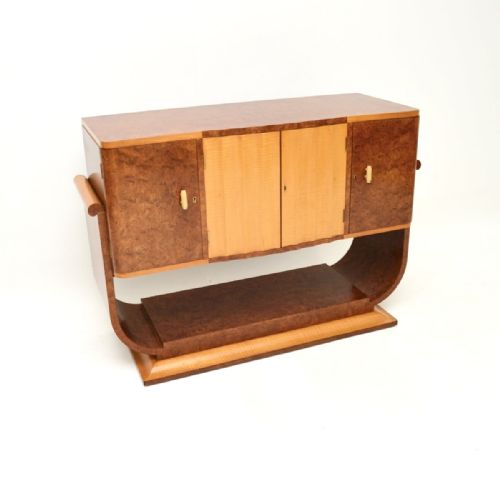
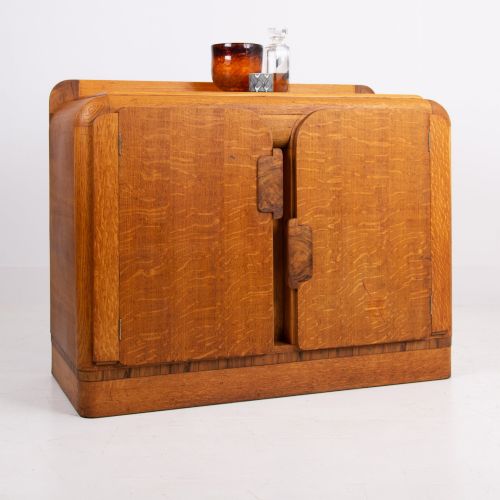
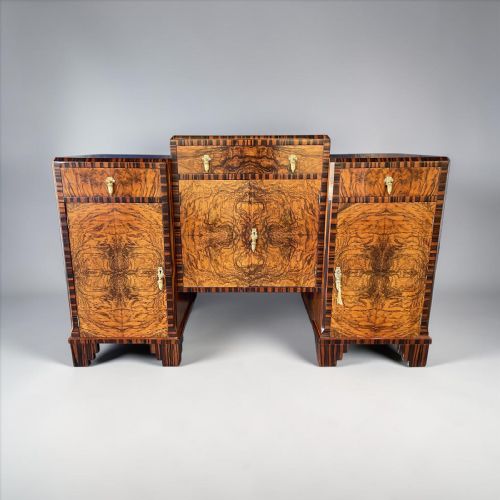
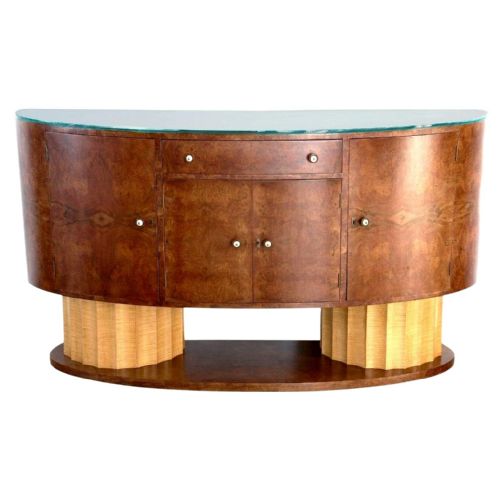


1930s Dining Credenza
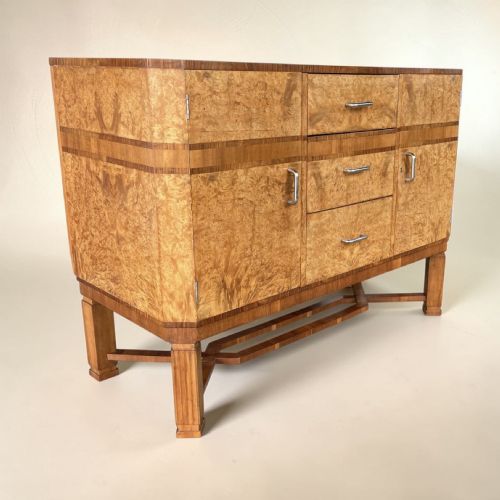
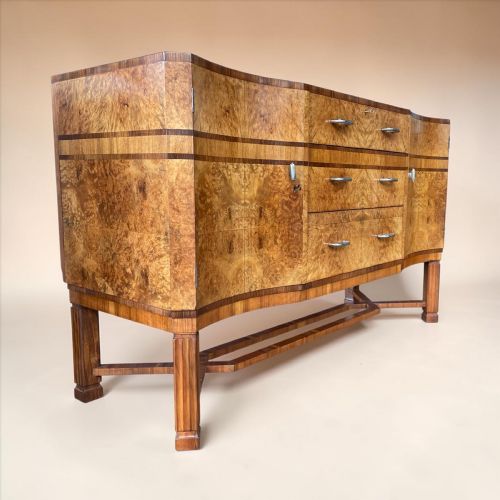
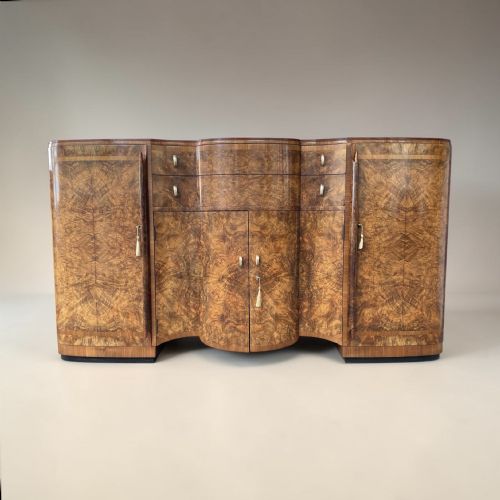
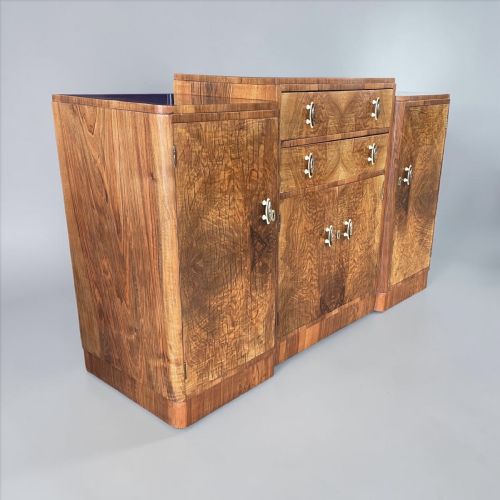
These pieces give a room a solid anchor, and a 1930s dining credenza brings together generous storage and striking period grain.
1930s Dining Credenza
A 1930s dining credenza takes the form of a substantial sideboard or buffet designed for the dining room. These pieces function primarily to store dining silver, linen, and glassware while providing a flat serving surface.
The version most commonly met on this page is the Art Deco sideboard, frequently constructed from figured timber veneers and geometric forms. Pieces span the 1920s and 1930s eras, including revival styles and continental workshops.
How they were made
Cabinet makers utilised core timbers surfaced with burr walnut, walnut veneer, mahogany, maple, and oak to achieve rich visual patterns on the doors and top surfaces. Sycamore provides contrasting lighter stringing and detail within the main construction.
Metal mounts, brass fittings, and occasional bakelite details complement the woodwork. Parquetry and French techniques appear alongside British workshop methods.
Objects on this page consist exclusively of sideboards, buffets, and credenzas originating from the 1920s and 1930s.
What varies in quality
The standard of timber selection and veneer matching defines the visual impact of each cabinet. Master workshops chose highly figured burr walnut and arranged the grain symmetrically across multiple doors.
Construction methods and designer attribution separate standard production from bespoke studio pieces. Named makers and specialised cabinet makers achieved tighter joinery and more cohesive decorative schemes.
Maurice Adams·Gomme·Hille·Epstein·Harry and Lou Epstein·Hamptons of Pall Mall London
The 1930s Dining Credenza Glossary
- Burr walnut
- A prized timber harvested from walnut tree growths, yielding intricate swirling grain patterns. It forms the primary decorative surface on many dining credenzas.
- Veneer
- A thin layer of superior wood adhered to a stable secondary timber base. This technique allowed makers to display dramatic grain without warping the structure.
- Art Deco
- A dominant design style of the period characterised by streamlined geometry, symmetry, and modernity. It influences the bulk of these dining room cabinets.
- Parquetry
- Geometric mosaic woodwork used for decorative surfaces. It appears on tabletops and cabinet fronts.
- Serpentine
- A gently undulating curved shape seen on the front edges of specific cabinets. This contour softens the geometric rigour typical of the era.
1930s Dining Credenza: Frequently Asked Questions
What is a 1930s dining credenza?
A 1930s dining credenza is a large cabinet or sideboard designed to hold tableware and serve food during meals. These items combine practical storage cupboards with decorative surfaces.
Most examples reflect Art Deco design principles, featuring polished wooden veneers and structured geometric proportions.
How do I style a credenza?
Position the cabinet against a main dining room wall to let the timber grain serve as a focal point. Keep the top surface uncluttered with minimal display items to highlight the veneer.
Pair the piece with matching dining room furniture from the same period to maintain visual harmony.
Where were these pieces made?
These cabinets originate from British workshops, London firms, and continental European makers. French studios contributed distinct parquetry and serpentine forms.
London department stores and specific cabinet makers retailed many of the British examples during the interwar period.
What woods are used?
Walnut and burr walnut dominate the construction, often applied as veneers over a sturdy timber frame. Sycamore, mahogany, maple, and oak also appear across various regional styles.
Brass hardware and bakelite accents provide functional contrast to the polished wooden surfaces.