


1930s Brass Pendant Light
A 1930s brass pendant light brings architectural form and period character to a hallway or room.
1930s Brass Pendant Light
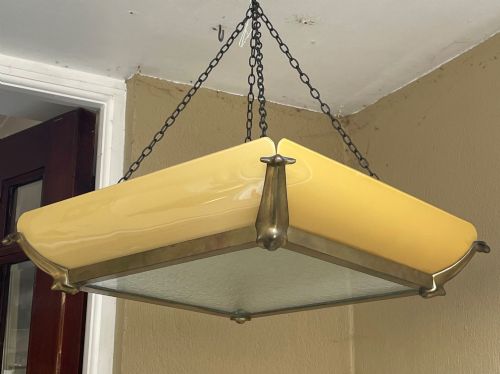
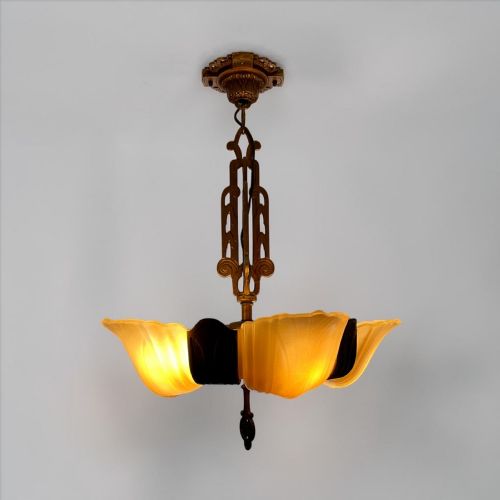
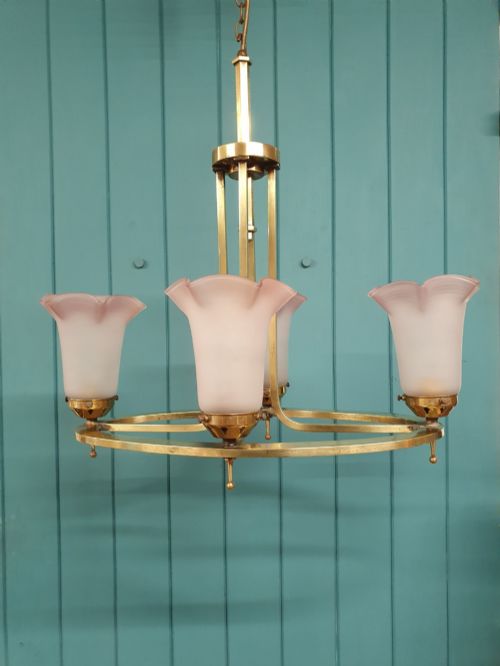
A 1930s brass pendant light encompasses hanging ceiling fixtures and chandeliers originating primarily from the Art Deco period, alongside French Empire and Dutch Revival variations. These pieces range from compact single-bulb hallway lanterns and opalescent glass up-lights to large multi-arm chandeliers spanning several lights.
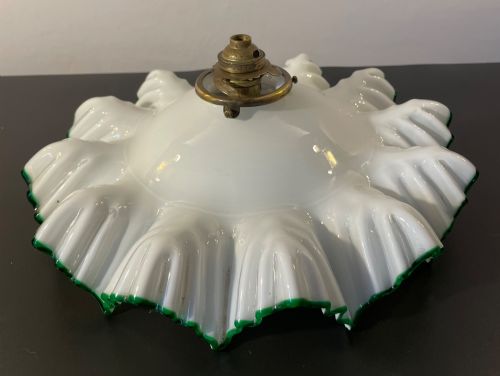
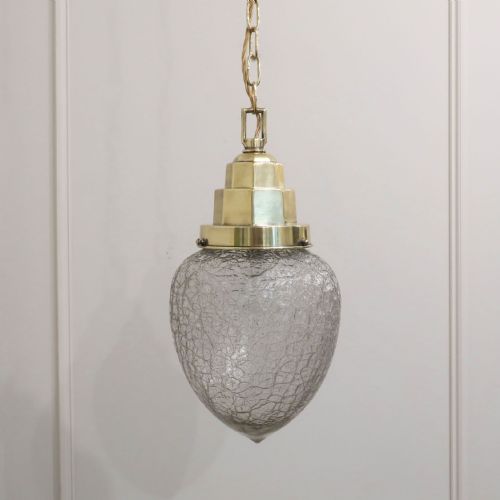
The dominant aesthetic draws heavily upon Art Deco design principles, manifesting in geometric structures, slip shades, and moulded glass bowls suspended on brass frames. Buyers encounter various configurations including flush plafonniers, pear-shaped opaline pendants, and substantial hall lanterns suited for domestic spaces.
Materials and construction
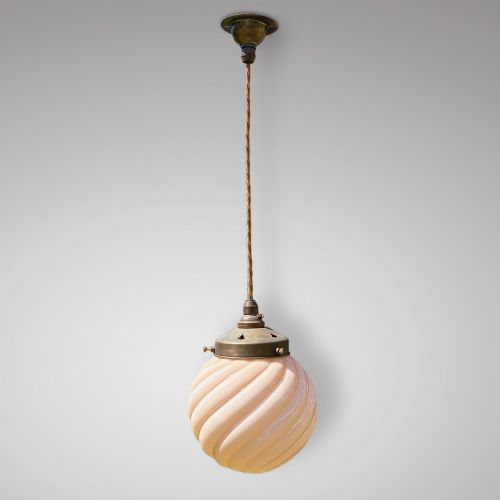
The primary structural metal is brass, frequently found alongside patinated brass, copper, and cast metal elements. These metal frames support a variety of glass components, including frosted glass, opalescent glass, opaline glass, crystal, alabaster, and crackle glass.
Shades and bowls were shaped through specialised moulding and glass-making techniques, yielding textures such as ribbed surfaces, clam shell profiles, and slip-inserted panels. Fixtures are commonly wired with fabric flex to connect the suspended metal and glass assembly to the ceiling.
Some pendant shades are shaped like giant pink clam shells, proving the 1930s decorator possessed a wonderfully theatrical sense of scale.
What separates examples
Quality in a 1930s brass pendant light rests upon the weight and casting finish of the metalwork, alongside the depth and clarity of the glass. Substantial brass frames and crisp surface detailing distinguish the more ambitious chandeliers and lanterns from simpler utilitarian pendants.
The artistic merit of the glass components also governs distinction, visible in the complexity of moulded opalescent bowls, crackle finishes, and fitted slip shades. Original integrity of the glass and the proportion of the hanging hardware relative to the shade define the finer survivals.
The 1930s Brass Pendant Light Glossary
- Art Deco
- A design style prevalent in the 1920s and 1930s characterised by streamlined geometric forms, stylised motifs, and modern industrial materials. It dominates the decorative language of these pendant lights.
- Plafonnier
- A shallow bowl-shaped ceiling light mounted close to or directly against the ceiling surface. These fixtures project downwards without a long suspension chain.
- Slip Shade
- A moulded piece of glass that slides or slips directly into a metal frame or basket to form the shade. They are a signature element of 1930s ceiling lights.
- Opaline Glass
- A milky, opaque or semi-translucent glass that diffuses light evenly across its surface. It was widely utilised for pendant shades and spherical globes during the period.
1930s Brass Pendant Light: Frequently Asked Questions
How do I hang a 1930s pendant?
Suspension typically relies on a central rod, chain, or fabric flex attached to a ceiling rose. Weight distribution must be considered when mounting heavier brass and glass chandeliers.
Professional installation is recommended to ensure the fixture is safely secured to ceiling joists and properly wired to modern electrical standards.
Are these lights suitable for low ceilings?
Certain forms like flush plafonniers and shallow dish lights sit close to the ceiling plane without hanging low. They provide overhead illumination without obstructing headroom in compact spaces.
Longer chandeliers and multi-arm pendant lights require higher clearance and work best in rooms with generous vertical space.
What rooms suit a brass pendant?
Hallways, stairwells, and dining areas frequently accommodate these hanging fixtures to create a focal point. Their architectural presence complements period properties and adds contrast in modern interiors.
Smaller single-bulb lanterns fit narrower corridors, while multi-light chandeliers suit principal reception rooms.
How do I identify a 1930s light?
Key indicators include characteristic Art Deco geometric lines, specific glass types such as opaline or crackle glass, and period brass construction. Stylistic cues draw from 1920s and 1930s manufacturing techniques.
Examining the metal patina and the moulding style of the glass helps distinguish authentic period pieces from later reproductions.