


1930s Bedroom Vanity
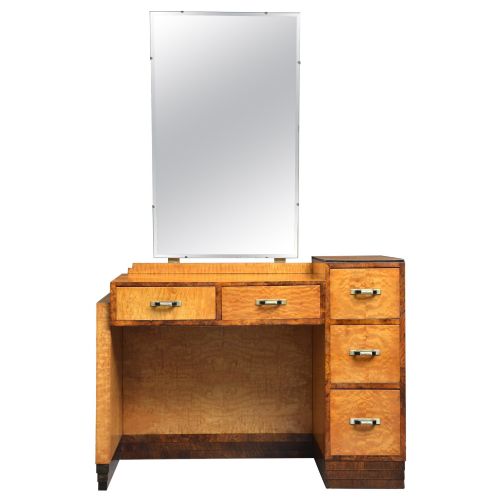
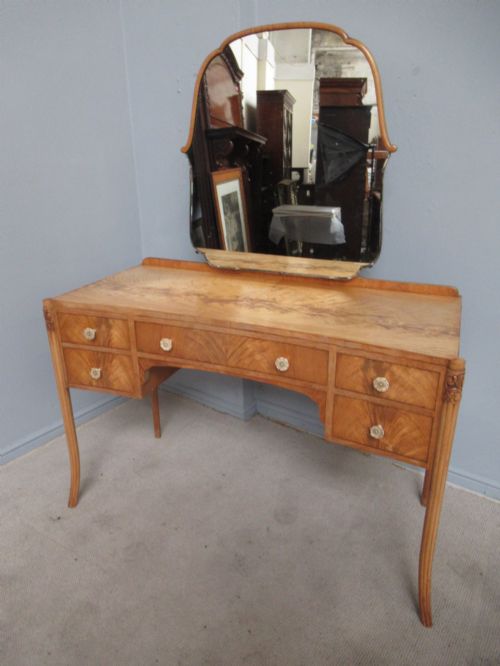
These 1930s bedroom vanity pieces bring bold geometric lines and rich figured timbers directly from the interwar period into a modern room.
1930s Bedroom Vanity
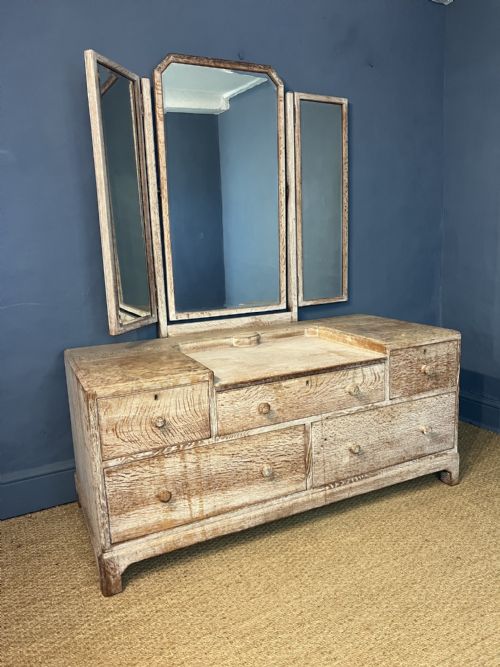
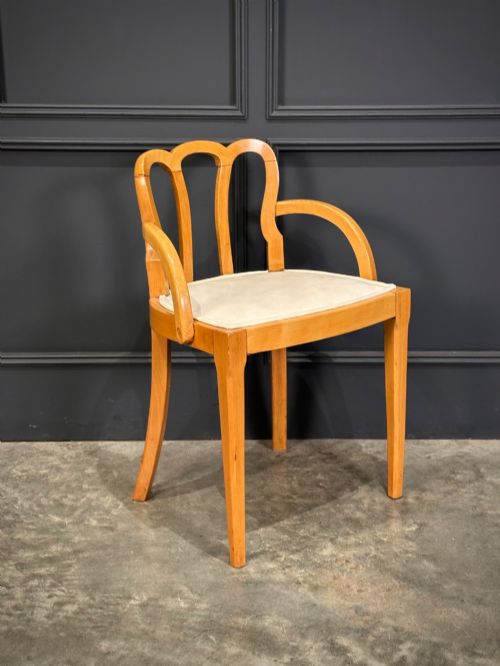
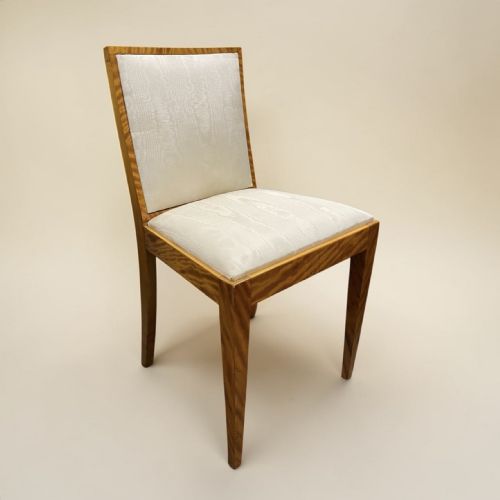
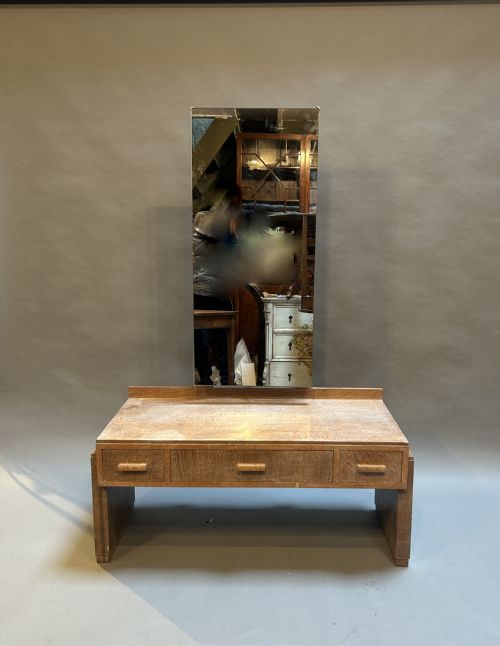
A 1930s bedroom vanity typically centres on a dressing table equipped with an integral or matching mirror, often accompanied by a low stool or chair for the dressing room. These forms emerge primarily from the Art Deco movement, alongside complementary expressions in Arts and Crafts and the Cotswold School.
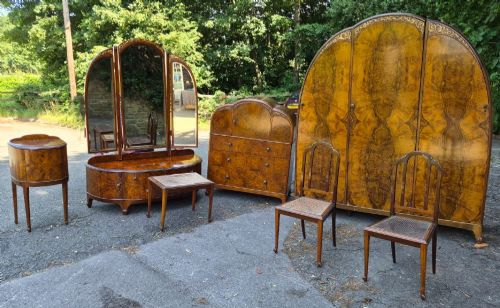
The material vocabulary relies heavily on figured walnut, burr walnut, and oak, punctuated by lighter woods such as maple, sycamore, and satinwood. Many pieces form part of larger bedroom suites that include matching chests of drawers and wardrobes.
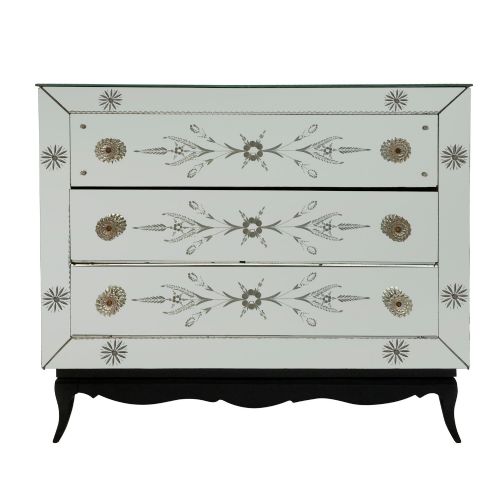
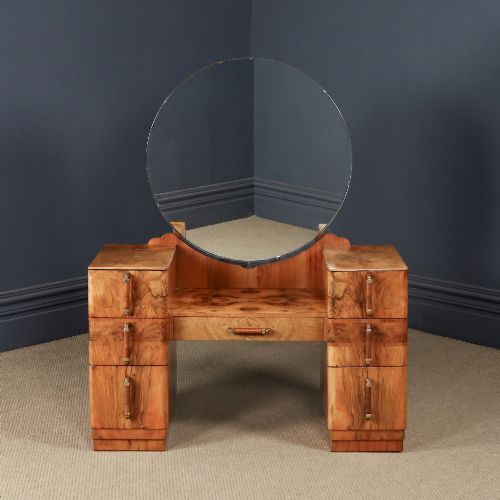
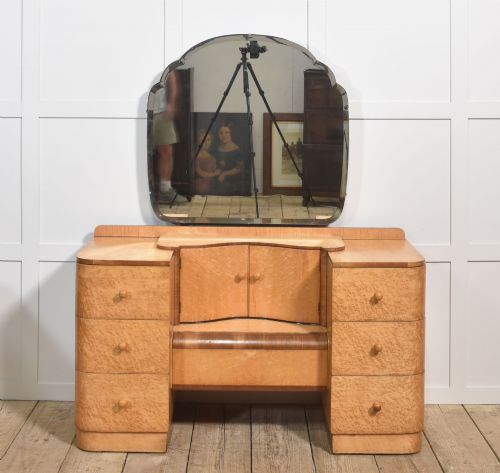
Makers working during this decade utilised architectural pedestals, drum shapes, and mirrored surfaces to create functional dressing furniture with strong decorative presence.
How they were made
Cabinet makers constructed these vanities using solid timbers combined with carefully selected veneers of burr walnut, figured walnut, and oak applied to carcases. Contrasting stringing in lighter woods or marquetry details frequently defined the borders of drawers and tabletops.
Mirrors were cut to fit geometric shapes, often incorporating bevelling or stepped frames that mirrored the overarching Art Deco style. Metal handles, glass surfaces, and occasional brass fittings completed the construction alongside upholstered seating covered in fabric or leather.
One dressing stool arrives shaped like a drum, complete with hidden storage inside for powder and pins.
What varies in quality
The standard of a 1930s bedroom vanity depends heavily on the selection and bookmatching of veneer grains across the drawer fronts and surfaces. Pieces by named workshops exhibit superior joinery and more ambitious architectural configurations than anonymous factory output.
The integration of original matching components, such as dressing stools with compatible upholstery and mirrors designed specifically for the dressing table, elevates the integrity of the ensemble.
Frank Taylor & Co.·Bath Cabinet Makers·Heal & Sons·Harry and Lou Epstein·Maurice Adams·B Cohen & Sons·Betty Joel·Rowley Gallery
The 1930s Bedroom Vanity Glossary
- Art Deco
- A design style spanning the 1920s and 1930s characterised by streamlined geometric forms, symmetry, and modern industrial motifs. It heavily influenced furniture design through bold silhouettes.
- Burr Walnut
- A specialised timber cut from walnut tree growths that produces intricate, swirling grain patterns. Cabinet makers prized this wood for high-end decorative veneer panels.
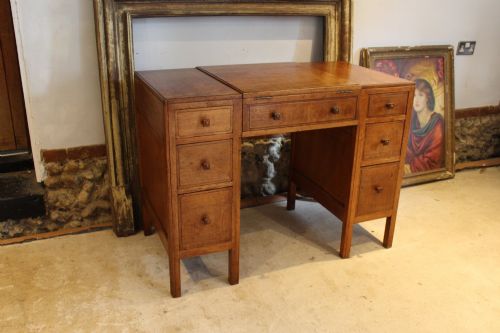
- Pedestal Dressing Table
- A dressing table supported by two structural columns or sets of drawers resting on the floor. This layout provided ample storage flanking a central kneehole.
- Limed Oak
- Oak treated with a finish that settles into the open grain to create a lighter, whitened appearance. This technique was favoured by progressive makers of the period.
- Marquetry
- The art of applying small pieces of veneer to a structure to form decorative patterns or pictures. It adds complex visual texture to flat surfaces.
1930s Bedroom Vanity: Frequently Asked Questions
What is a 1930s bedroom vanity?
A 1930s bedroom vanity is a dressing table designed during the interwar period, typically featuring a large mirror and matching seating.
These pieces served as dedicated stations for grooming and personal care within period bedrooms.
How do I identify Art Deco furniture?
Art Deco furniture is recognised by its symmetrical shapes, stepped outlines, and clean architectural lines.
Designers often used contrasting veneers like burr walnut against lighter woods to emphasise the geometric forms.
Where were these dressing tables placed?
They were positioned against bedroom walls, frequently taking pride of place to catch natural light near a window.
Many formed part of coordinated bedroom suites alongside matching wardrobes and chests of drawers.
How do I care for walnut veneer?
Walnut veneer should be kept away from direct sunlight and excessive moisture to prevent fading and lifting.
Regular dusting with a soft, dry cloth helps maintain the natural sheen of the polished wood.