

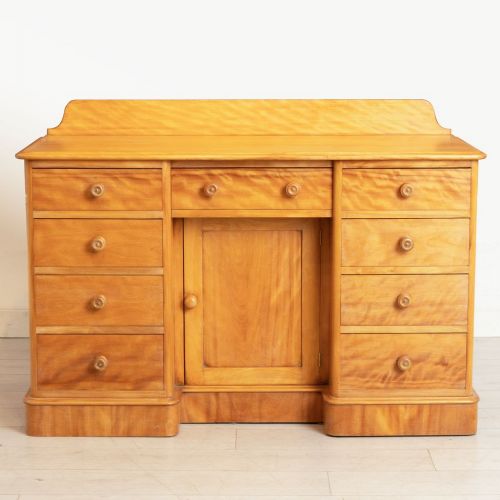


Blond Wood Dressing Table
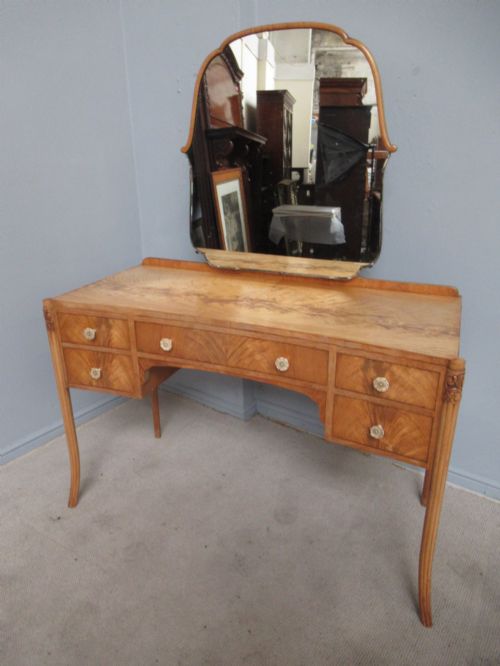
A blond wood dressing table brings warmth and light into a bedroom through pale veneers like birdseye maple, satin birch and sycamore.
Blond Wood Dressing Table
A blond wood dressing table is a light-toned piece of bedroom furniture designed for grooming, frequently incorporating mirrors and matching stools. When searching for a blond wood dressing table, buyers encounter examples ranging from 19th-century Victorian and Georgian pieces to modernist Art Deco designs from the 1920s and 1930s.
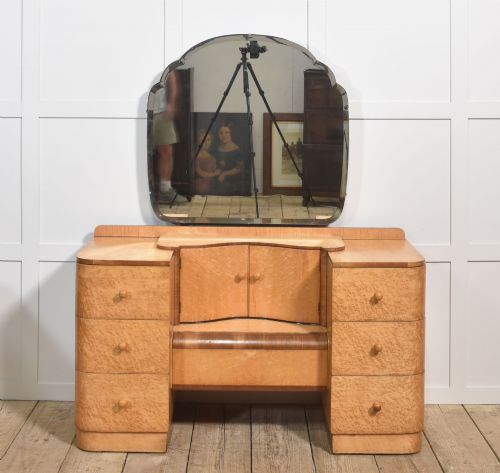
The selection on this page centres heavily on Art Deco maple and sycamore vanity tables, alongside earlier satin birch and satinwood items from the nineteenth century. Makers and houses such as Heal and Son, Hille, Harry and Lou Epstein, and Betty Joel produced notable variations of these pale wood designs.
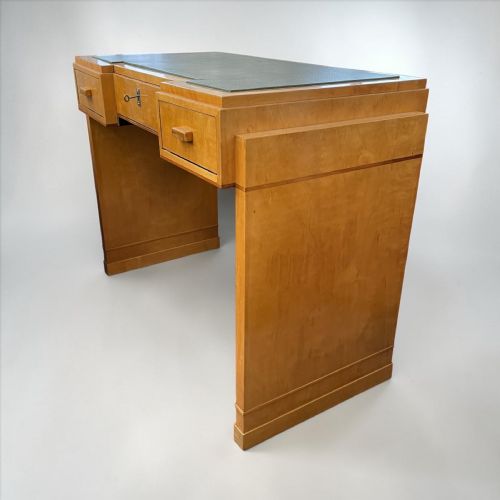
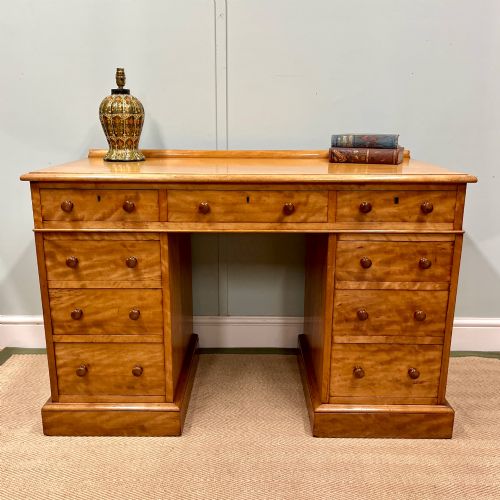
Forms extend beyond traditional dressing tables to include writing desks, kneehole desks, chests of drawers with mirrored backs, and matching dressing table stools. These pieces suit interiors that favour natural timber grain and lighter colour palettes over dark mahogany or walnut.
How they were made
Makers utilised light timbers such as birds eye maple, satin birch, sycamore, satinwood, Hungarian ash and pale mahogany to construct these surfaces. These woods were often applied as decorative veneers over solid secondary timbers to showcase complex grain patterns.
Mirrored glass panels, brass fittings, and inset leather surfaces were integrated into dressing tables and desks to provide functional contrast. Joinery methods varied from traditional 19th-century cabinet making to the streamlined geometric construction characteristic of the 1920s and 1930s.
Some Art Deco stools arrive wearing their original upholstery alongside newly added flowery top covers.
What varies in quality
Quality rests in the selection of the timber veneers and how symmetrically the grain patterns are matched across large surfaces like table tops and drawer fronts. Superior pieces display intricate figuring in materials like birdseye maple or burr maple that remains uninterrupted across the design.
The sophistication of the hardware, the integrity of the original mirror glass, and the precision of the cabinet construction separate standard production items from workshop pieces attributed to major makers. Cohesion between the dressing table and any associated stool or mirror further defines the standing of an individual piece.
Heal and Son·Harry and Lou Epstein·Hille·Betty Joel·John Taylor of Edinburgh
The Blond Wood Dressing Table Glossary
- Birds eye maple
- A figure in maple wood resembling tiny swirling eyes caused by local disruptions in the grain growth. It is highly prized for decorative veneer work on Art Deco furniture.
- Satin birch
- A pale, lustrous timber utilised extensively in nineteenth-century and early twentieth-century cabinet making. It offers a smooth surface that takes a fine polish.
- Kneehole desk
- A writing desk or dressing table featuring a central recessed space for the user's legs, flanked by pedestals of drawers. This form became popular during the Georgian and Victorian periods.
- Art Deco
- A design movement of the 1920s and 1930s characterised by streamlined geometric forms and modern materials. Dressing tables from this era often feature curved mirrors and symmetrical veneers.
Blond Wood Dressing Table: Frequently Asked Questions
How do I clean a blond wood surface?
Dust regularly with a soft, dry cloth to prevent dirt accumulation on the delicate veneer. Avoid using harsh chemical sprays or excess moisture, which can damage the polished finish.
Condition the wood periodically with appropriate furniture wax recommended for vintage timber. This preserves the natural pale tone without darkening the grain over time.
Can I use a dressing table as a desk?
Many dressing tables, particularly kneehole designs and pedestal forms from the Art Deco period, function effectively as compact writing desks. Their surface area accommodates laptop use while providing convenient drawer storage for everyday items.
Ensure the kneehole clearance suits your seating arrangements before daily use. Adding a coordinating stool or side chair completes the setup.
What is the difference between satin birch and satinwood?
Satin birch refers to a specific variety of birch timber exhibiting a natural sheen and pale colouring. It gained widespread popularity during the nineteenth century for bedroom suites and desks.
Satinwood comes from a distinct tropical tree family known for its dense, yellow-hued timber and silky texture. It was frequently utilised in high-status Georgian and Victorian cabinet making.
How do I date a piece of pale wood furniture?
Examine the construction methods, drawer linings, and hardware styles to determine the era of manufacture. Nineteenth-century pieces often feature hand-cut dovetails and solid secondary woods, whereas 1930s items display modernist geometric lines and sophisticated veneering.
Look for maker stamps, labels, or attribution details within drawers and on the underside of the carcase. Comparing the timber species and overall silhouette against known period examples helps narrow down the decade.