

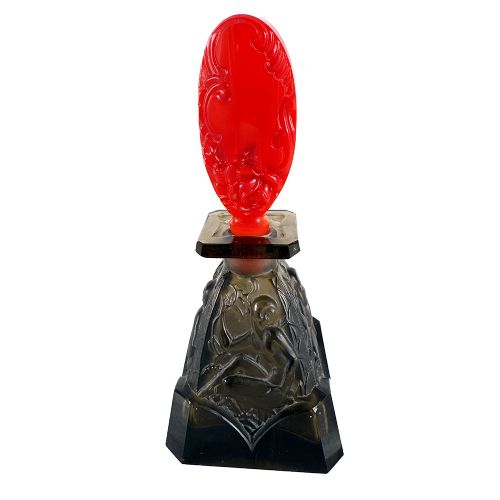


1930s Art Deco Scent Bottle
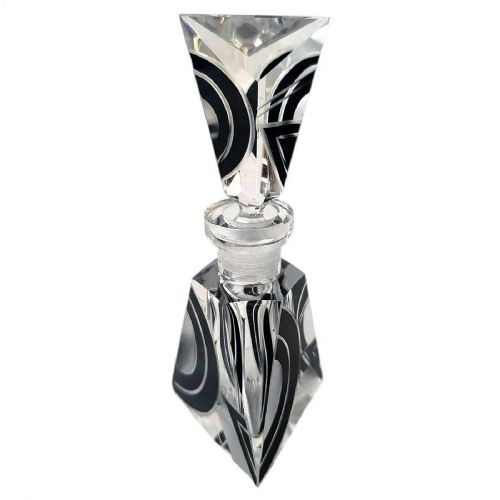
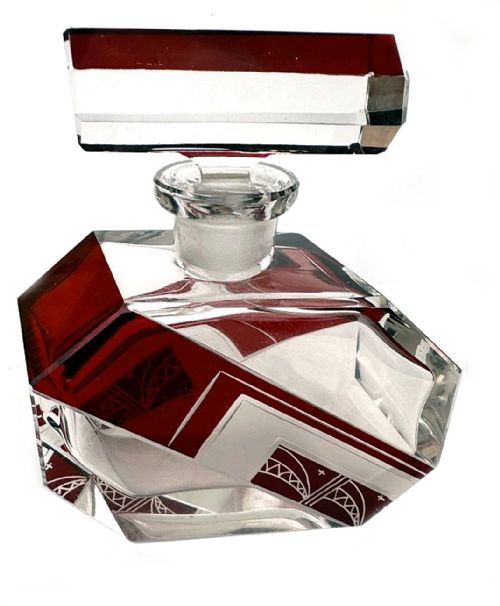
These 1930s art deco scent bottles combine geometric glass and enamel with period metalwork for the dressing table.
1930s Art Deco Scent Bottle
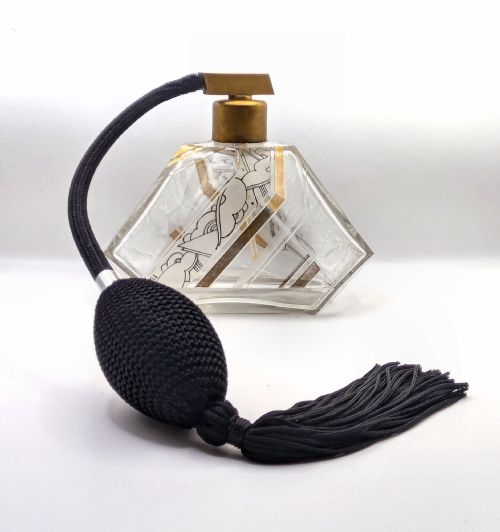
A 1930s art deco scent bottle is a functional vanity object designed during the interwar period to hold perfume. These pieces take the form of freestanding glass flasks, atomisers with bulb mechanisms, and matching vanity sets.
The objects stem predominantly from the 1930s with occasional 1920s examples, originating from makers and workshops in regions such as Bohemia, Czechoslovakia, France, and London. Buyers encounter standard stoppered bottles alongside mechanical atomisers mounted on stands.
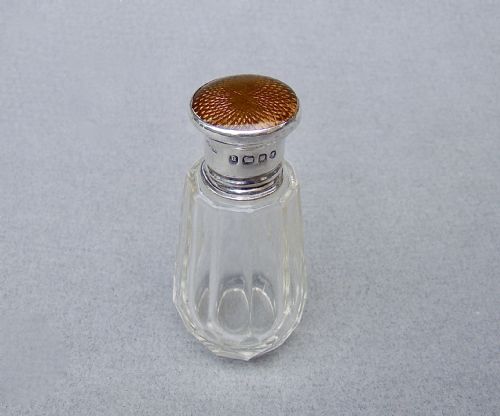
Glass forms the core of this category, appearing as cut crystal, moulded shapes, and opalescent finishes. Many examples incorporate sterling silver, chrome, fabric, and colourful enamel work on the collars and mounts.
How They Were Made
Makers utilised heavy crystal and glass, shaping pieces through cutting, moulding, and opalescent techniques to capture light. Geometric facets and sunray motifs were carved directly into the body of the vessel.
Metal components involved sterling silver and chrome, often paired with guilloche enamel in blue or other shades applied to collars and atomiser hardware. Artisans integrated fabric elements into specific spray mechanisms and presentation sets.
Listings feature glass, sterling silver, enamel, and chrome across pieces originating primarily from the 1930s.
What Varies in Quality
Quality rests upon the execution of the glasscutting and the depth of the enamel work on the silver mounts. Finer examples display crisp geometric lines and substantial crystal weight rather than simple pressed moulds.
Attribution to known makers such as Karl Palda or Sabino elevates a piece above anonymous production. The complexity of the atomiser mechanism and the preservation of the enamel also dictate the standing of individual items.
Karl Palda·Henry Perkins·Rudolf Hlousek·Rene Lalique·Sabino·Hermanova
The 1930s Art Deco Scent Bottle Glossary
- Atomiser
- A perfume bottle fitted with a bulb and spray mechanism. This allows the user to mist fragrance rather than apply it directly from a stopper.
- Guilloche enamel
- Decorative metalwork featuring intricate geometric patterns engraved beneath translucent enamel. This technique appears frequently on silver collars.
- Opalescent glass
- Glass containing ingredients that create a milky, multi-coloured glow when light strikes the surface. Makers used this effect for sculptural bottles.
- Sterling silver
- A silver alloy containing ninety-two point five percent pure silver by mass. It provides durable mounts for enamel work on dressing table items.
1930s Art Deco Scent Bottle: Frequently Asked Questions
How do I use an atomiser bottle?
Squeeze the attached bulb to create air pressure that draws perfume up through the internal tube and releases a fine mist. Ensure the interior remains clean to prevent clogging of the metal spray nozzle.
Store the bottle upright on a stable surface to protect the mechanism from sticking. Avoid submerging the bulb assembly in water during routine cleaning.
What materials are typical for these bottles?
The primary body consists of glass, crystal, or opalescent glass shaped into geometric or moulded forms. Mounts and collars frequently incorporate sterling silver, chrome, and coloured enamel.
Some examples include fabric components within the atomiser assembly. These diverse materials reflect the manufacturing traditions of European glasshouses.
How do I clean enamel and silver mounts?
Wipe silver and enamel surfaces gently with a soft, dry cloth to remove dust and oils. Avoid harsh chemical polishes that can damage the delicate enamel work surrounding the collar.
Keep moisture away from the interior of vintage atomiser mechanisms during maintenance. Regular gentle care preserves the original finish of the metalwork.
Where were these pieces manufactured?
Production centred in European glass-making regions, particularly Bohemia and Czechoslovakia, alongside significant contributions from French studios. London silversmiths also provided hallmarked mounts for imported glass bodies.
Makers across these areas exported vanity items globally throughout the interwar period. Regional styles often reveal themselves through specific cutting patterns and enamel colours.