

1930s Armchairs Pair
A 1930s armchairs pair brings interwar character to a room, offering matching comfort and striking design.
1930s Armchairs Pair
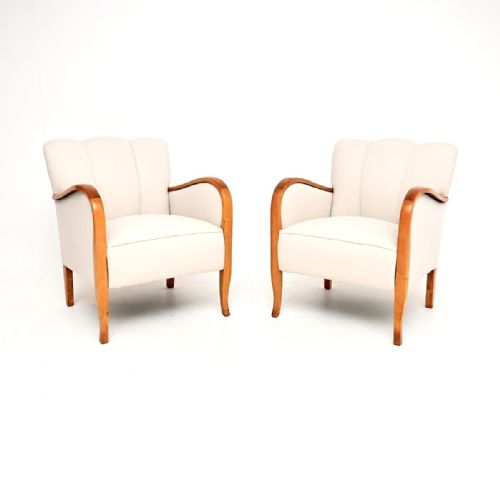
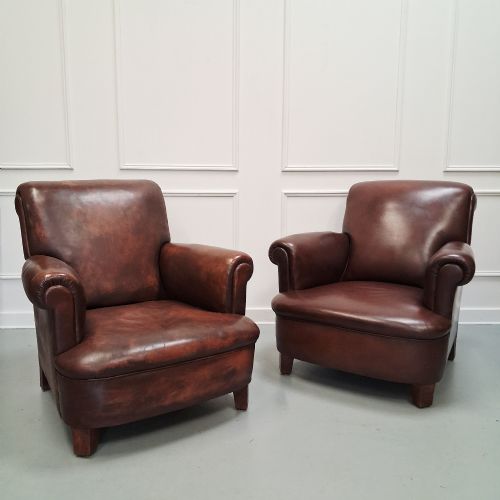
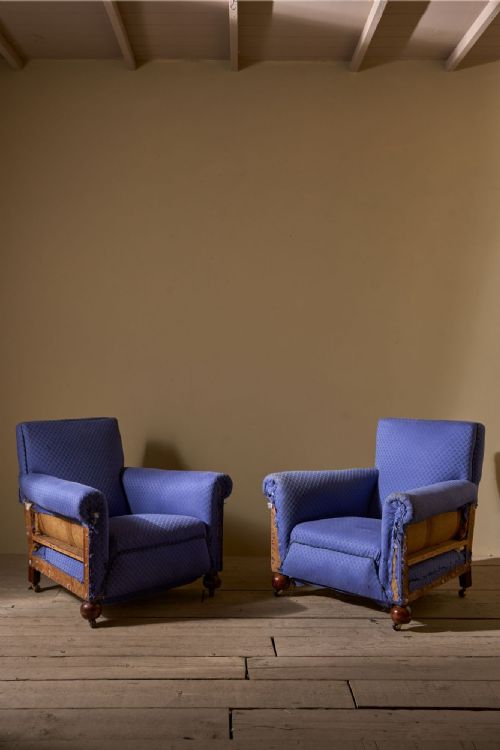
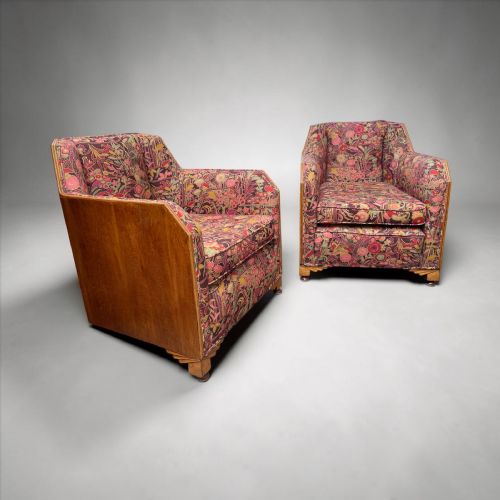
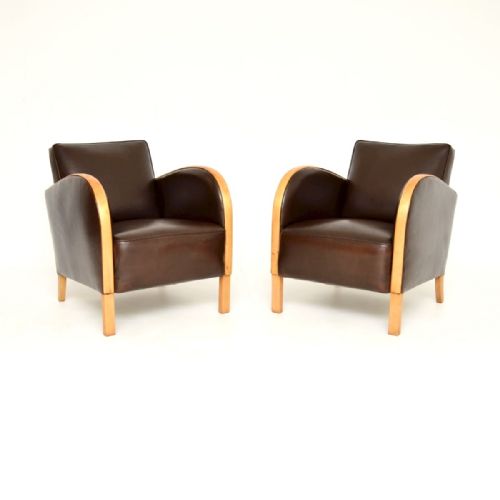
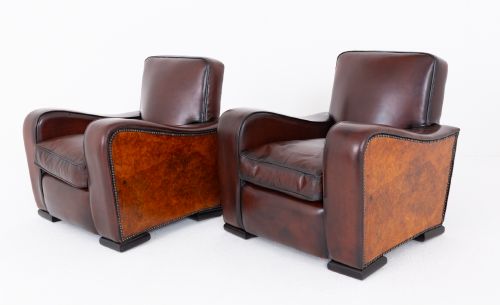
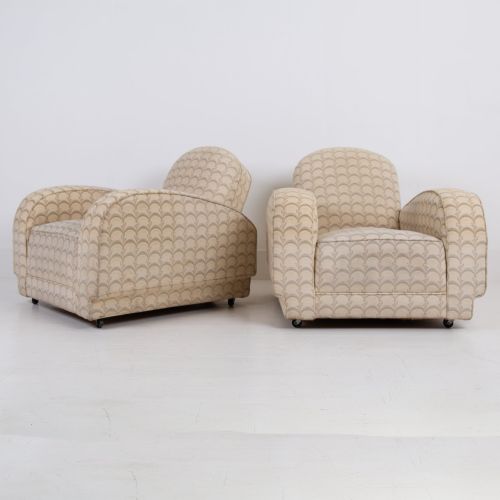
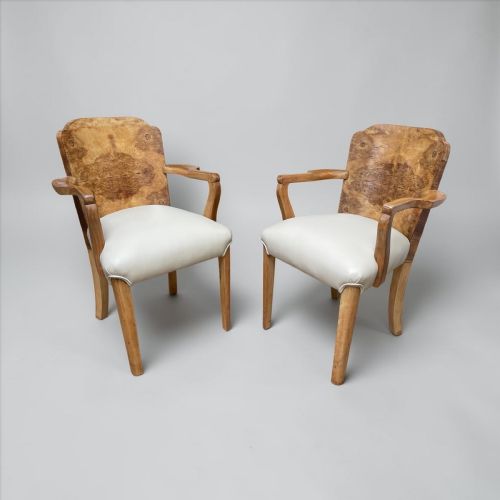
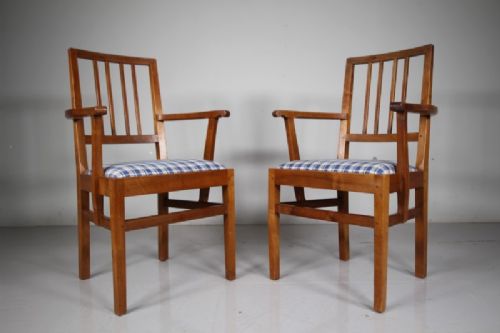
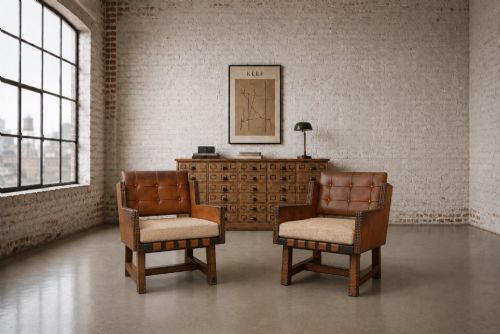
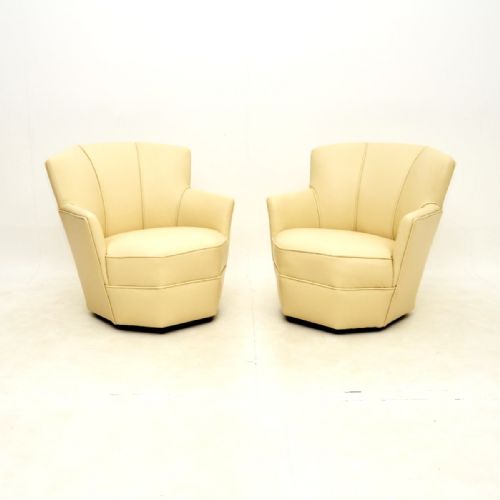
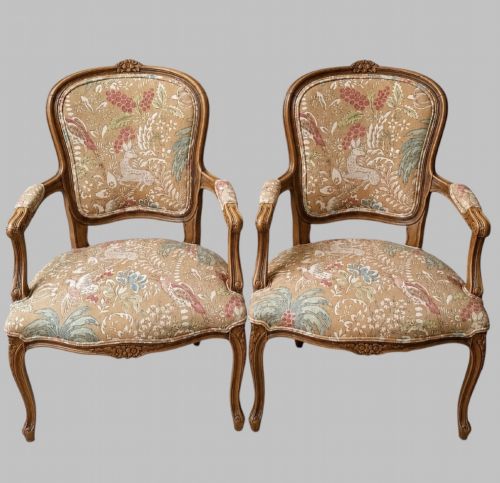
When you search for a 1930s armchairs pair, you encounter seating designed during an era of significant stylistic variety. The selections span French club chairs, Swedish birch designs, and traditional revival forms.
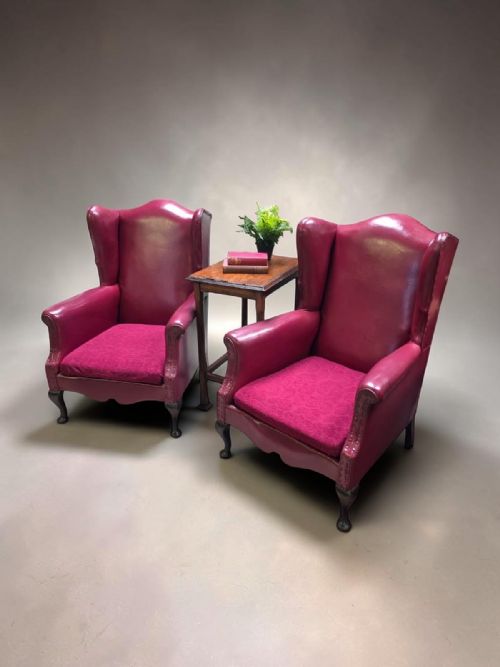
Most entries belong to the Art Deco movement, alongside Arts & Crafts, Neo-Rococo, and Queen Anne Revival styles. These seats appear in formats ranging from low occasional chairs to deep lounge suites.
Origin points include English, French, and Scandinavian workshops. Buyers frequently meet club chairs upholstered in leather or occasional chairs framed in timber.
How they were made
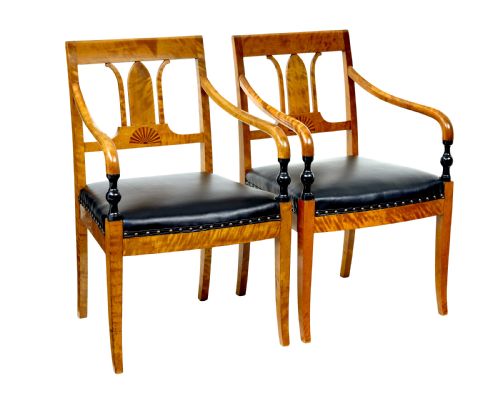
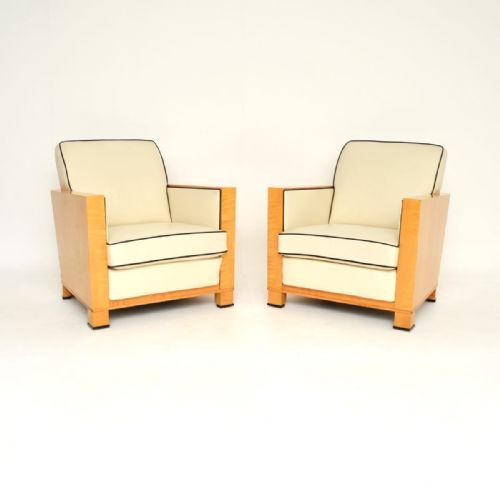
Frames rely on solid timbers including oak, walnut, beech, elm, and satin birch, alongside structural hardwood. Cabinetmakers shaped these woods into curved club profiles and open-arm frameworks.
Upholstery relies on leather, such as cigar brown or green hides, paired with various fabrics. Button-back techniques and cloud-shaped padding define the plush cushioning of the period.
Cast iron garden armchairs from this era occasionally feature fierce lion masks gazing out from the armrests.
What varies in quality
The distinction between tiers rests on timber selection and grain figuring. Pieces utilising burr birch, figured walnut, or select satin birch exhibit superior cabinetmaking ambition.
Another division lies in the integrity of the original frames and the execution of period-appropriate upholstery work. Maker attribution, such as stamped Hille or Epstein pieces, further distinguishes the upper echelon.
Hille·Edward Barnsley·Harry and Lou Epstein·Dicon Nance St. Ives Studio
The 1930s Armchairs Pair Glossary
- Club chair
- A deep, low-slung armchair traditionally upholstered in leather. These seats prioritise robust comfort and heavy proportions.
- Art Deco
- A design style dominant in the interwar period featuring streamlined curves, geometric symmetry, and polished veneers. It departed heavily from Victorian ornamentation.
- Satin birch
- A pale, lustrous timber utilised extensively in Swedish modern and Art Deco cabinetmaking. Its grain offers a distinctive golden shimmer.
- Open armchair
- A seat featuring unpadded wooden armrests rather than fully upholstered sides. These frames highlight the exposed grain of oak or walnut.
- Occasional chair
- A light, movable seat designed for intermittent use rather than primary lounging. They often feature decorative woodwork and slender proportions.
1930s Armchairs Pair: Frequently Asked Questions
How do I style a 1930s armchairs pair?
These matching seats anchor a living space by providing symmetry and a distinct focal point. Position them opposite a sofa or flanking a fireplace to highlight their profile.
Their interwar styling complements both modern minimalist interiors and traditional rooms. Allow enough surrounding floor space to display the woodwork and leather or fabric upholstery clearly.
What materials were used in these chairs?
Makers utilised a diverse palette of hardwoods and softwoods for the structural frames. Walnut, oak, beech, elm, and satin birch appear frequently across the listings.
Upholstery materials range from smooth leather hides to various woven fabrics. Timber veneers provide surface pattern, particularly on Art Deco examples.
Are these chairs comfortable for daily use?
The seating designed in this decade prioritised ergonomics and relaxation, especially lounge and club variants. Deep cushions and sprung bases provide substantial support.
Many listings note recent or full reupholstery work. This ensures internal padding meets modern standards while retaining the original external silhouette.
How do I identify Art Deco chairs?
Art Deco seating is characterised by clean geometric lines, rounded cloud shapes, and polished wood veneers. The forms often emphasise horizontality and streamlined curves.
Materials like satin birch and walnut reinforce this aesthetic. Unlike earlier revival styles, these pieces shed heavy carving in favour of sleek surfaces.