


Carved Foot Club Chair
These carved foot club chair pieces bring solid comfort and rich historic character to a room, offering tactile materials and traditional craftsmanship.
Carved Foot Club Chair
When you search for a carved foot club chair, you encounter a robust seating form spanning the Victorian, Edwardian, and Art Deco eras. These armchairs combine substantial frames with supportive upholstery designed for long periods of sitting.
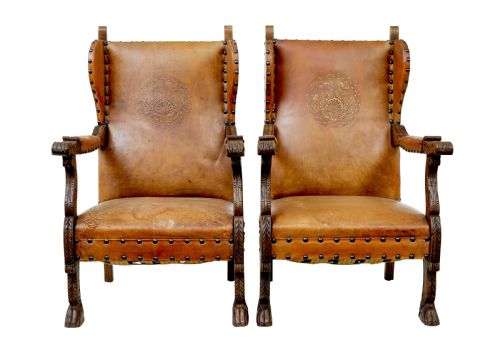
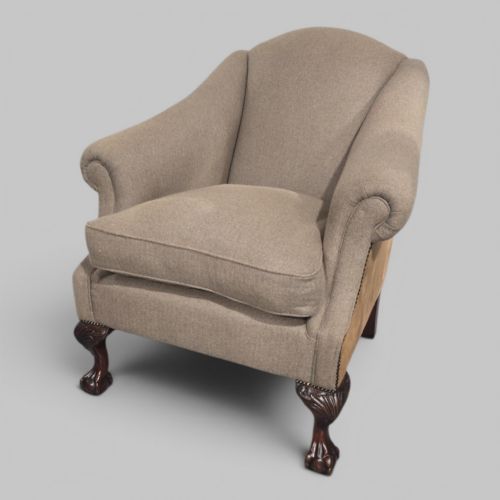
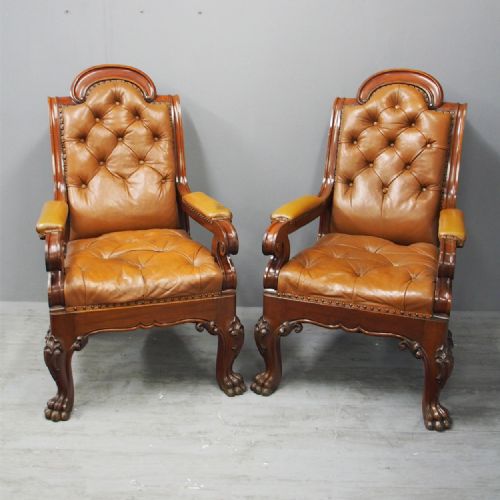
The versions you are most likely to meet on this page include mahogany, oak, and walnut frames paired with leather or fabric upholstery. Many feature distinct claw and ball feet that anchor their proportions to the floor.
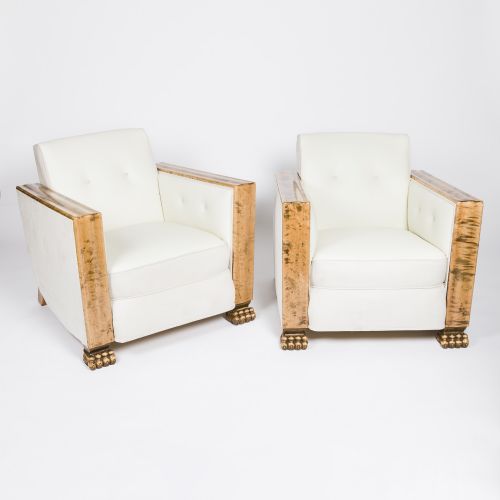
Originating across the nineteenth and early twentieth centuries, these pieces draw on revival styles such as Chippendale and Victorian Gothic alongside clean Art Deco lines. They serve as focal points in studies, libraries, and sitting rooms.
Materials and construction
Makers built the foundational frames of these armchairs using dense hardwoods like mahogany, oak, walnut, elm, and birch. These timbers provided the structural integrity needed to support deep seating and elaborate carved details.
Upholstery traditionally utilised durable materials including heavy leather, wool, and woven fabric, often secured with brass tacks. Selected pieces incorporated specialised elements like embossed leather or woven bergere panels.
Carvers shaped wooden components by hand, detailing elements such as claw and ball feet directly into the legs. Joinery relied on traditional methods to ensure stability across decades of daily use.
Listings feature items spanning the Victorian era through the 1930s, utilising leather, mahogany, oak, walnut, and wool.
Distinctions in quality
The caliber of a carved foot club chair rests upon the crispness of its woodwork and the integrity of its frame. Crisp, deep carving on the feet and legs demonstrates the hand of a skilled artisan rather than hurried production.
Materials dictate the upper tier of the range, particularly heavy hides, burr birch veneers, and dense timbers like mahogany and walnut. Superior examples maintain firm structural support and retain their original upholstery materials where applicable.
Proportion and presence separate standard seating from exceptional pieces. Chairs that balance heavy wooden elements with harmonious upholstery lines command attention in any interior scheme.
George Bullock·Howard & Son's
The Carved Foot Club Chair Glossary
- Claw and ball foot
- A furniture foot carved to resemble a bird's talon grasping a spherical ball. This motif appeared frequently in eighteenth-century design and later revival periods.
- Bergere
- An enclosed upholstered armchair with wooden framing exposed around the sides and back. The arm panels frequently feature woven cane or rush.
- Victorian Gothic Revival
- A nineteenth-century design movement drawing inspiration from medieval architecture and forms. Pieces from this era often incorporate pointed arches, heavy tracery, and dark woods.
- Art Deco
- A design style dominant in the 1920s and 1930s characterised by streamlined geometric shapes and modern materials. It marked a departure from historical revivalism towards sleek functionality.
- Chippendale Revival
- A late nineteenth and early twentieth-century movement recreating the distinctive mid-eighteenth-century designs of Thomas Chippendale. These items frequently showcase ornate carved woodwork and cabriole legs.
Carved Foot Club Chair: Frequently Asked Questions
What is a club chair?
A club chair is a heavily upholstered comfortable armchair designed for relaxation, typically featuring deep seating and supportive armrests.
Historically found in gentleman's clubs and private libraries, these pieces evolved through various stylistic periods while retaining their primary focus on comfort.
Are these chairs comfortable?
These armchairs were specifically engineered for extended sitting, offering generous proportions and supportive backrests. The deep cushioning provides a sturdy yet accommodating seat.
Over the decades, internal suspension and padding may vary depending on past restoration work, influencing the exact feel of the seat.
Where should I place one?
These substantial armchairs suit studies, libraries, and living rooms where they can anchor the surrounding furniture arrangement. Their distinctive carved feet and leather or wood finishes make them natural focal points.
Pairing them with a reading lamp or a low side table creates a functional and visually balanced reading corner.