


1920s Standing Lamp
A 1920s standing lamp brings height and ambient light to a room, offering both decorative presence and period utility.
1920s Standing Lamp
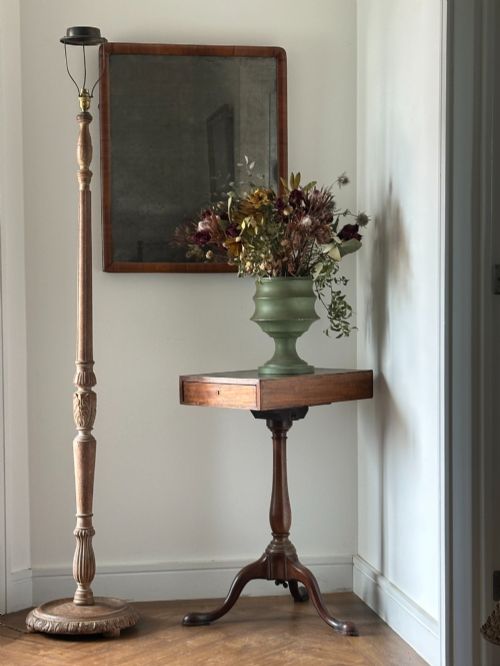
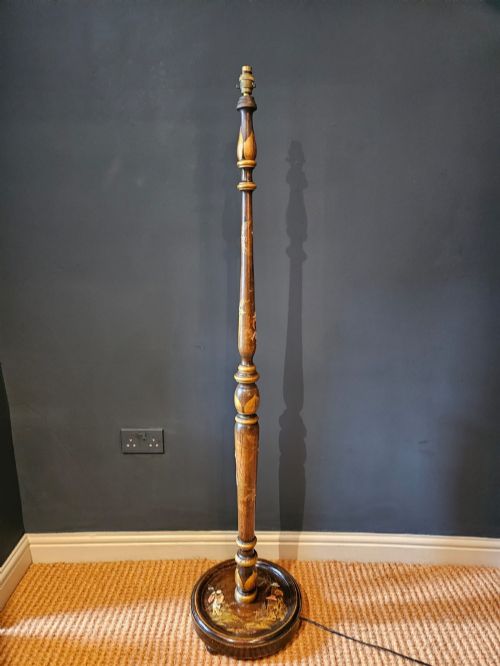
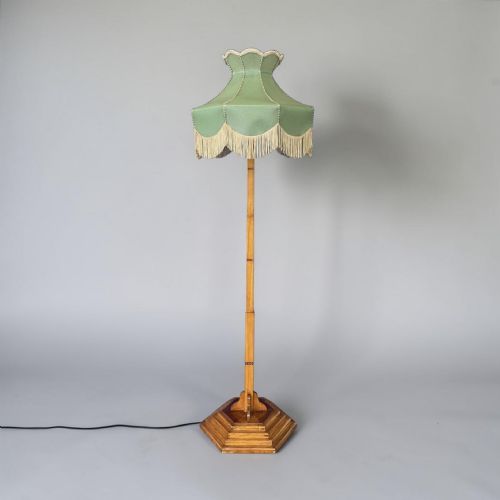
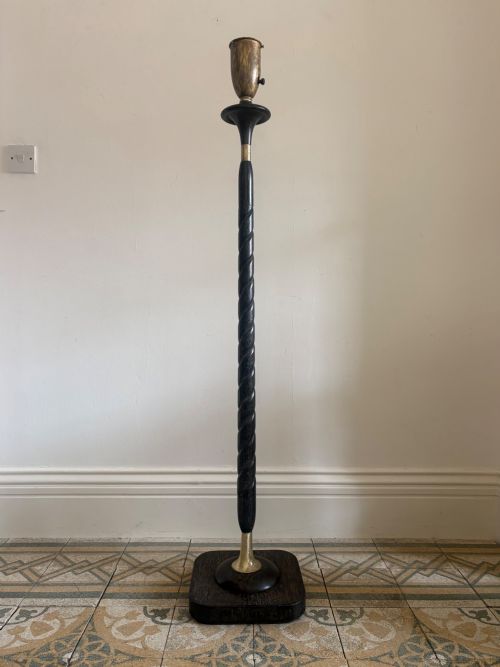
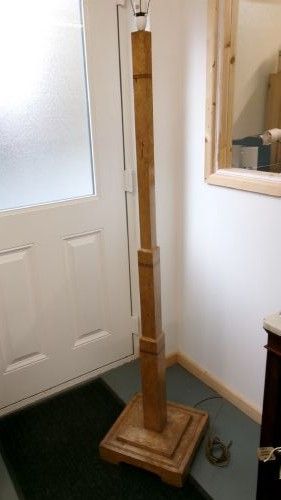
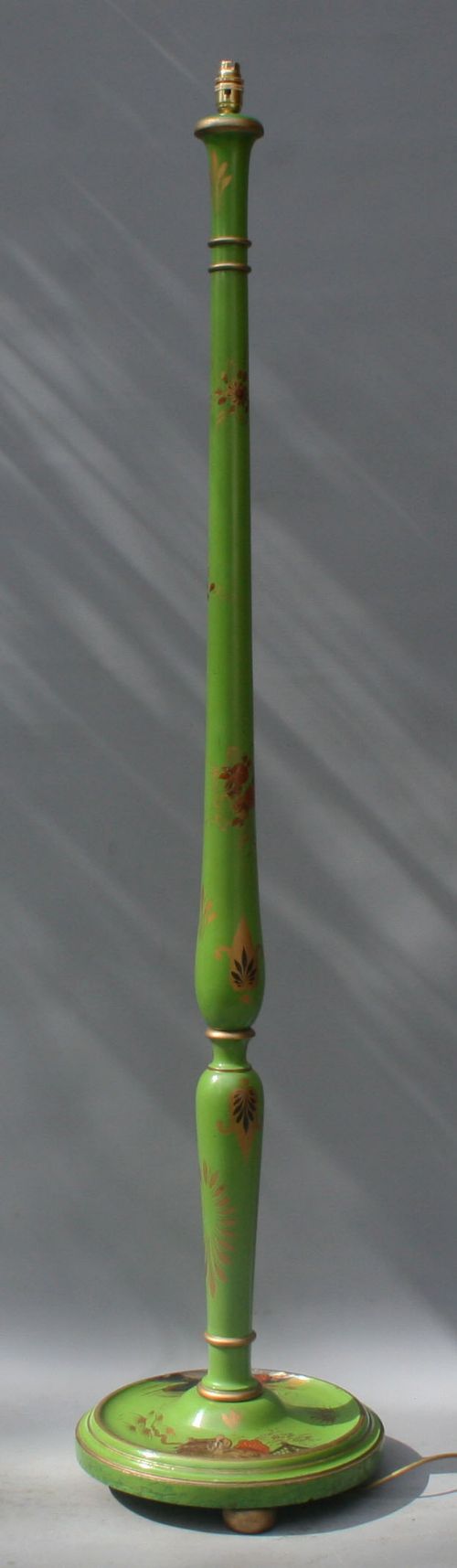
A 1920s standing lamp is a tall lighting fixture designed to rest directly on the floor, illuminating a room from an elevated position. These pieces are frequently encountered as standard lamps or floor lamps in oak, walnut, brass, and chrome. The selections span styles such as Art Deco, Jacobean Revival, Chinoiserie, and Arts and Crafts.
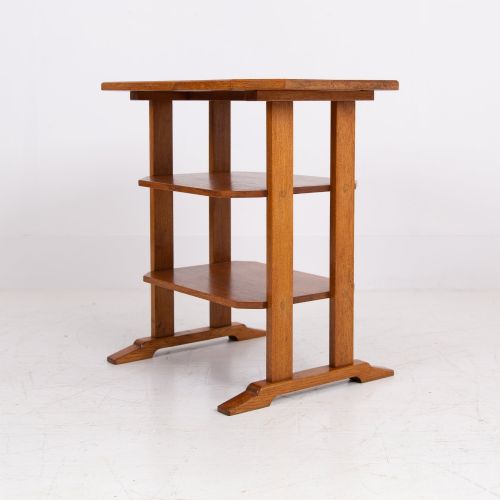
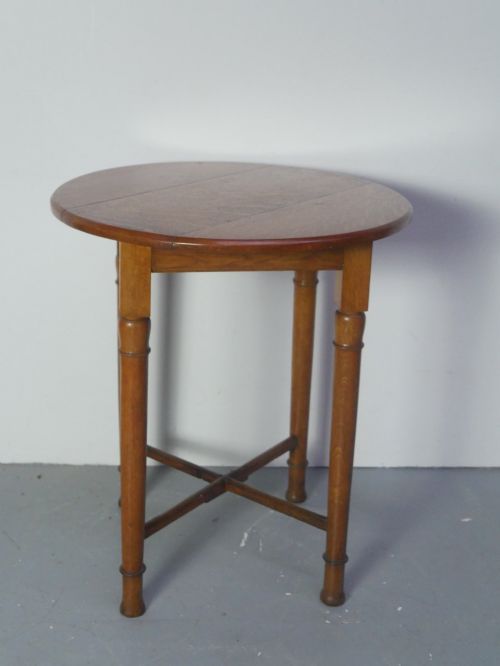
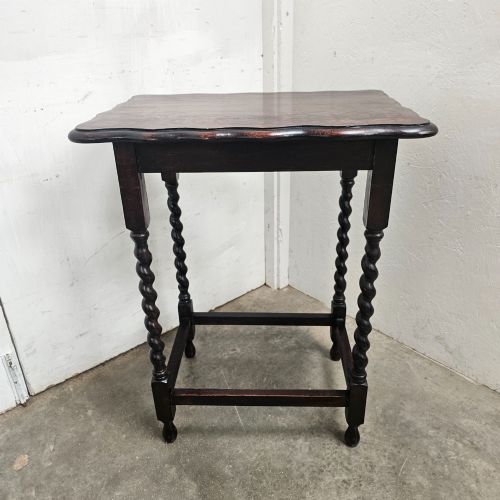
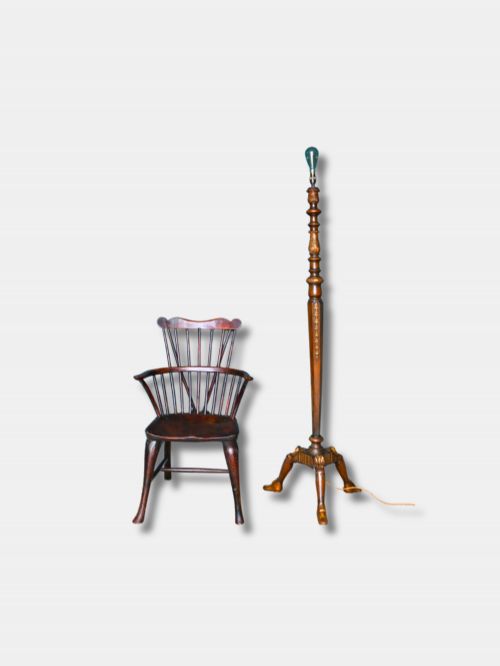
Buyers will find these tall lamps paired with smaller companion forms like side tables, occasional tables, and console tables. The proportions vary from slender turned shafts to substantial carved wooden columns resting on tripod or circular bases. Many examples utilise traditional joinery and turnings typical of the early twentieth century.
Origins range from English workshops to French studios and Italian ateliers, reflecting diverse regional tastes of the period. Whether finished in bright metal or rich dark wood, each piece serves as a primary vertical lighting element in a traditional or modern interior.
Materials and construction methods
Makers utilised solid oak, walnut, and padouk, often shaping the timber into barley twist columns, octagonal shafts, or carved torchere forms. Wood surfaces received limed finishes, ebonisation, or gilding to enhance the grain and decorative detail.
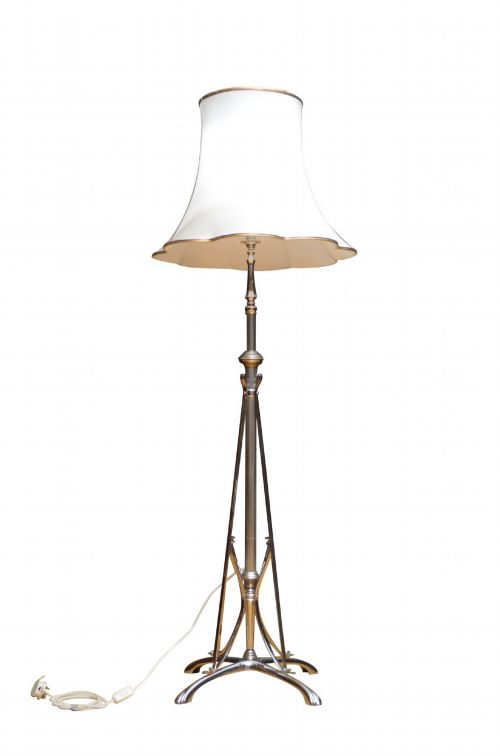
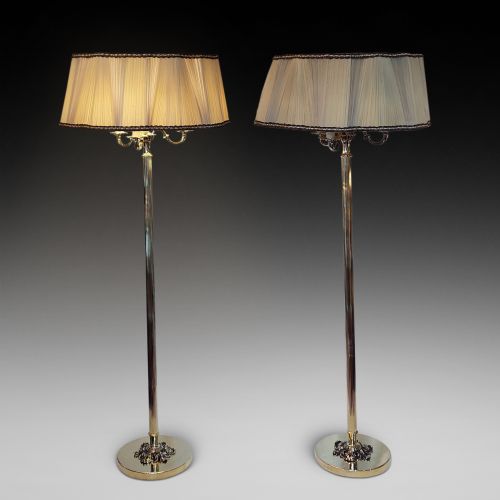
Metalworking played an equal role, with brass and chrome utilised for adjustable floor lamps and uplighters. These metallic components allowed for height adjustments and directional lighting, supported by weighted bases for stability.
Listings feature oak and walnut woods alongside brass and chrome metals across multiple periods.
Distinguishing quality in period lighting
Quality rests in the weight of the base and the integrity of the timber or metal fabrication. Solid hardwoods and heavy cast brass provide stability, whereas lesser examples rely on lighter constructions or composite materials.
The precision of the carving, the execution of applied decorations such as Chinoiserie motifs, and the smoothness of adjustable mechanisms separate standard production from superior pieces.
The 1920s Standing Lamp Glossary
- Standard lamp
- A tall floor-standing lamp designed to illuminate a room from above. These fixtures usually feature a heavy base and a vertical column supporting a shade.
- Barley twist
- A spiral turning resembling a twisted rope, commonly found on wooden lamp shafts and table legs. This decorative woodworking technique was popular during the early twentieth century.
- Uplighter
- A type of lamp designed to direct light upwards toward the ceiling. They appear in brass and other metals from the interwar period.
- Torchere
- A tall ornamental stand or lamp modelled on a torch holder. Examples from this era often feature carved wooden shafts and decorative vase-like profiles.
- Chinoiserie
- European decorative art influenced by Chinese styles and motifs. These painted and lacquered finishes appear on selected lamp standards.
1920s Standing Lamp: Frequently Asked Questions
How do I place a 1920s standing lamp in a room?
Position the lamp in a corner or beside seating to provide ambient illumination at a comfortable height.
Ensure the cord reaches a wall socket safely without stretching across main pathways.
What materials are common in 1920s standing lamps?
Woods such as oak, walnut, and padouk appear frequently alongside metals like brass and chrome.
Fabric shades and glass elements complete the construction of these lighting fixtures.
How do I identify an Art Deco standard lamp?
Look for geometric lines, sleek chrome finishes, or blonde walnut surfaces.
These designs often feature simplified forms that contrast with earlier revival styles.
Can I adjust the height of these floor lamps?
Certain metal models include adjustable mechanisms on the central shaft.
Wooden versions are fixed in height according to their original manufacture.