


1920s Solid Oak Table
A 1920s solid oak table brings sturdy interwar character and honest timber into a room without fuss.
1920s Solid Oak Table
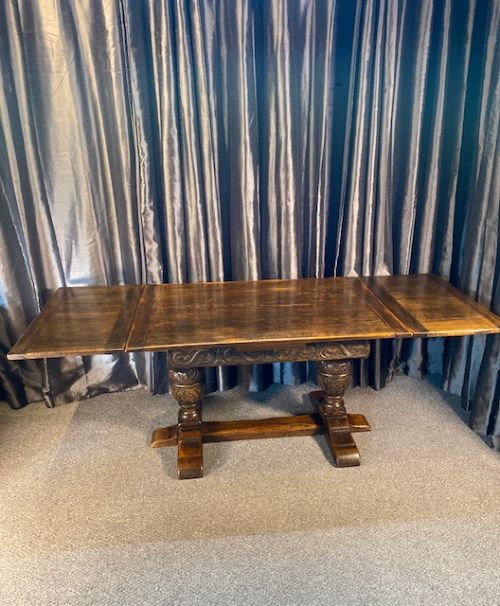
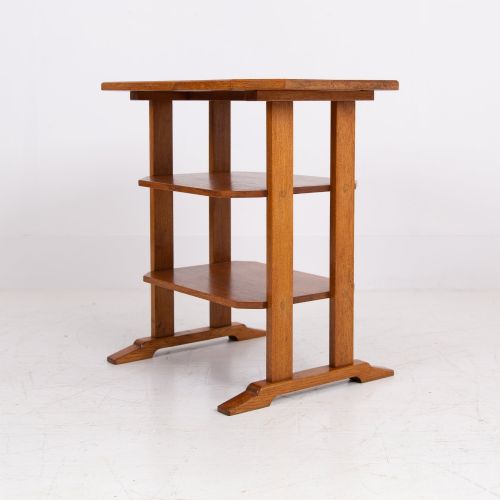
A 1920s solid oak table spans a practical variety of domestic forms, ranging from substantial refectory and draw leaf dining tables to compact occasional, side, and coffee tables. These pieces emerge from an era that balanced traditional craft with interwar utility, often drawing on earlier vernacular forms.
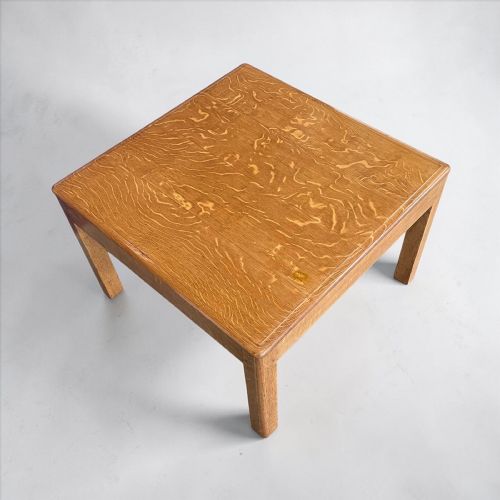
The most common versions met here include occasional and coffee tables alongside larger dining formats like refectory and draw leaf pieces. Makers utilised solid oak throughout, sometimes applying quarter-sawn boards to reveal distinctive medullary rays in the grain.
Stylistic influences across these forms lean toward Jacobean Revival, Arts and Crafts, and early Art Deco. Pieces such as Cotswold School tables or folding reading designs show how workshops adapted sturdy oak for modern living spaces.
How they were made
Construction relies heavily on solid oak timber, frequently utilising quarter-sawn boards that offer stability and a decorative grain pattern. Joinery is straightforward and robust, designed to withstand daily use without relying on elaborate veneers.
Metal components such as brass or basic iron hardware appear functionally on hinges, handles, or folding mechanisms. Occasional glass inserts appear in specific designs, though oak remains the primary structural medium across all recorded forms.
Listings feature solid oak across dining, coffee, and occasional forms, spanning Jacobean Revival, Arts and Crafts, and Art Deco styles.
What varies in quality
The distinction between standard production and finer work lies in the selection of timber and the nuance of the design. Quarter-sawn oak displays a more striking grain figure than plain-sawn boards, marking out pieces from more considered workshops.
Proportion and construction detail elevate individual examples. Pieces associated with specific makers or regional movements like the Cotswold School demonstrate superior hand-finishing and thoughtful joinery compared to utilitarian factory output.
Betty Joel·Heals
The 1920s Solid Oak Table Glossary
- Quarter-sawn oak
- Timber cut radially from the log, producing a distinct striped grain pattern known as medullary rays. This cut offers greater dimensional stability.
- Draw leaf table
- A dining table equipped with two sliding leaves stored beneath the main top that pull out to extend the surface area.
- Refectory table
- A long, narrow dining table traditionally used for communal dining, characterised by sturdy legs joined by low stretchers.
- Jacobean Revival
- A decorative style popular in the early twentieth century that imitates seventeenth-century English furniture, often featuring turned legs and geometric moulding.
- Cotswold School
- An influential twentieth-century design movement focusing on honest construction and traditional hand-craftsmanship in wood.
1920s Solid Oak Table: Frequently Asked Questions
How do I identify a 1920s oak table?
Look for construction traits typical of the interwar period, such as solid oak timbers, simple draw leaf mechanisms, and styles blending Jacobean Revival or Arts and Crafts influences. The absence of modern laminates and the presence of period hardware offer further clues.
Examine the legs and stretchers for turned elements like barley twist details or trestle supports. The use of quarter-sawn oak with visible medullary rays is also common in better quality examples from this decade.
Are these tables suitable for daily dining?
Many of these pieces, particularly the refectory and draw leaf formats, were built specifically for daily meals. Solid oak construction provides the durability needed for regular use.
Consider the clearance of the stretcher base and the height of the apron when pairing chairs with these tables. Draw leaf versions offer flexibility for expanding the surface when hosting guests.
What is quarter-sawn oak?
Quarter-sawn oak is timber cut at right angles to the annual growth rings. This method yields boards with enhanced resistance to warping and shrinking.
Visually, this cut reveals striking decorative flakes or medullary rays across the surface. It was frequently utilised on the top boards of better quality tables from the period.
How do I care for solid oak furniture?
Maintain solid oak surfaces by dusting with a dry cloth and avoiding excessive moisture or direct heat sources. Natural wax finishes can be reapplied periodically to nourish the grain.
Protect the timber from spills and sharp temperature changes to prevent the wood from splitting. Simple preventative care preserves the original tone and finish of the interwar surface.