



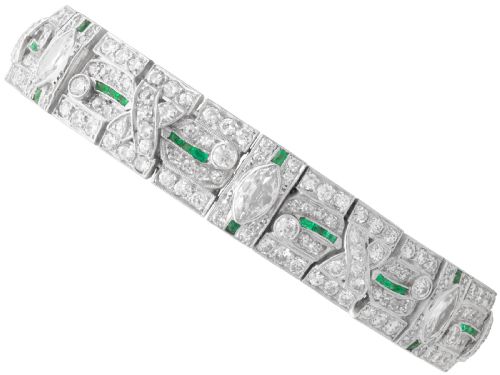


1920s Platinum Bracelet
A 1920s platinum bracelet brings geometric brilliance and enduring strength to the wrist, offering genuine Art Deco style for daily wear.
1920s Platinum Bracelet
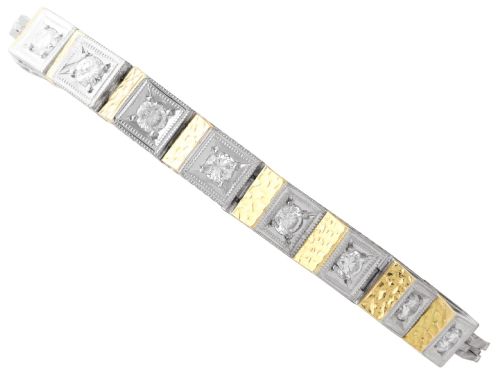
A 1920s platinum bracelet embodies the geometric spirit of the Art Deco era, appearing primarily as line or tennis bracelets alongside cocktail watches. These pieces span the 1920 and 1930 periods, showcasing structured metalwork designed to sit flat against the skin.
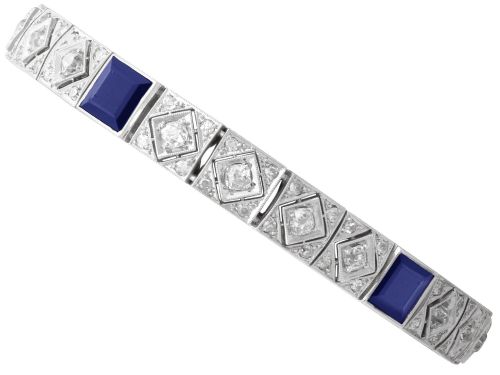
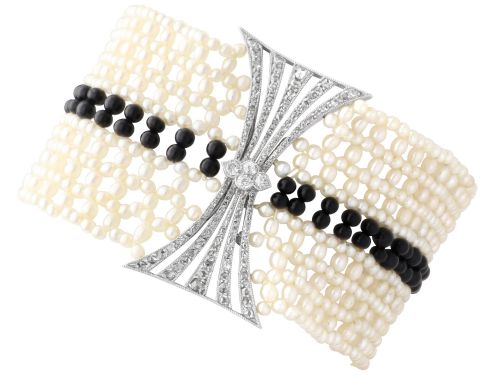
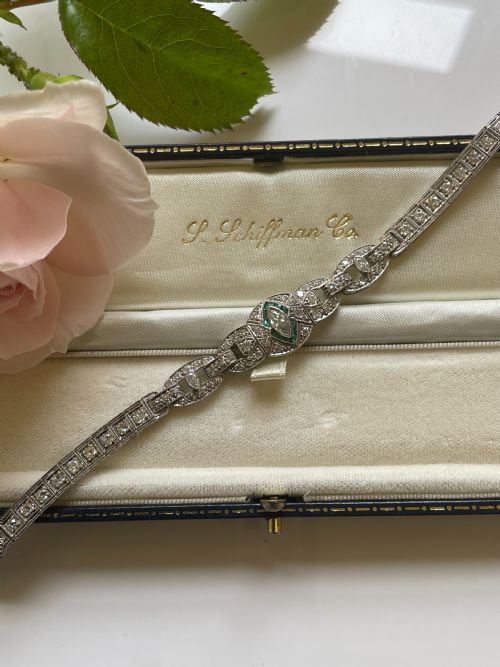
The objects seen here consist chiefly of diamond-set links fashioned in platinum, often accompanied by calibre-cut sapphires or emeralds. Occasional examples integrate yellow gold or white gold mesh structures alongside the dominant platinum settings.
Origin details in this category sometimes point to French manufacture, reflecting the high standards of European jewellery workshops during the period. Buyers encountering these items find rigorous geometric layouts dominated by old-cut stones.
Materials and construction
Platinium served as the primary structural metal because its natural strength allowed jewellers to form delicate, knife-edge settings while holding substantial stone weight securely. This dense metal supported intricate pierced work without requiring thick bands.
Diamonds dominate the construction, paired with accent stones such as emeralds and sapphires set in symmetrical line arrangements. Metal variations include white gold and yellow gold components in specific watch and bracelet combinations.
1920s Platinum Bracelet Retail Price Guide 2026
Typical asking prices for 1920s platinum bracelet among the pieces listed under this phrase on Sellingantiques today, from the lower quarter to the upper quarter. They describe what is for sale here now, not the wider market.
Some platinum line bracelets hide their clasps so cleverly that finding the release mechanism requires a minor investigation.
Assessing quality in period pieces
Quality rests heavily on the uniformity and cut of the diamonds, particularly the old-cut stones that catch ambient light with softer, broader flashes than modern brilliant cuts. The precision of the platinum link articulation dictates how fluidly the piece wraps around the wrist.
The integration of coloured gemstones like emerald and sapphire alters the character of the piece, with calibre-cut stones demanding exact placement within the metal grid. Superior examples maintain structural integrity across complex pierced platinum designs without looseness in the hinge joints.
The 1920s Platinum Bracelet Glossary
- Art Deco
- A design style dominant in the 1920s and 1930s characterised by symmetry, geometric lines, and streamlined elegance. It rejected Victorian ornamentation in favour of modern industrial influences.
- Platinum
- A dense, white precious metal prized for its strength and resistance to tarnish. It permits secure, ultra-fine claw and bezel settings for diamonds.
- Line bracelet
- A flexible bracelet featuring a continuous line of gemstones set in metal links. These items often feature diamonds in a uniform or graduated arrangement.
- Old-cut diamond
- A predecessor to the modern brilliant cut, featuring a smaller table, higher crown, and open culet. These stones were cut by hand to maximise sparkle under candlelight.
- Calibre-cut
- Small gemstones cut specifically in geometric shapes to fit tightly together within a designated channel or border. This technique creates continuous blocks of colour in high-end jewellery.
1920s Platinum Bracelet: Frequently Asked Questions
How do I wear a delicate line bracelet?
These items pair well with evening wear or structured daytime tailoring where their geometric profile remains visible. Their flexible links allow them to sit comfortably alongside a wristwatch.
Care should be taken to secure the clasp properly before fastening it around the wrist for extended wear.
What defines the Art Deco style?
Art Deco design relies on straight lines, repeating geometric patterns, and symmetrical arrangements that reflect machine-age influences. This aesthetic replaced earlier flowing floral motifs with crisp architectural precision.
Jewellery from this movement uses platinum to create light, airy structures filled with diamonds and contrasting coloured stones.
Are these bracelets suitable for daily wear?
Platinum provides exceptional durability, making the metal framework robust enough for regular use. The underlying hinge and link construction should be checked periodically by a specialist to ensure ongoing security.
Gentle cleaning with warm soapy water helps maintain the brilliance of the old-cut diamonds.
How do I distinguish 1920s pieces from later work?
Period pieces from the 1920s and 1930s utilise specific hand-cut diamond geometries and heavy platinum usage that differ from mid-century manufacturing methods. The integration of calibre-cut emeralds or sapphires often points directly to this timeframe.
Examining the link flexibility and the patina of the white metal helps confirm its era.