

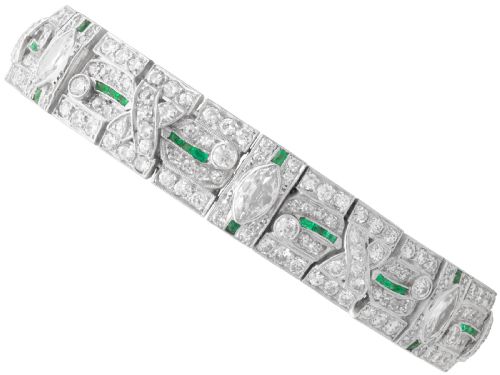


Vintage Platinum Cuff
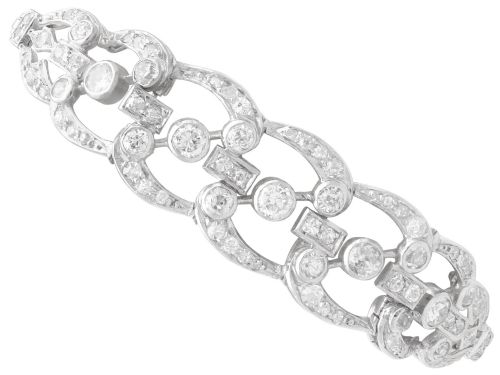
A vintage platinum cuff offers striking geometry and substantial diamond weight, making it a definitive statement piece for collectors of fine period jewellery.
Vintage Platinum Cuff
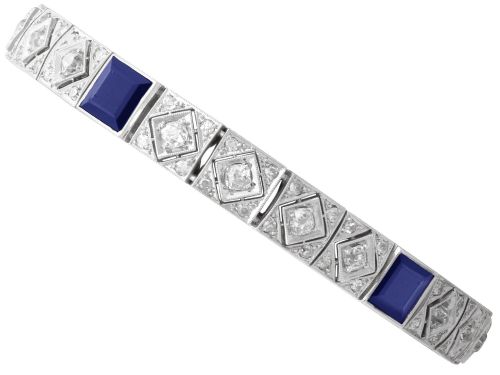
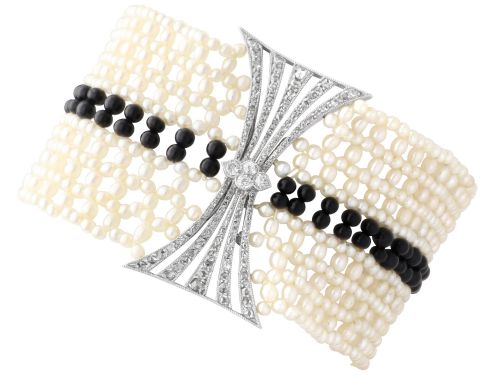
A vintage platinum cuff encompasses intricate bracelets spanning the Edwardian era through the mid-century period. Buyers searching for a vintage platinum cuff typically encounter elaborate Art Deco geometric frameworks set with substantial diamonds alongside sapphires, emeralds, or pearls.
The selections on this page draw from the 1920s, 1930s, and 1950s, showcasing both French import items and early twentieth-century creations. These bracelets combine precious metals with high carat gem weights to form wide wrist ornaments.
Materials and construction methods
Makers utilised durable platinum to build strong, delicate metal structures that could securely hold massive diamond carat weights without heavy settings. This strong white metal allowed artisans to create openwork lace patterns typical of the Edwardian and Art Deco styles.
Gemstones including brilliant cut diamonds, calibré-cut emeralds and sapphires, and natural pearls were integrated into the metal frames. Occasional pieces also incorporate rose gold or white gold alongside the primary platinum structure.
Vintage Platinum Cuff Retail Price Guide 2026
Typical asking prices for vintage platinum cuff among the pieces listed under this phrase on Sellingantiques today, from the lower quarter to the upper quarter. They describe what is for sale here now, not the wider market.
One exceptional 1930 bracelet packs over thirty-three carats of diamonds, ensuring your wrist doubles as a municipal lighting project.
Distinctions in craftsmanship and stone selection
Quality separates pieces by the uniformity and total carat weight of the diamond pavé and primary stones, ranging from modest two-carat designs to monumental assemblies exceeding thirty carats. The precision of the piercing and the symmetry of the Art Deco geometry dictate the upper tier of execution.
The Vintage Platinum Cuff Glossary
- Platinum
- A dense, strong, and malleable white precious metal that became the preferred setting for fine jewellery due to its ability to hold delicate gemstone arrangements securely. It resists tarnish and maintains a bright finish over decades.
- Art Deco
- A design style spanning the 1920s and 1930s characterised by sleek geometric shapes, stylised symmetry, and streamlined forms. This aesthetic heavily influences the line of bracelets seen in this category.
- Edwardian
- A period of refined, garland-style jewellery dating from the early twentieth century before the First World War. Pieces from this era often feature platinum lace patterns mimicking fabric.
- Calibré-cut
- Gemstones cut specifically in small, uniform geometric shapes to fit tightly into a designated channel or pattern within the metal framework. This technique demands high skill from the lapidary.
- Pavé
- A setting technique where numerous small gemstones are closely set together with minimal visible metal, creating a continuous surface of sparkle.
Vintage Platinum Cuff: Frequently Asked Questions
How do I wear a vintage platinum cuff?
These wide bracelets sit directly on the wrist as statement accessories, designed to be worn on bare skin or over evening wear fabrics. Their structural rigidity means they function best as standalone pieces rather than stacked alongside other bangles.
Because platinum is durable, they withstand careful evening wear, though one should avoid heavy impacts that might compromise delicate stone settings or delicate piercing work.
What periods do these bracelets cover?
The available pieces span from the Edwardian era around 1910 through the Art Deco height of the 1920s and 1930s, extending into mid-century French imports from 1950. Each era brings distinct stylistic shifts, moving from delicate garland motifs to bold geometric abstraction.
Recognising these chronological shifts helps date the craftsmanship, as Edwardian work leans towards lace-like lightness while Art Deco prioritises stark architectural lines.
Are all these bracelets made entirely of platinum?
While the primary metal across the selection is platinum, certain pieces incorporate alternative precious metals such as rose gold or white gold within their internal structures or clasps. Platinum remains the dominant material due to its strength in securing large diamond configurations.
Examining the metal hallmarks and overall composition clarifies the exact alloy mix used by the maker during fabrication.
What gemstones accompany the diamonds?
Beyond diamonds, these bracelets frequently feature blue sapphires, emeralds, and pearls integrated into the central design. Coloured stones are often cut into specific shapes to accent the surrounding diamond work.
The presence of coloured gems like Ceylon sapphires adds significant variety to the visual impact of the platinum framework.