



1920s Oil Portrait Painting
These 1920s oil portrait painting works capture sitters through expressive brushwork and pigment, offering direct contact with interwar society.
1920s Oil Portrait Painting
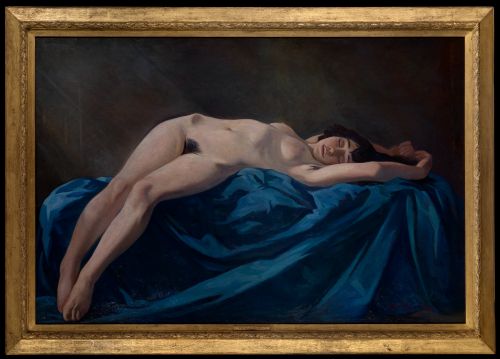
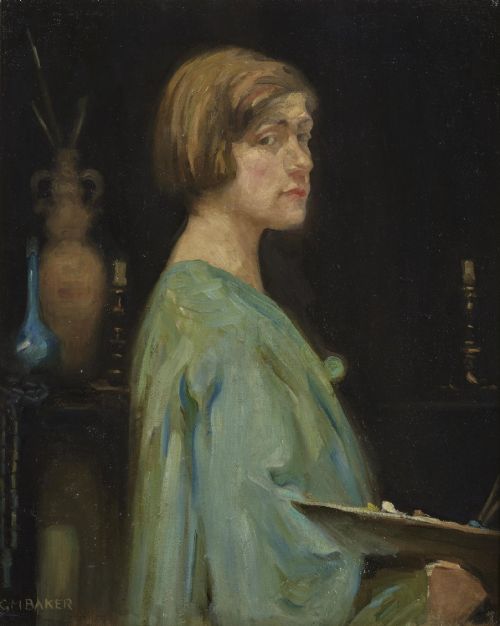
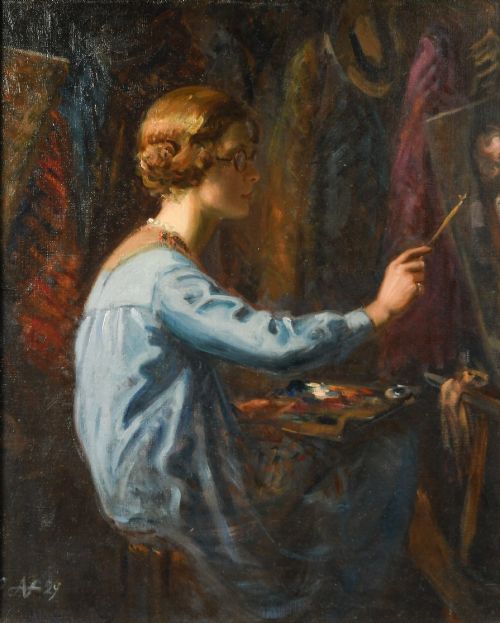
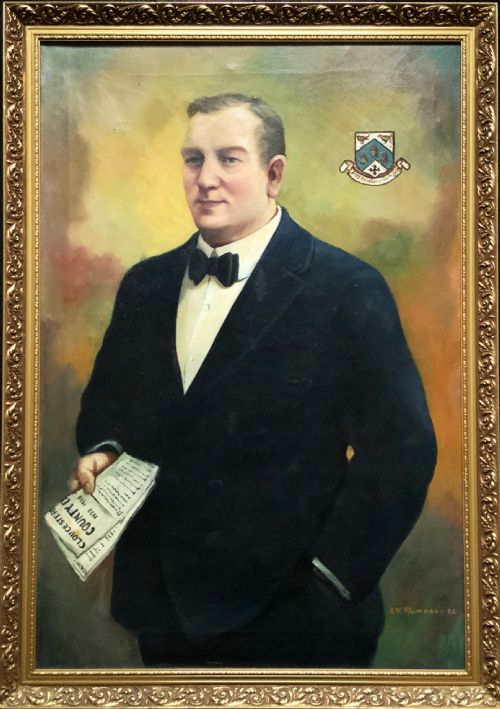
A 1920s oil portrait painting presents human subjects from an era spanning academic realism, Art Deco, and modernist movements. The pieces on this page record figures ranging from society ladies and artists to specific historical personages rendered on canvas or wood.
Most examples originate from British and continental European schools, displaying stylistic influences such as the Bloomsbury Group, Fauvism, and traditional realism. Subjects frequently appear in contemporary attire like kimonos and chemises, or in professional poses at the easel.
How They Were Made
Artists built these works utilising oil paint applied to stretched canvas, wood panels, or occasionally paper supports. Pigments were manipulated with brushes to achieve tonal depth, textural variation, and distinct atmospheric lighting characteristic of the period.
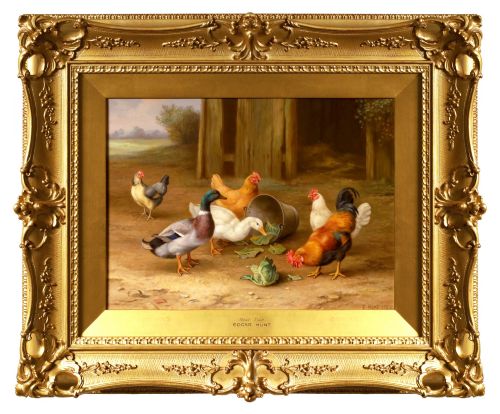
Many surviving pieces retain their original period frames constructed from wood, embellished with gesso, and finished in gilt or giltwood. These frames complement the painted surface and protect the perimeter of the canvas or panel.
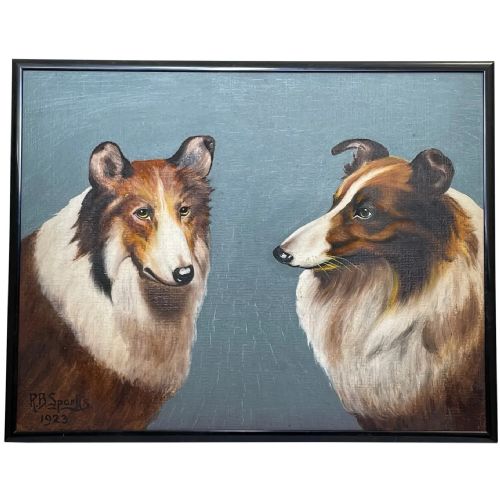
Several canvases feature sharp-eyed terriers and heavy-coated collies staring out from the interwar domestic interior.
What Varies in Quality
Quality rests upon the confidence of the brushwork and the psychological depth achieved in capturing the sitter's likeness. Superior execution demonstrates a clear command of light, shadow, and proportion, elevating the work beyond a mere mechanical record.
The sophistication of the composition and the integrity of the original support influence overall standing. Works exhibiting distinct stylistic character from recognised hands command greater attention than standard anonymous school pieces.
Eric Robertson·Frederick Albert Clark·Gladys Marguerite Baker·Edgar Hunt·Raymond Moritz·Alexandre-Louis Martin·Georges Goursat Sem·Jean Hippolyte Marchand·Frank Wren·Benedict Angell Hyland·Harry John Pearson·Cowan Dobson·Olaf Simony Jensen·Henri Mathy·Fernand Duroze
The 1920s Oil Portrait Painting Glossary
- Oil on Canvas
- A painting medium where pigments suspended in drying oils are applied to a woven fabric support. This combination provides flexibility and durability for large-scale portraiture.
- Giltwood
- Wood carved and coated with gold leaf or a gold-coloured metallic finish. This material forms traditional ornate frames enclosing period paintings.
- En Grisaille
- A painting executed entirely in shades of grey or a single neutral colour. This technique mimics the appearance of sculpture or relief work.
- Academic Realism
- A style of painting governed by the rules of formal art academies. It emphasises precise anatomical accuracy, smooth blending, and traditional subject matter.
- Fauve
- A style associated with the early twentieth century characterised by strong, non-naturalistic colours and bold brushstrokes. Painters using this approach prioritized emotional expression over photographic representation.
1920s Oil Portrait Painting: Frequently Asked Questions
How do I identify a 1920s portrait?
Look for stylistic clues such as interwar fashion, hairstyles like the bob, and art movements including Art Deco and Fauvism. Canvas preparations and framing styles also provide chronological markers.
Signatures, dates inscribed on the reverse, and artist records help confirm the exact decade of execution alongside traditional subject matter.
What surfaces were used?
Artists of this era primarily painted with oil on stretched canvas or wooden panels. Some works utilise heavy paper supports mounted securely to backing boards.
Support materials often bear manufacturer stamps on the reverse, which assist in dating the physical components of the artwork.
How should I hang these paintings?
Keep oil paintings away from direct sunlight and dramatic temperature fluctuations to prevent the canvas from warping or the paint from cracking. Ensure the wall fixings match the weight of the frame.
Allow adequate clearance from heat sources to protect both the wooden stretcher bars and the historical giltwood frames.
What is academic realism?
Academic realism refers to the formal painting style taught in European art academies during the nineteenth and early twentieth centuries. It prioritises strict proportions, smooth finishes, and lifelike representation.
Works in this style demonstrate the artist's rigorous training in anatomy, lighting, and traditional composition.