
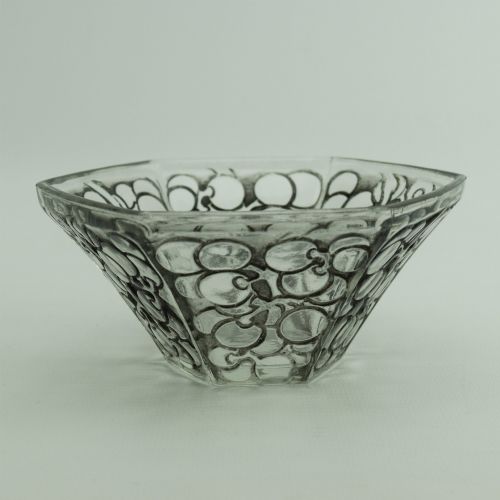


1920s French Glass Dish
A 1920s french glass dish brings the distinctive tactile weight and optical depth of early twentieth-century design directly to a table.
1920s French Glass Dish
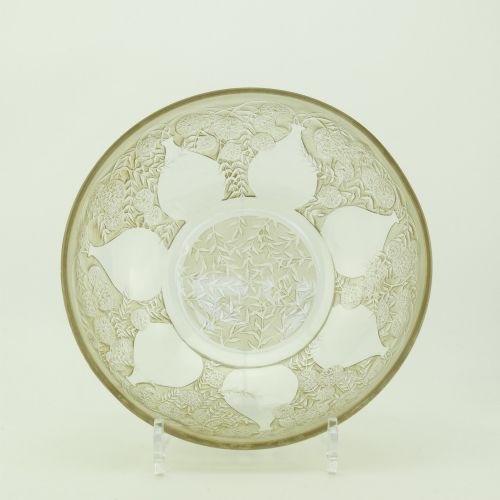
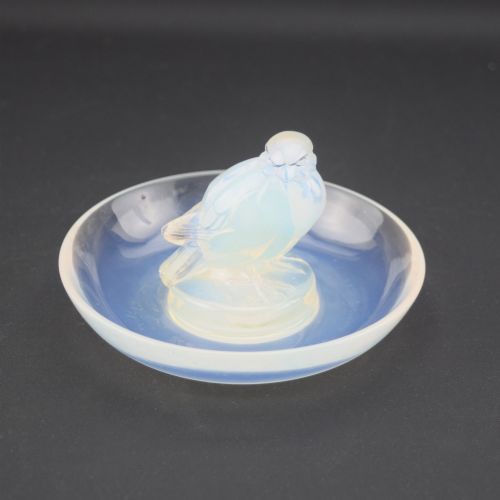
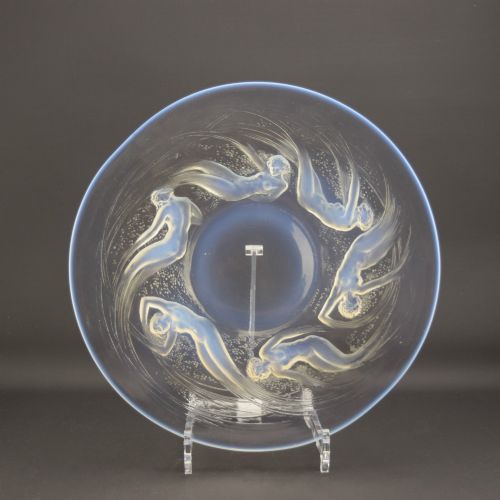
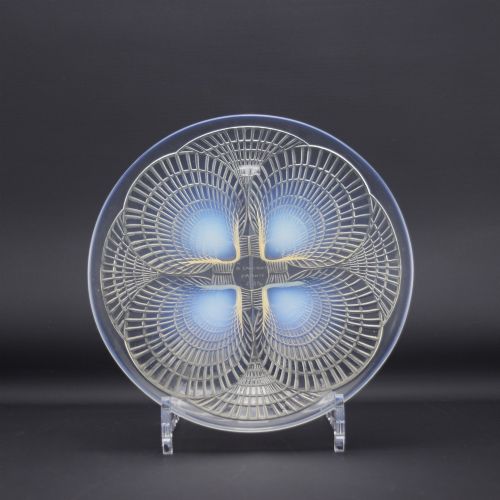
When you search for a 1920s french glass dish, you encounter decorative bowls, plates, and salvers originating primarily from the 1920s and 1930s, alongside a few Edwardian examples. The Art Deco style dominates these pieces, establishing the geometric and stylised floral motifs characteristic of the period.
The objects themselves function primarily as decorative bowls and plates designed for display or dining. Most pieces take the form of shallow dishes or deep bowls utilising pressed and moulded techniques.
What varies in quality
The definition and crispness of the moulded relief separate standard production from finer examples. Deep, clean undercuts in motifs such as fish scales or floral petals demonstrate superior control during the pressing process.
The intensity and milky blue fire of the opalescent effect vary noticeably across different pieces. Subtle patination applied to recessed areas further elevates the visual contrast and depth of the design.
Current listings feature opalescent glass, frosted glass, and amber glass across Art Deco bowls and plates.
Rene Lalique
The 1920s French Glass Dish Glossary
- Opalescent glass
- Glass that displays a milky blue or white translucency when viewed by reflected light, contrasting with a warm amber or orange tone when viewed by transmitted light. This optical property creates shifting colour effects across moulded relief surfaces.
- Moulded glass
- Glass shaped by pressing molten metal into an iron or bronze mould using a plunger. This technique allows for complex three-dimensional patterns and high-relief designs.
- Patinated glass
- Glass treated with coloured pigments or staining rubbed into the recessed areas of a design. The technique accentuates the sculptural details carved into the glass surface.
- Frosted glass
- Glass treated by acid-etching or sandblasting to achieve a matte, non-reflective finish. It provides a soft contrast to polished or clear sections of a bowl.
1920s French Glass Dish: Frequently Asked Questions
How do I clean a glass bowl?
Wash these pieces gently in warm water using a mild, non-abrasive detergent and a soft cloth. Avoid harsh scrubbing brushes or abrasive cleaning agents that might damage delicate patination or frosted surfaces.
Dry the glass thoroughly with a lint-free cloth to prevent water spots from obscuring the opalescent finish.
Were these dishes meant for food?
Many of these items functioned as decorative bowls and plates for fruit, display, or service during the Art Deco era. Their heavy glass construction suits occasional dining use.
Care should be taken with vintage surfaces to avoid staining from acidic foods or scratching from cutlery.
What is Art Deco glass?
Art Deco glass embodies the geometric symmetry, stylised flora, and classical figures popular during the interwar period. The style relies on strong relief decoration and tactile surfaces.
Pieces often feature repeating motifs such as fish, flower heads, and dancers rendered in heavy pressed glass.
How do I identify a Lalique dish?
Examine the base and sides for signature marks, distinctive motifs like fish or coquilles, and characteristic opalescent qualities. The relief work on these pieces shows deep undercuts and meticulous detailing.
Compare the weight and glass consistency against standard pressed glassware of the period.