


1920s Figural Lamp
A 1920s figural lamp brings sculptural presence to a room, combining period illumination with human or figural forms.
1920s Figural Lamp
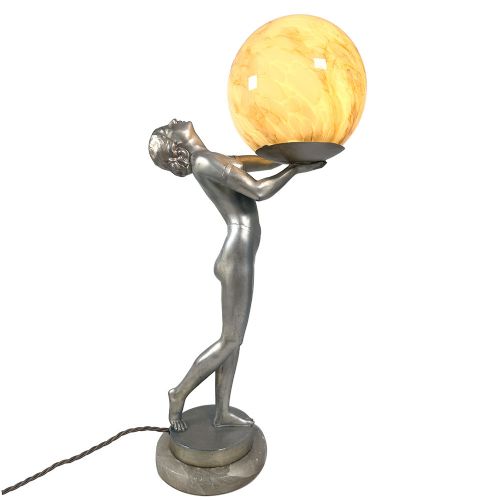
A 1920s figural lamp combines domestic lighting with sculptural human or angelic forms, drawing the eye whether lit or unlit. You encounter these pieces primarily as table lamps designed for desks, sideboards or boudoirs.
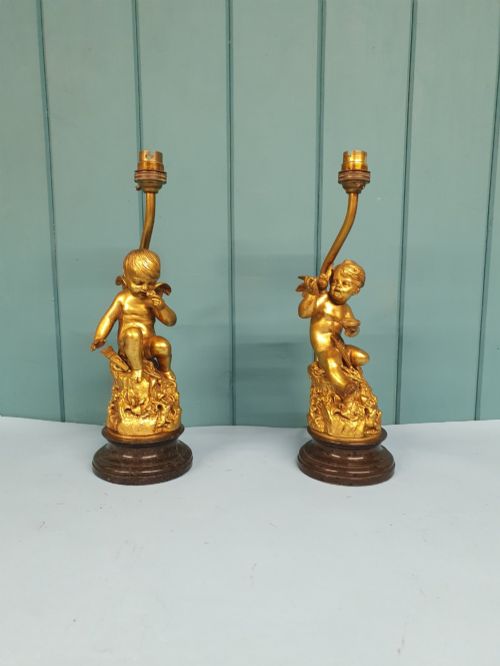
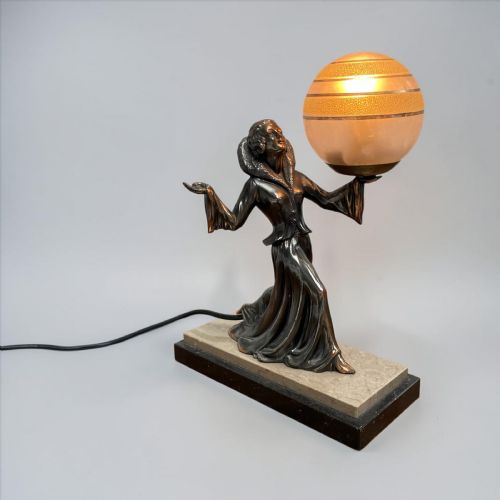
The selections span the 1920s through to 1940, with strong representation from the Art Deco style alongside occasional Rococo Revival pairs. Forms range from solitary standing nudes and twin lady configurations to cherubs and boys with animal companions.
Makers and designers of the era utilised distinct sculptural motifs, producing night lights, veilleuses and large table pieces. These items serve as functional lighting while capturing the sculptural tastes of the period.
How they were made
Makers constructed these lamps using metals such as bronze, brass, silver plate and cold-painted bronze, frequently mounting them on sturdy marble or alabaster bases. Metalwork often involved patination or plating to achieve specific surface finishes.
Porcelain and glass served as key materials for figure creation and illumination components, particularly in delicate blue and white porcelain or figural night lights. Artisans combined these fragile elements with metal mounts to secure the electrical components.
Art Deco dominates the stylistic offerings, though Rococo Revival brass pairs appear alongside sculptural table and desk lamp formats.
What varies in quality
Quality rests heavily on the crispness of the casting in bronze or metal pieces, and the delicacy of the painting on porcelain figures. Stronger examples display finer detail in facial expressions, drapery and posture.
The integration of secondary materials like marble bases and alabaster panels distinguishes standard production from superior output. Weight, balance and the harmony between the sculptural figure and the lamp base dictate the overall success of the piece.
Karl Ens·Anton Buschelberger·Bruno Zach
The 1920s Figural Lamp Glossary
- Veilleuse
- A small ceramic or porcelain night light designed to burn low through the night. These often take figural or architectural forms.
- Patinated metal
- Metal treated with chemicals or heat to produce a coloured surface finish. This technique protects the metal and defines sculptural details.
- Cold-painted bronze
- Bronze sculpture painted with oil or enamel paints after casting, rather than firing in a kiln. This finish requires careful handling to preserve the original pigment.
- Alabaster
- A fine-grained, translucent stone used for bases and decorative panels. It diffuses light softly when illuminated from within.
1920s Figural Lamp: Frequently Asked Questions
What is a figural lamp?
A figural lamp incorporates a human, angelic or animal sculpture into its primary structure rather than relying on a traditional column or standard.
These pieces function as both sculpture and lighting source, placing the artistic subject at the centre of the design.
How do I date a 1920s lamp?
Dating relies on stylistic markers such as Art Deco geometric lines or specific sculptural clothing, alongside material choices like cold-painted bronze or early wiring.
Maker signatures, registry marks and base materials such as heavy marble further help anchor a piece within the period.
Where should I place a table lamp?
These lamps suit low sideboards, entrance consoles or bedside tables where their sculptural details can be appreciated at close range.
Position them away from heavy foot traffic to protect delicate elements like porcelain extremities or alabaster bases.
What maintenance do bronze lamps need?
Bronze lamps require only a gentle dusting with a soft, dry cloth to prevent the accumulation of grime on the patinated surface.
Avoid chemical polishes or water, which can strip cold-painted finishes or discolour the underlying metal.