


Polychrome Ceramic Table Light
These polychrome ceramic table light selections bring vibrant hand-painted colour and domestic illumination together through converted nineteenth-century vases and ginger jars.
Polychrome Ceramic Table Light
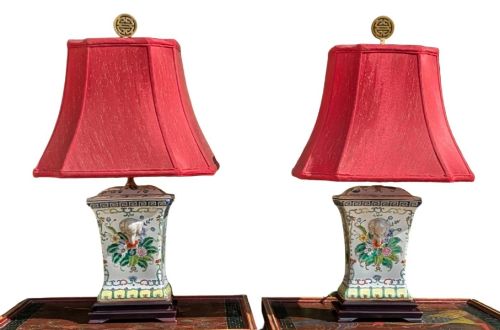
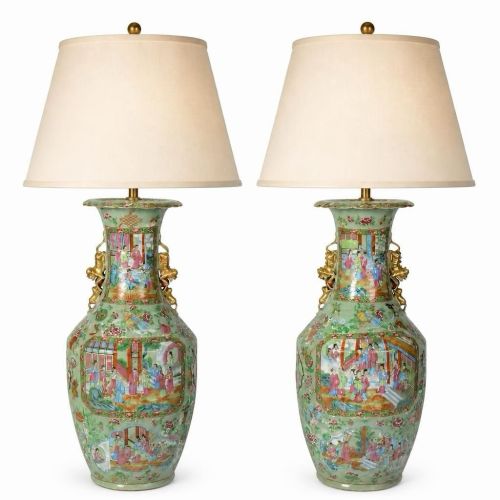
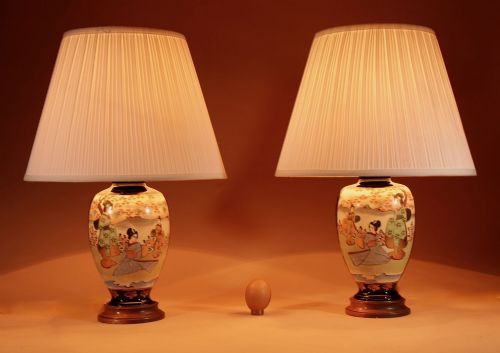
When you examine a polychrome ceramic table light on this page, you are typically looking at a traditional oriental or European vessel adapted for electrical illumination. The selection relies heavily on nineteenth-century Chinese export porcelain and Japanese earthenware, including rose medallion and satsuma bodies.
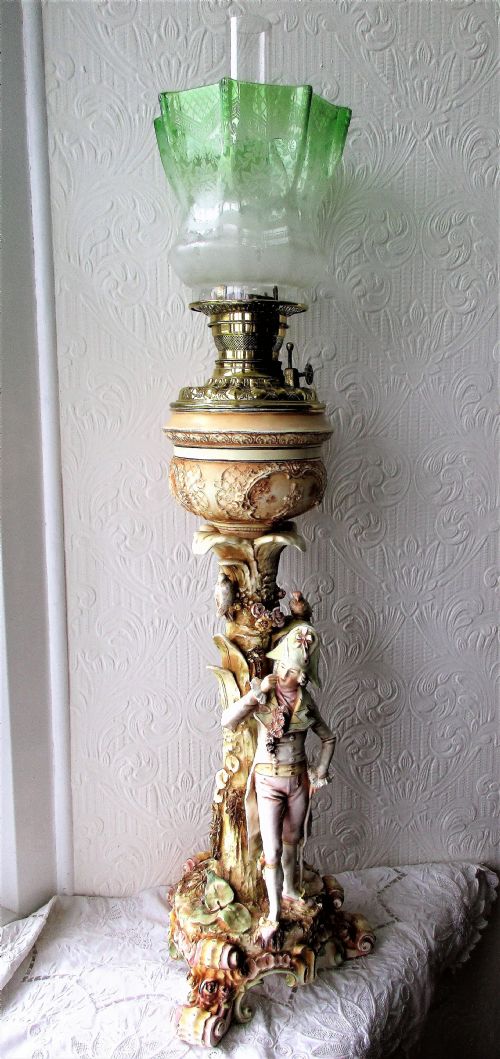
Most examples take the form of converted ginger jars, baluster vases, or figural oil lamps mounted with brass or gilt bronze fixtures. Buyers frequently encounter symmetrical pairs alongside substantial single lamp bases featuring intricate multi-coloured enamel decoration.
How they were made
The foundation of a polychrome ceramic table light is heavy-potted porcelain or ceramic, shaped by hand or on a wheel before being fired. Artisans then applied vibrant mineral pigments by hand, building up detailed scenes of figures, flowers, and foliage.
Metalwork components such as brass or gilt bronze mounts were fitted to secure electrical wiring or burner mechanisms. Many pieces incorporate fabric shades and wooden bases to complete the conversion from decorative vessel to functional lamp.
The inventory combines nineteenth-century porcelain and ceramic bodies with brass, gilt bronze, and fabric elements.
What varies in quality
The quality of a polychrome ceramic table light rests largely on the precision and density of the hand-painted enamelwork. Finer examples display crisp outlines and rich, varied palettes that remain bright and well-adhered across the ceramic body.
The integrity of the conversion and the quality of the metal mounts further distinguish the pieces. Heavy bronze or brass fittings securely attached without damaging the underlying ceramic indicate superior craftsmanship and careful adaptation.
The Polychrome Ceramic Table Light Glossary
- Polychrome
- Decorated in several colours. This term describes ceramics painted with a diverse palette of enamel pigments.
- Baluster
- A vase form with a rounded body and a narrow neck. This shape widens towards a footed base.
- Famille Rose
- A palette of opaque enamels dominated by pink. It developed in China during the eighteenth century and continued through the nineteenth.
Polychrome Ceramic Table Light: Frequently Asked Questions
Are these lamps converted from old vases?
Many examples are indeed historic vases, ginger jars, or oil lamps that have been adapted for modern electrical use. This conversion process preserves decorative oriental and European ceramics while giving them a functional purpose in a contemporary room.
Makers often added brass, bronze, or wooden mounts to secure the wiring and support a shade without altering the antique ceramic body permanently.
How do I date a ceramic lamp base?
Dating relies on examining the ceramic body, the style of the hand-painted enamelwork, and any accompanying metal mounts. Nineteenth-century pieces frequently display characteristic export styles such as rose medallion or satsuma earthenware.
The weight of the porcelain, the composition of the glaze, and the specific motifs provide strong clues to the period of manufacture before conversion.
What styles of decoration are common?
The selection is dominated by Chinese export styles, particularly famille rose, famille verte, and rose medallion patterns. Japanese Meiji period satsuma wares and nineteenth-century European figural designs also appear frequently.
These styles are characterised by vibrant multi-coloured palettes depicting floral arrangements, domestic scenes, and traditional figures.
Can I find matching pairs of lamps?
Symmetrical pairs of lamps appear regularly among the nineteenth-century Chinese and Japanese vessels. These matched sets usually derive from ginger jars or baluster vases that were converted together.
Collectors often seek out pairs to place on sideboards or bedside tables for a balanced decorative arrangement.