



1920s Female Nude Statue
These 1920s female nude statue examples capture the kinetic grace of Art Deco figure sculpture in bronze and marble.
1920s Female Nude Statue
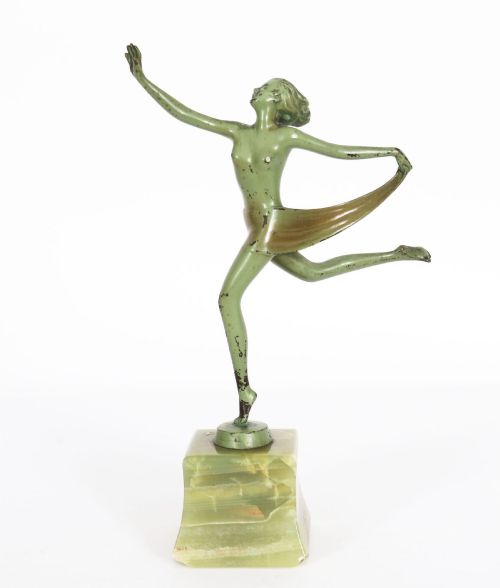
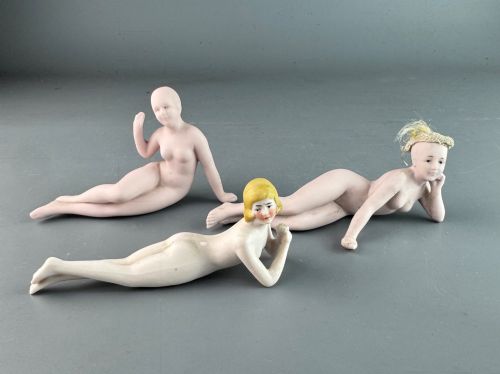
A 1920s female nude statue embodies the sculptural energy of the early twentieth century, presenting dancers, bathers, and mythological figures. The pieces on this page span table lamps, car mascots, and standalone figures.
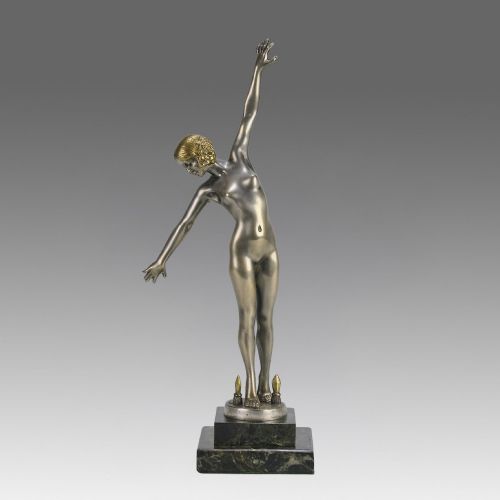
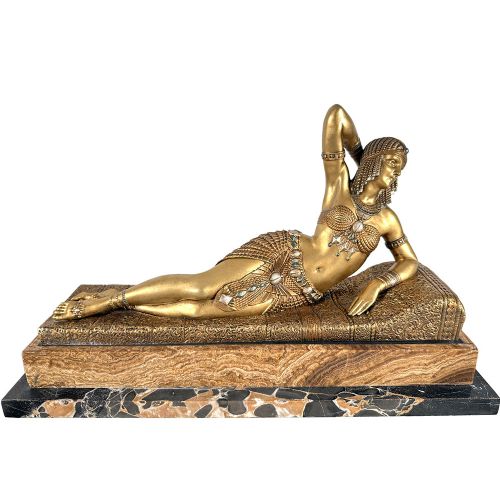
Most examples align with the Art Deco movement, originating from workshops across France and Austria. Creators rendered these subjects in distinct poses, from dynamic dancers caught mid-leap to reclining classical figures.
The forms frequently combine metalwork with carved stone bases, uniting figurative sculpture with functional design. Collectors encounter these works as cabinet bronzes, larger floor or table sculptures, and specialised lighting.
Materials and construction methods
Foundries cast these figures predominantly in bronze, applying cold-painted polychrome finishes, silvering, or rich patination to accentuate the contours of the body. Several works integrate carved marble or onyx plinths to provide stability and visual contrast.
Makers utilised specialised casting techniques to capture fine details in drapery, hair, and anatomical definition. Details such as enamel accents and carved wooden elements appear alongside cast metal components.
1920s Female Nude Statue Retail Price Guide 2026
Typical asking prices for 1920s female nude statue among the pieces listed under this phrase on Sellingantiques today, from the lower quarter to the upper quarter. They describe what is for sale here now, not the wider market.
Several ladies hold forth as car mascots, proving that 1920s motorists appreciated a high-speed passenger.
Factors of distinction
Quality rests upon the crispness of the casting and the sensitivity of the chasing work done after the metal cooled. Finer examples retain delicate facial expressions and sharp delineation in fingers and garments.
The sophistication of the patination and the choice of mounting materials distinguish standard foundry output from masterworks. Integration with high-grade marble or onyx bases elevates the presence of the sculpture.
Ferdinand Preiss·Josef Lorenzl·Demetre Chiparus·Maurice Guiraud Riviere·Pierre Le Faguays·Claire Jeanne Roberte Colinet·Paul de Boulogne·Bruno Zach·Mario Korbel
The 1920s Female Nude Statue Glossary
- Cold-painted bronze
- A technique where oil paint or enamel is applied to a bronze casting without heat firing. It allows for intricate polychrome clothing and skin tones.
- Patinated metal
- A chemically induced surface coloration applied to bronze or other metals. This process creates brown, green, or black tones that highlight sculptural contours.
- Car mascot
- A miniature sculpture mounted to the radiator cap of an automobile. These aerodynamic figures were popular during the interwar period.
- Gilt bronze
- Metal coated with a thin layer of gold or gold-coloured alloy. It adds a reflective, warm finish to the figure.
1920s Female Nude Statue: Frequently Asked Questions
Where were these statues made?
The pieces originate primarily from European studios, with significant output from French and Austrian foundries during the interwar decades.
Craftsmen in cities like Paris and Vienna produced these figures for an international clientele seeking modern decorative arts.
How do I clean a bronze statue?
Dust the surface gently with a soft, dry cloth to prevent accumulation. Avoid abrasive cleaners or liquids that can strip the patination.
Preserving the original finish maintains the historical integrity of the metalwork.
What is an Art Deco lamp?
An Art Deco lamp incorporates a female figure as the structural support for a light source. These functional objects blend illumination with decorative sculpture.
They often feature frosted glass shades held by outstretched arms or positioned beside the main figure.
How can I date a bronze figure?
Dating relies on stylistic markers, foundry marks, and the artist's active period. The aesthetic vocabulary of the 1920s emphasises stylized linearity and kinetic motion.
Comparing known signatures and casting techniques helps confirm the period of manufacture.