



1920s Drinks Cupboard
A 1920s drinks cupboard brings sophisticated entertaining home, offering fitted storage for bottles and glassware in striking burr walnut or solid oak.
1920s Drinks Cupboard
A 1920s drinks cupboard provides dedicated storage for bottles and glassware, emerging as a distinct form during the interwar period. These pieces respond to changing social habits by bringing formal hospitality directly into the reception room.
Buyers encounter cocktail cabinets and drinks cabinets spanning the 1920 and 1930 periods. The selection encompasses distinct revivalism alongside modern modernist lines.
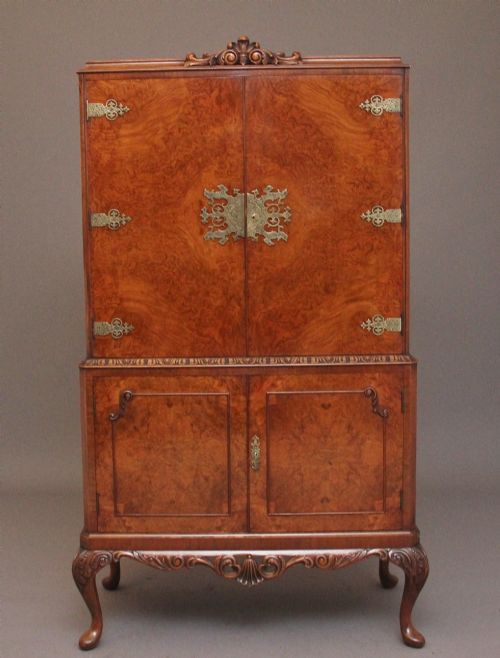
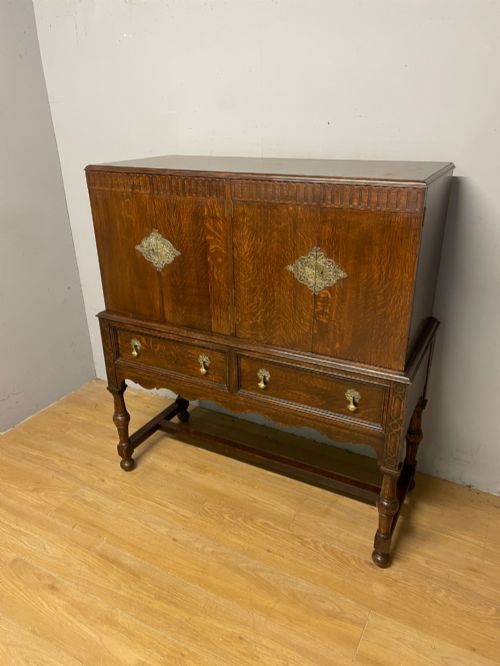
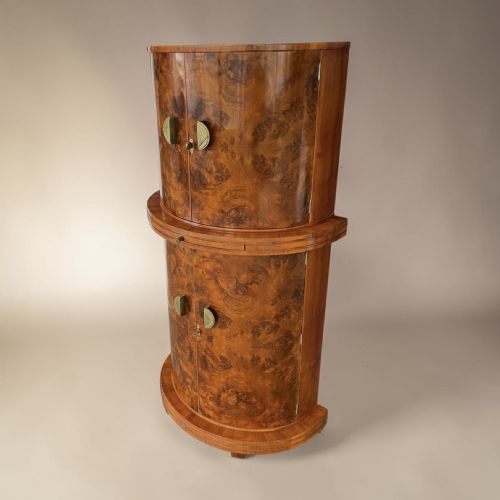
Art Deco examples sit alongside Queen Anne Revival and Jacobean Revival interpretations. This variety allows the form to bridge traditional rooms and more contemporary interior schemes.
How they were made
Makers construct these cabinets using solid oak and walnut, frequently applying burr walnut veneer to exterior surfaces to showcase striking grain patterns. Brass hardware provides functional closure and decorative contrast against the dark timber tones.
Cabinetmakers combine traditional carcase construction with specialised veneering techniques to achieve decorative symmetry on the doors. Interior compartments often utilise specialised joinery to secure glassware and bottles safely during use.
Every cabinet holds the quiet promise of a misplaced cocktail shaker hidden behind veneered doors.
What varies in quality
Quality separates through the selection and matching of burr walnut veneers across the principal facade. Superior examples display thoughtful grain continuity that elevates a standard timber box into a decorative focal point.
The refinement of internal fittings and the integration of brass hardware distinguish finer pieces from simpler utility cabinets. Construction integrity in the doors and hinges determines how well the cabinet withstands regular opening and closing.
The 1920s Drinks Cupboard Glossary
- Burr walnut
- A figured timber obtained from walnut tree growths, valued for its swirling patterns. This veneer defines the most decorative cabinet exteriors.
- Art Deco
- A design style emphasising geometric forms and streamlined shapes. This aesthetic characterises the modern interwar cocktail cabinets.
- Jacobean Revival
- An architectural style reinterpreting seventeenth-century motifs. Cabinets in this manner feature solid oak construction and darker, heavier proportions.
- Queen Anne Revival
- A revival style utilising cabriole legs and restrained walnut surfaces. These pieces draw on early eighteenth-century domestic furniture traditions.
1920s Drinks Cupboard: Frequently Asked Questions
What is a 1920s drinks cupboard used for?
These cabinets serve as specialised storage for spirits, wine bottles, and cocktail glassware.
They keep entertaining equipment organised and accessible within living spaces.
How do I identify an Art Deco drinks cabinet?
Art Deco models show clean geometric lines and often feature burr walnut veneers.
They reflect the modern design sensibilities of the nineteen-thirties.
Are these cabinets made from solid wood?
Many examples utilise solid oak or walnut for structural framing and internal components.
Exteriors frequently employ decorative walnut veneers to create striking visual patterns.
What styles are common in this period?
The selection includes modernist Art Deco designs alongside Queen Anne and Jacobean revivals.
This mix offers choices ranging from traditional dark oak to figured walnut.
How do I fit a drinks cupboard into a room?
A drinks cupboard works well as a statement piece in a dining room or sitting room.
Its compact footprint allows it to function as a standalone cocktail station.