




1920s Diamond Line Bracelet
A 1920s diamond line bracelet brings the geometric elegance of the Art Deco period straight to the wrist.
1920s Diamond Line Bracelet
A 1920s diamond line bracelet presents a continuous channel or linked sequence of stones set in precious metal, defining the aesthetic of the Art Deco period. These pieces originate primarily from the 1920s and 1930s, capturing an era defined by linear geometry and fine craftsmanship.
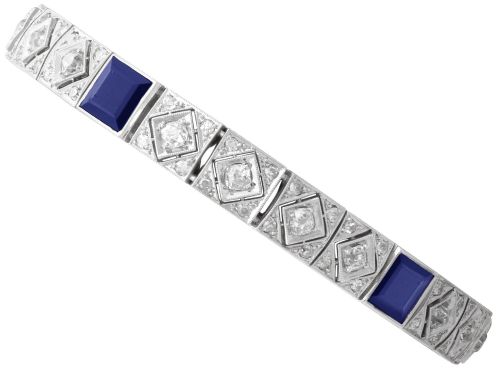
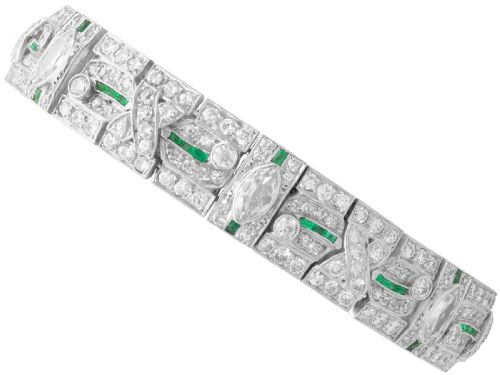
You will most frequently encounter platinum settings framing brilliant or old-cut diamonds, often paired with calibre-cut sapphires or emeralds. Pieces range from delicate gemstone arrangements to substantial diamond-heavy designs weighing over ten carats.
Materials and construction methods
Platinum serves as the primary metal for the finest examples, offering the tensile strength required to hold intricate stone configurations securely with minimal visible metal. White gold and yellow gold also appear across the selection, providing alternative tones for the linked structure.
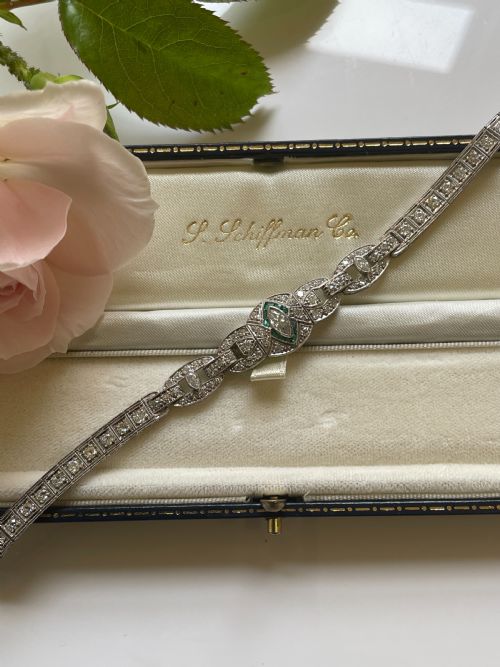
Goldsmiths utilised platinum and gold to house diamonds alongside contrasting accents of emerald and sapphire. Stones are secured within precise metalwork, ensuring fluid movement across the wrist while maintaining structural integrity.
The selection spans pieces from the 1920s and 1930s, utilising platinum, yellow gold, white gold, diamonds, emeralds, and sapphires within Art Deco designs.
Factors influencing distinction
The choice of primary metal and total carat weight heavily dictate the distinction of a piece, with platinum and high diamond weight commanding attention. The presence of calibré-cut emeralds or sapphires adds complexity to the design.
The precision of the articulation between individual links determines how smoothly the bracelet drapes around the wrist. Superior examples maintain alignment and flexibility without slack in the hinges.
The 1920s Diamond Line Bracelet Glossary
- Art Deco
- A design style dominant in the 1920s and 1930s, characterised by symmetry, geometric patterns, and stylised motifs. It informs the architecture of these line bracelets.
- Calibre-cut
- Small gemstones cut precisely to fit specific geometric channels within a metal setting. They frequently outline or punctuate the diamond rows.
- Platinum
- A dense, durable white metal favoured in the 1920s for its strength in delicate jewellery settings. It allows for minimal metal visibility around stones.
- Old-cut diamond
- A diamond cut with facets designed before modern brilliant-cutting standards, often featuring a smaller table and higher crown. These stones produce a softer candlelight sparkle.
1920s Diamond Line Bracelet: Frequently Asked Questions
How do I wear a line bracelet daily?
Wear the bracelet securely fastened and avoid exposing it to harsh chemicals or heavy impacts during strenuous manual tasks. Regular checks by a jeweller ensure the settings remain tight.
Store the piece in a soft-lined box away from other jewellery to prevent scratching the platinum or gold links.
Are these bracelets made of platinum?
Many examples from this period utilise platinum due to its strength and bright white finish, which complements the diamonds. Other pieces are constructed from 18ct white gold or yellow gold.
Check the individual listing details to confirm the specific metal composition of each bracelet.
What stones accompany the diamonds?
Sapphires and emeralds frequently appear alongside the diamonds in these designs, often forming contrasting geometric borders or accents. These coloured gemstones are typically cut in calibré styles to fit tightly within the metal framework.
Not all bracelets include coloured stones, as many consist entirely of graduated diamonds.
How do I date a 1920s bracelet?
Dating relies on stylistic markers such as Art Deco geometry, the use of platinum, and old-cut diamond configurations typical of the period. Hallmarks and maker stamps stamped on the clasp can also provide specific chronological clues.
Most pieces date from the 1920s through to the 1930s.