




1920s Art Deco Sideboard
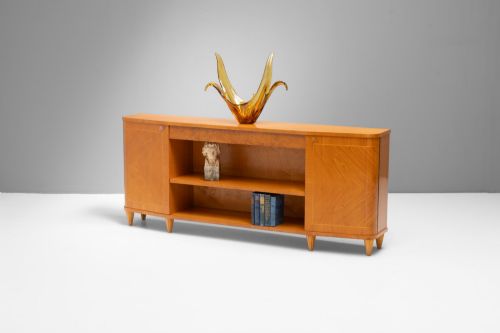
A 1920s art deco sideboard brings geometric symmetry and bold timber grain into a room, offering generous storage with distinct period character.
1920s Art Deco Sideboard
When you search for a 1920s art deco sideboard, you encounter striking storage furniture rooted in the aesthetic of the early twentieth century. These pieces combine utilitarian function with the decorative energy of the Art Deco movement, providing substantial surface area and internal capacity for dining rooms and living spaces.
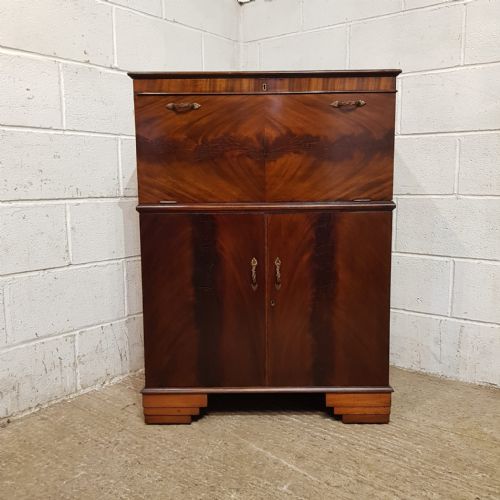
The selections available here reflect the cabinet-making traditions of the nineteen-twenties and nineteen-thirties, spanning English workshops and continental French studios. Alongside traditional sideboards and buffets, the grouping includes related case furniture such as drinks cabinets, display cabinets, and complete dining suites.
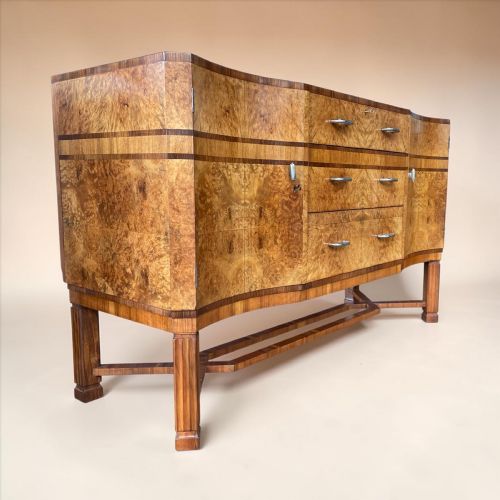
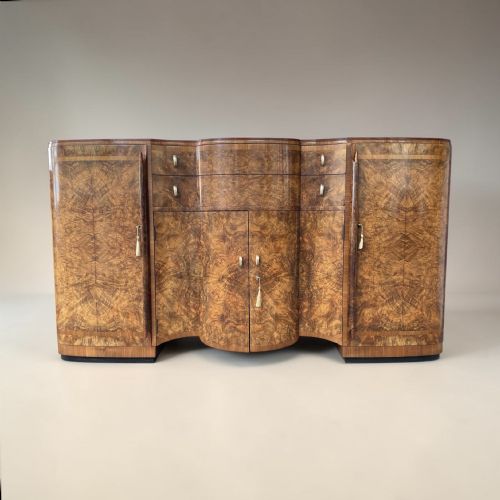
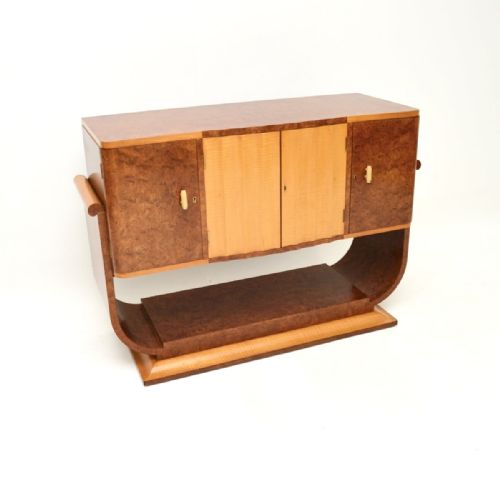
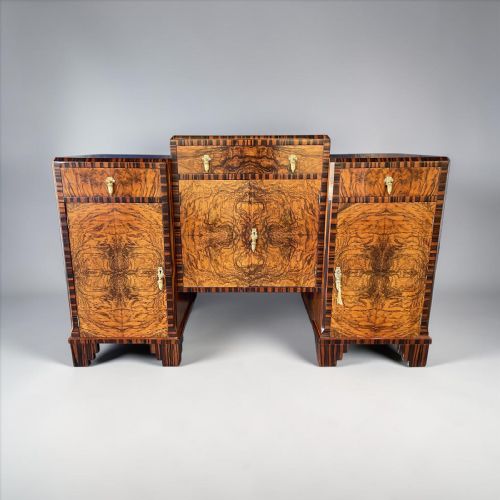
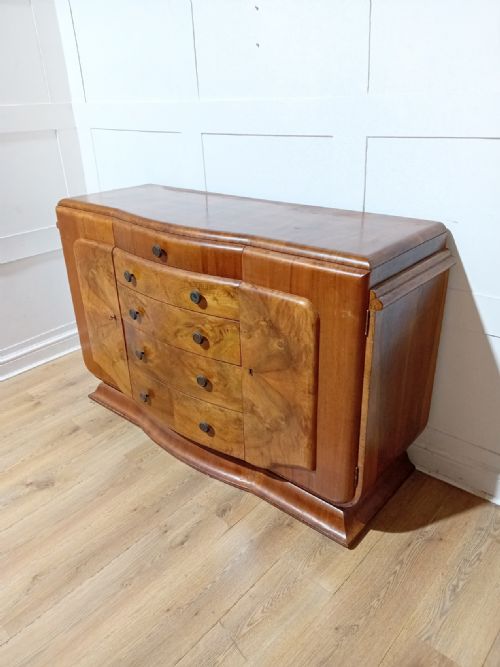
Burr walnut and figured walnut dominate the forms, frequently paired with contrasting timbers like ebony, macassar ebony, calamander, and sycamore. Smaller scale examples appear alongside larger serving tables, giving options for varying room dimensions while maintaining the characteristic architectural silhouettes of the era.
Materials and Construction
Construction relies heavily on dense timber substrates faced with decorative veneers selected for their dramatic natural figures. Burr walnut, macassar ebony, and calamander provide high-impact visual patterns across large flat doors and drawer fronts, framed by darker contrasting borders of ebony or plain walnut.
Metal components play a structural and decorative role, with brass fixtures, mounts, and hardware integrated into the cabinet designs. Glass panels appear in display sections and cabinet doors, while specialised timber varieties like limed oak and mahogany demonstrate the breadth of materials utilised by period makers.
Several sideboards include fitted interiors designed specifically for storing long-forgotten twentieth-century cocktail paraphernalia.
Assessing Quality and Execution
The distinction between standard commercial output and superior craftsmanship lies in the selection and matching of veneers. Finer examples display book-matched or slip-matched grain patterns across entire cabinet fronts, creating symmetrical, mirror-image designs that require exceptional skill to cut and lay.
Structural integrity and the quality of associated hardware also define the upper tier of pieces. Substantial timber framing, smooth drawer operation, and original brass details indicate workshops operating at a high level, whereas simpler construction uses basic timber framing with minimal decorative banding.
Maurice Adams·Heals of London·Harry And Lou Epstein·Epstein
The 1920s Art Deco Sideboard Glossary
- Art Deco
- A design style spanning the nineteen-twenties and thirties characterised by geometric shapes, streamlined forms, and modern industrial motifs. It rejected Victorian ornamentation in favour of sleek lines and luxurious materials.
- Burr Walnut
- A specialised timber cut from the abnormal growth of a walnut tree, producing a swirling, highly figured grain pattern. Cabinet makers prize this material for its decorative surface potential on prominent doors and panels.
- Book-Matched
- A technique where adjacent veneer leaves are opened like a page to create a symmetrical pattern along the central join. This method highlights the natural movement of the wood grain.
1920s Art Deco Sideboard: Frequently Asked Questions
How do I clean a burr walnut surface?
Dust regularly with a soft, dry cloth to prevent particulate accumulation on the delicate veneer. Avoid household chemical sprays or excess moisture, which can penetrate the polished finish and damage the timber beneath.
Apply a traditional beeswax polish sparingly when the wood appears dry, buffing gently to maintain a soft lustre. Consistent low humidity in the room preserves the stability of both the carcase and the decorative veneer.
Will a large sideboard fit a modern dining room?
Measure your available floor space carefully, accounting for the swing of wide cabinet doors and protruding handles. Period proportions often exceed standard modern furniture depths, requiring adequate clearance behind dining chairs.
Consider alternative compact forms if space is restricted, as smaller sideboard variants provide similar timber aesthetics without dominating smaller domestic interiors.
What is the difference between a sideboard and a drinks cabinet?
A sideboard functions primarily as a serving table and storage unit for dining accessories, featuring long flat tops and internal cupboards or drawers. It provides low, horizontal storage for tableware and linens.
A drinks cabinet incorporates specialised internal fittings designed for bottles, glassware, and mixing surfaces, often standing taller with drop-down writing or serving flaps integrated into the upper section.
How can I distinguish English art deco from French pieces?
English pieces often utilise domestic and imperial hardwoods like walnut and oak with restrained geometric banding, reflecting traditional cabinet-making standards adapted to modern tastes. Makers such as Epstein and Heals produced robust, highly figured walnut designs suited to British homes.
French pieces frequently incorporate exotic timbers like calamander and macassar ebony on a grander scale, accompanied by dramatic contrasting veneers and striking brass hardware that reflect Parisian luxury.