
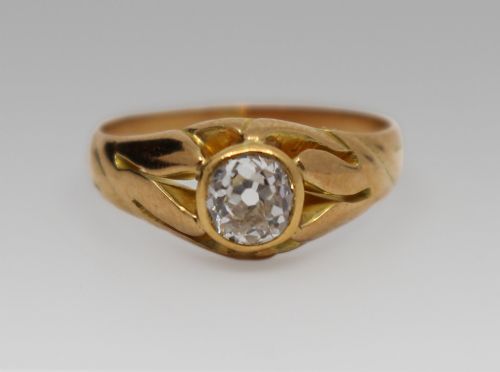
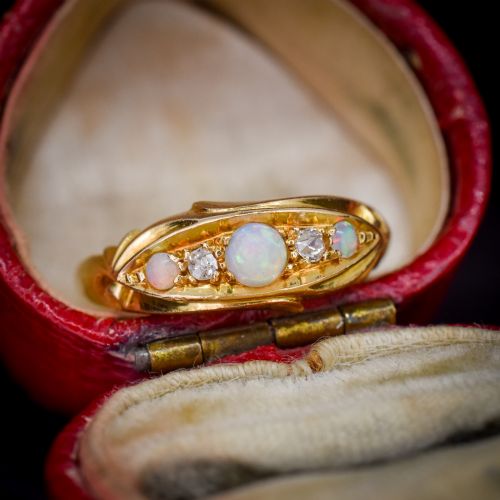
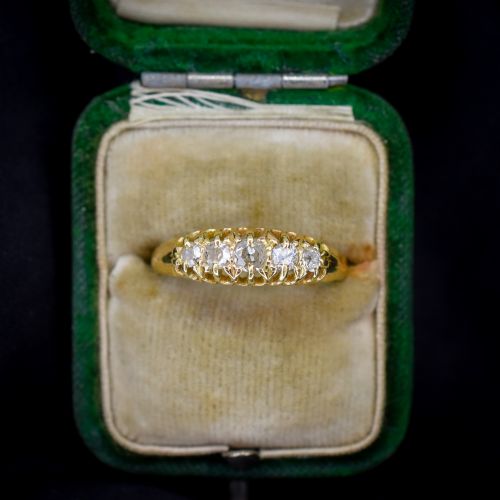

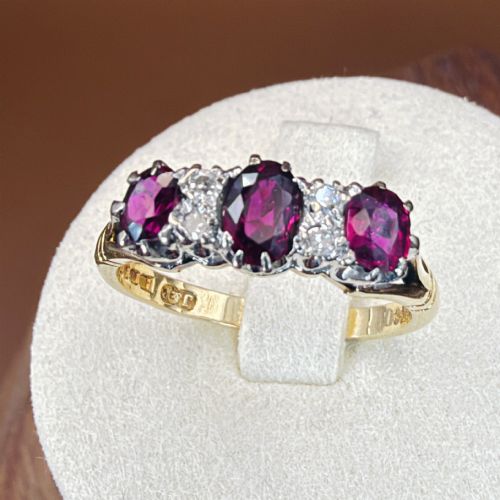



1910s Gold Diamond Ring
A 1910s gold diamond ring brings hand-cut sparkle and distinct Edwardian character to the finger.
1910s Gold Diamond Ring
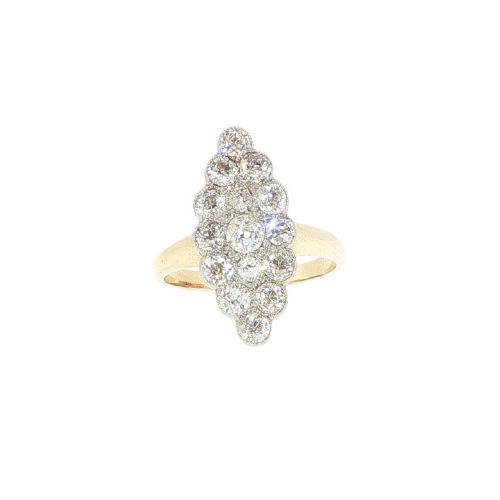
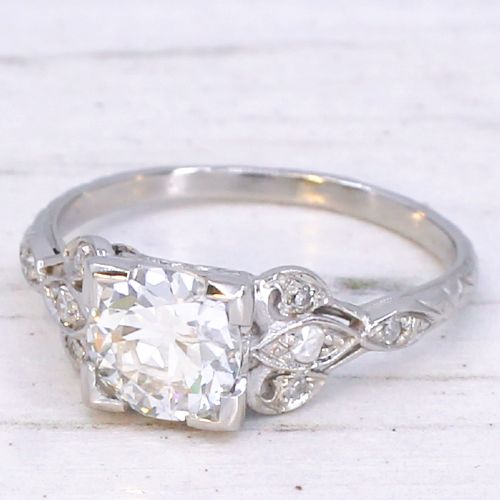
When you search for a 1910s gold diamond ring, you encounter pieces spanning the Edwardian era, George V reign, and Art Nouveau styles. The selection includes clusters, boat rings, navette designs, and solitaires that reflect the jewellery production of the 1910s decade.
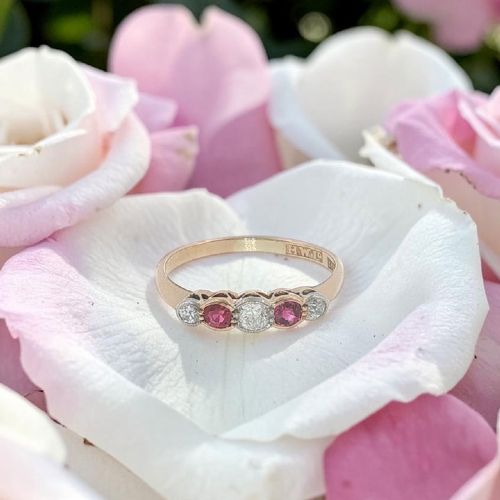
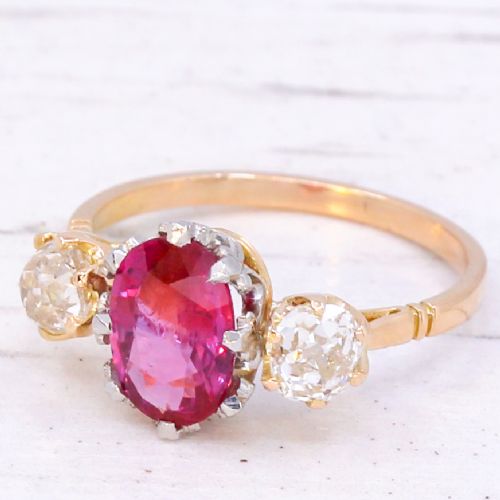
The version you are most likely to meet on this page is an 18ct yellow gold band holding old cut diamonds, frequently paired with platinum settings or accented with rubies, sapphires, and opals. These rings survive from years such as 1913, 1915, 1917, and 1919, often carrying clear British hallmarks from assay offices like Chester and Birmingham.
How They Were Made
Goldsmiths of this decade utilised 18ct yellow gold and rose gold for the shanks and mounts, frequently combining platinum on the top surfaces to hold the stones in crisp white metal. This dual-metal technique allowed workshops to maximise the perceived brightness of the diamonds while retaining the warmth of gold beneath.
Stones were set by hand using old cut, old European cut, old mine cut, and rose-cut diamonds, alongside natural rubies, sapphires, and opals. The cutting styles of the period produced softer facets and deeper pavilions compared to modern machinery, giving each cluster or solitaire a distinctive scintillation under candlelight.
An Edwardian snake ring curls around the finger with rose-cut diamond eyes as a traditional symbol of eternal love.
What Varies in Quality
The standard of a 1910s gold diamond ring rests upon the harmony of the design and the proportion of the stones. Finer examples display balanced cluster arrangements or well-matched five-stone rows where each old cut diamond complements its neighbour in size and brilliance.
Execution in the metalwork marks the divergence between standard production and superior craftsmanship. Delicately pierced platinum-topped galleries and crisp, legible hallmarks from Birmingham or Chester indicate careful workshop output from the period.
The 1910s Gold Diamond Ring Glossary
- Old cut
- A diamond cut by hand before modern symmetrical standards were established, featuring a smaller table, higher crown, and open culet. These stones catch ambient light uniquely.
- Boat ring
- A ring style where the mounting curves gently across the finger in the shape of a hull, commonly housing a row of graduated stones.
- Navette
- A pointed, boat-shaped cluster design resembling a small shuttle, popular in Edwardian jewellery to elongate the appearance of the finger.
- Toi et Moi
- A French term meaning you and me, describing a crossover ring featuring two main gemstones entwined side by side.
- Hallmark
- An official mark stamped into precious metal indicating the purity, maker, and assay office of origin, often including a date letter.
1910s Gold Diamond Ring: Frequently Asked Questions
How do I identify a 1910s ring?
Look for distinct periods like Edwardian or George V, combined with specific material pairings such as 18ct yellow gold and platinum.
Assay office stamps and date letters from Chester or Birmingham found inside the band help pin down the exact year of manufacture.
What is an old cut diamond?
An old cut diamond is a stone shaped by hand during the late nineteenth and early twentieth centuries rather than by modern automated machinery.
These diamonds possess smaller tops and larger facets that produce a warm, gentle glow rather than sharp modern brilliance.
Can I wear these rings daily?
These antique rings survived over a century because previous owners wore them with care during daily activities.
Due to their delicate handmade settings and older stones, removing them during heavy physical work preserves the metal and prongs.
What does platinum top mean?
Goldsmiths soldered thin sheets of platinum onto the yellow gold face of a ring where the diamonds sat.
This technique provided a bright white backdrop that made the diamonds appear whiter without changing the gold structure of the band.