



1910s Diamond Engagement Ring
A 1910s diamond engagement ring brings undeniable period charm, combining old cut sparkle with the refined handcraft of the Edwardian era.
1910s Diamond Engagement Ring
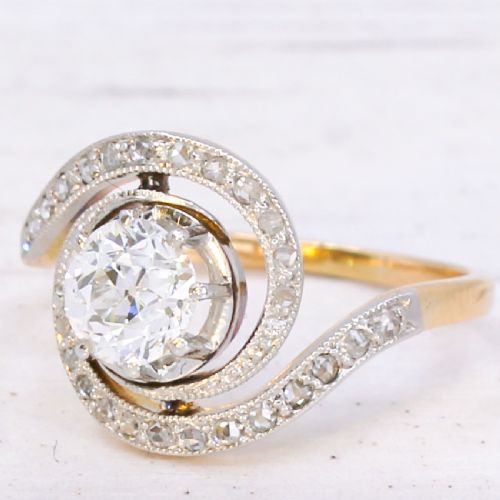
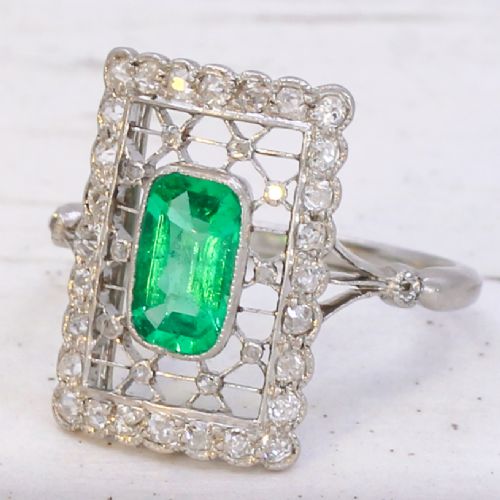
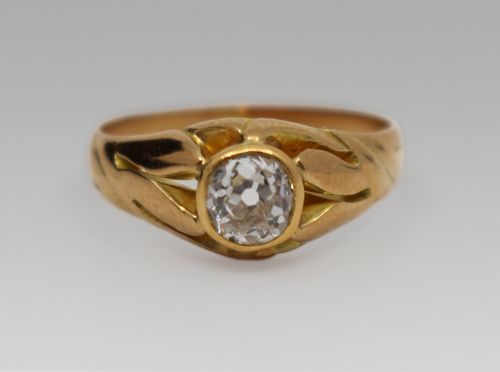
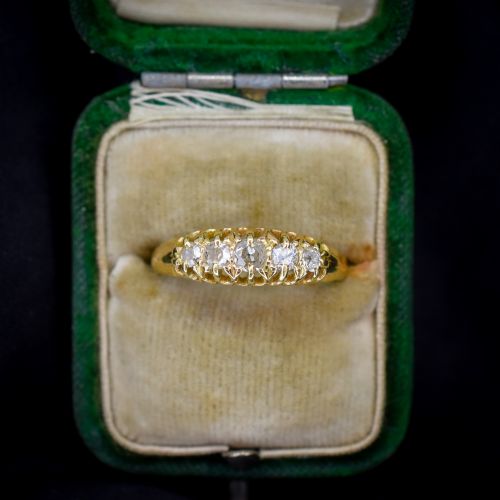
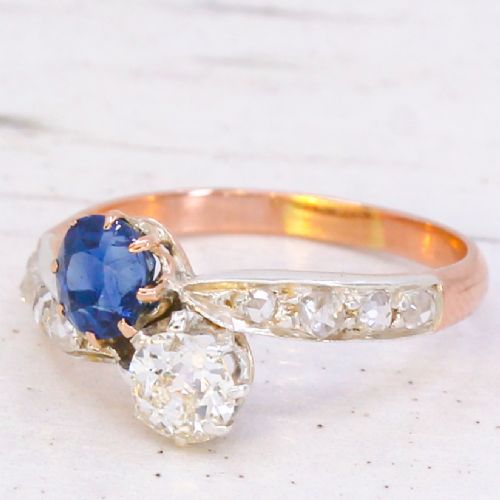
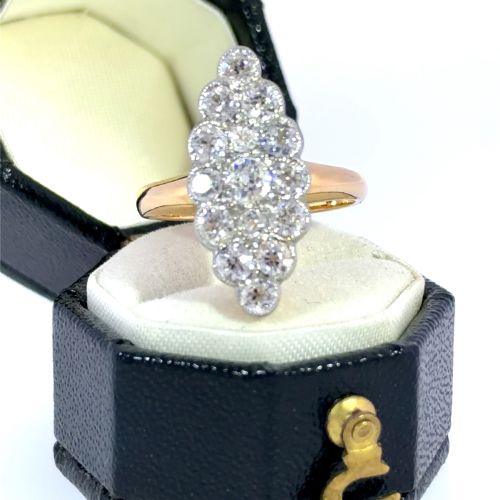
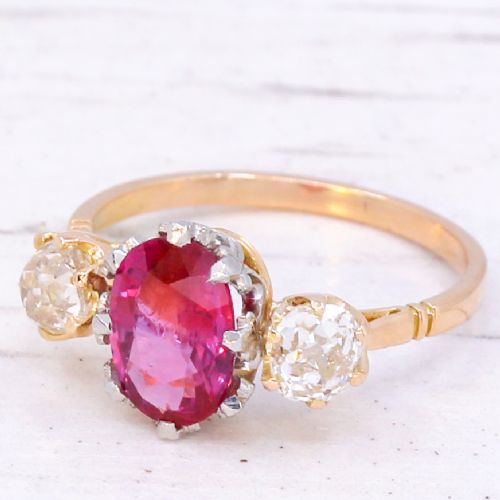
A 1910s diamond engagement ring sits firmly within the Edwardian period and the reign of George V, capturing an era of delicate elegance and intricate metalwork. You will most frequently encounter solitaire and cluster designs, alongside romantic floral motifs and toi et moi crossover styles.
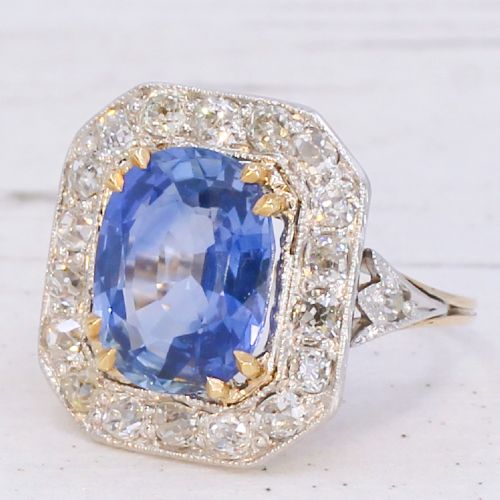
The materials span platinum, 18ct yellow gold, 18ct white gold, and combinations of gold and platinum. Alongside central diamonds, pieces frequently incorporate rubies, sapphires, emeralds, opals, and natural pearls.
Most examples hail from the 1900s through the 1920s, bridging late Victorian aesthetics with early Art Nouveau and Art Deco touches. These rings were made to be worn, carrying the distinct character of hand-finished jewellery from the early twentieth century.
How they were made
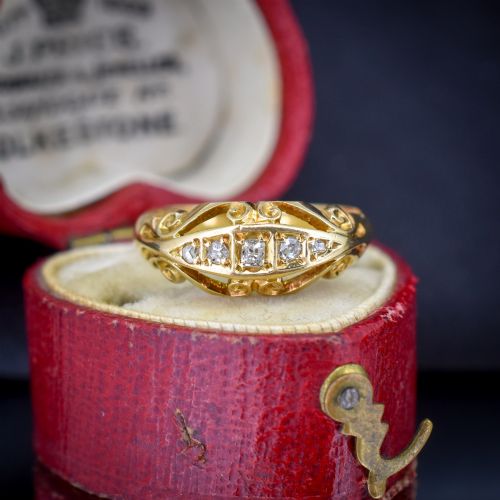
Goldsmiths of this era typically combined durable platinum settings with warm 18ct yellow gold bands, allowing white metals to showcase the stones while gold provided structural warmth.
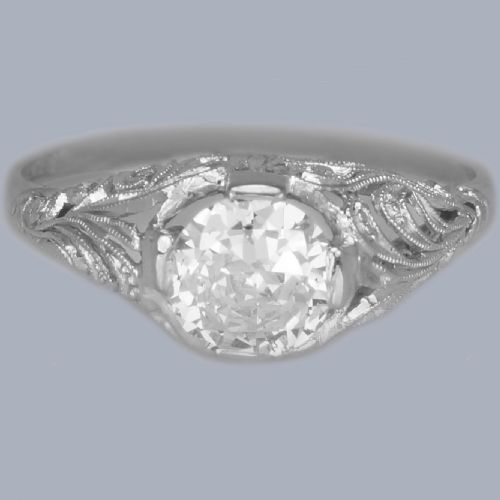
Diamonds were predominantly old European cut or old mine cut, shaped by hand to catch candlelight rather than the precise geometry of modern stones. Settings often utilised delicate millegrain edging, a technique involving tiny raised beads of metal along the mount.
Cluster and navette designs relied on precise hand-piercing of the metal plate to let light pass through the diamonds and coloured gemstones, creating a lighter appearance on the finger.
1910s Diamond Engagement Ring Retail Price Guide 2026
Typical asking prices for 1910s diamond engagement ring among the pieces listed under this phrase on Sellingantiques today, from the lower quarter to the upper quarter. They describe what is for sale here now, not the wider market.
The listings span the Edwardian, Art Nouveau, George V, and Art Deco styles, created across the 1900s, 1910s, and 1920s.
What varies in quality
Quality rests in the harmony of the design and the proportion of the stones to the mount. Finer rings display crisp millegrain work and well-matched diamond pairings in multi-stone layouts.
The choice of materials also dictates the piece, with platinum-topped gold mounts representing a higher standard of period craftsmanship compared to simpler yellow gold bands. The presence of unheated rubies, negligible oil emeralds, or natural pearls elevates the status of coloured stone rings.
The 1910s Diamond Engagement Ring Glossary
- Old European cut
- A round diamond cut popular in the late nineteenth and early twentieth centuries, characterised by a small table, high crown, and open culet. This cut produces a softer, warmer scintillation than modern brilliant cuts.
- Millegrain
- A decorative edging technique consisting of a line of tiny raised metal beads along the border of a setting. It gives a soft, textural finish typical of Edwardian jewellery.
- Navette
- A boat-shaped ring setting that tapers to points at either end. This elongated silhouette maximises finger coverage and often frames a central cluster of diamonds.
- Toi et moi
- A two-stone ring style meaning you and me in French, featuring a crossover band that brings two gems together. It often pairs a diamond with a sapphire or ruby.
- Solitaire
- A ring featuring a single prominent gemstone mounted on a plain or shoulders-set band. In this period, solitaires are usually old cut diamonds held in claw or basket settings.
1910s Diamond Engagement Ring: Frequently Asked Questions
How do I care for a 1910s ring?
Wear your ring with care, removing it during heavy manual work or gardening to protect the delicate claw settings and millegrain edges from wear. Platinum and gold benefit from gentle cleaning with warm soapy water and a soft brush.
Avoid harsh chemical dips, particularly if the ring contains softer gems like opals or natural pearls. Periodic checks by a jeweller ensure the stones remain secure in their antique mounts.
Are these rings suitable for daily wear?
These pieces were built for everyday life in the early twentieth century, using durable metals like platinum and 18ct gold. However, their age means they require a more mindful approach than modern jewellery.
Prongs and settings can thin over decades of use. Regular inspection helps preserve the integrity of the original craftsmanship while you enjoy wearing it daily.
How can I tell a 1910s ring from a later style?
Look for the characteristic use of old cut diamonds, which feature smaller tables and deeper pavilions than modern stones. The presence of platinum-topped yellow gold and fine millegrain work points directly to the Edwardian era.
Art Nouveau flowing lines or early George V hallmarks, such as those from Birmingham, also help anchor the piece to the 1910s decade.
What coloured stones appear in these rings?
Alongside diamonds, jewellers of this decade frequently set vibrant blue sapphires, rich red rubies, and Colombian emeralds. Opals and natural pearls also feature prominently in cluster and toi et moi designs.
These coloured gems are typically secured alongside old cut diamonds, offering a contrast of tone and texture characteristic of the period.