

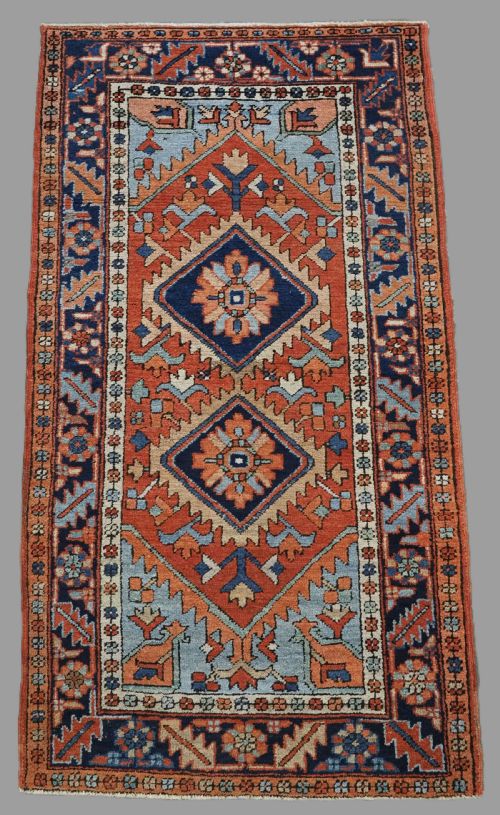
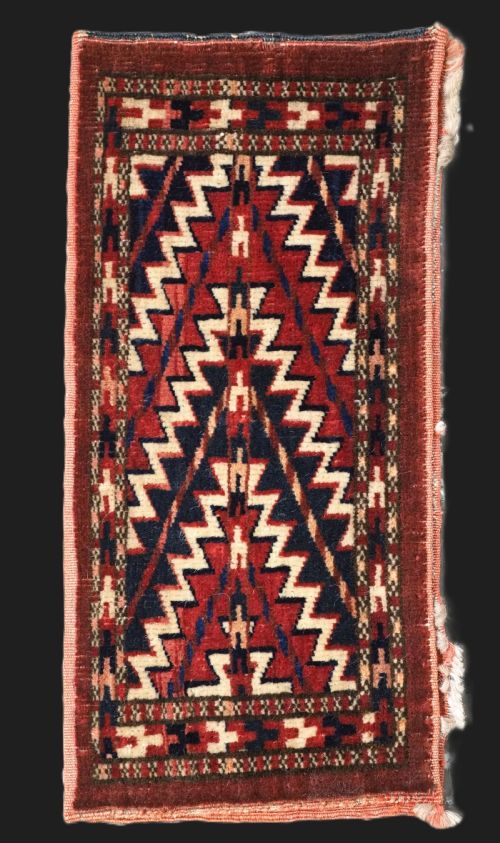


1900s Wool Tribal Rug
When you seek a 1900s wool tribal rug, you encounter hand-knotted textiles carrying regional nomadic designs from Persia, Central Asia, and the Caucasus.
1900s Wool Tribal Rug
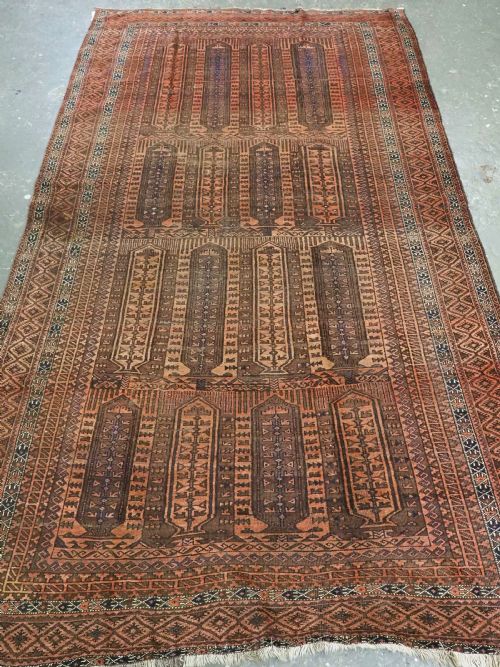
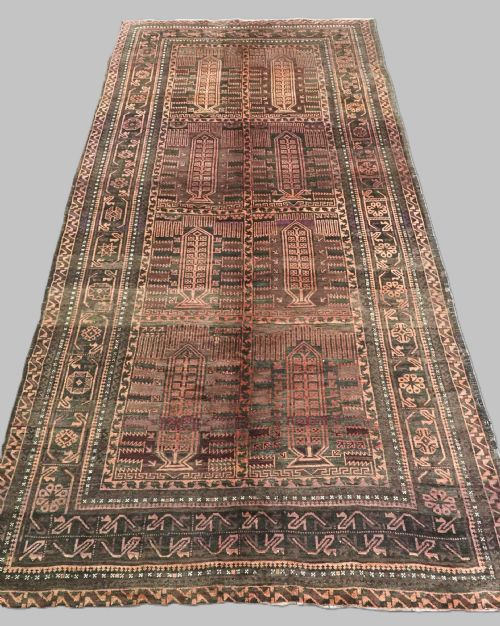
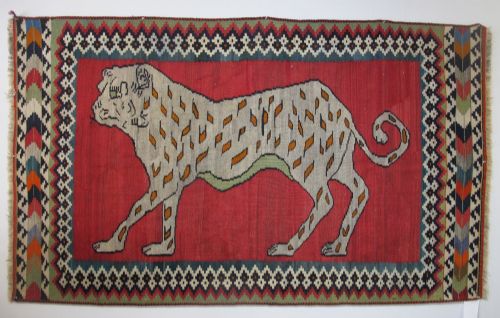
A 1900s wool tribal rug encompasses floor coverings, runner rugs, and saddlebag faces produced by nomadic and village weavers around the turn of the twentieth century. These textiles originate from diverse regions, including Baluch, Turkmen, Qashqai, and Caucasian weaving traditions.
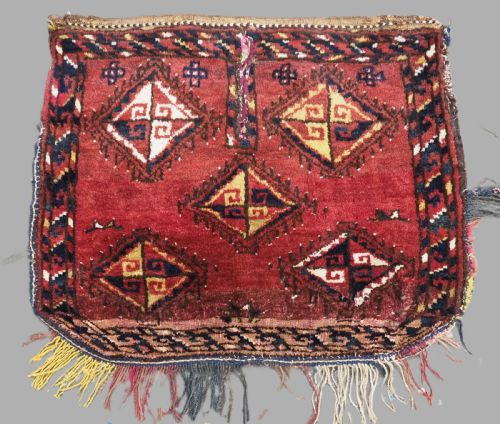
The objects on this page include main carpets, prayer rugs with mihrab designs, and small utilitarian items such as spindle bags and torbas. Each piece displays the geometric motifs, guls, and field patterns characteristic of its specific tribal group.
Materials and construction
Weavers constructed these pieces predominantly using hand-spun wool for the pile, frequently supported by cotton foundations or wool warps and wefts. Additional structural elements incorporate goat hair and camel hair, particularly in borders and selvedges.
Nomadic workshops relied on natural dyes to colour the wool, yielding deep reds, aubergine grounds, and ivory tones that mature with age. Plain weave techniques, pile knots, and banded weft work define the structural methods seen across the pieces.
Materials recorded across the inventory include hand-spun wool, cotton, natural dyes, goat hair, and camel hair.
Quality and execution
Quality in these textiles depends on the density of the weave, the precision of the geometric design, and the handling of the natural dyes. Finer knots and stable foundations distinguish exceptional room-size carpets and small prayer rugs from simpler utility pieces.
The clarity of motifs such as guls, boteh, and medallion repeats indicates the weaver's skill. Depth of colour and the preservation of original structure heavily influence the standing of an individual rug.
The 1900s Wool Tribal Rug Glossary
- Mihrab
- A niche design on a prayer rug indicating the direction of prayer, frequently found in Baluch and Caucasian examples.
- Gul
- An octagonal or repeating medallion motif characteristic of Turkmen and Central Asian carpet design.
- Torba
- A small wall-hanging bag or storage face produced by Turkmen tribes, often featuring specific güls and curled leaf motifs.
- Boteh
- A stylised floral or almond-shaped motif representing a-shoot or cypress tree, common in Persian and Caucasian rugs.
- Ensi
- A tent door hanging traditionally woven by Turkmen tribes, featuring a cross-quartered design on the field.
1900s Wool Tribal Rug: Frequently Asked Questions
How do I identify a Baluch rug?
Baluch rugs from the turn of the twentieth century often display dark indigo or aubergine grounds, camel hair details, and geometric prayer niches. They frequently incorporate box medallions or 'pencil box' borders characteristic of weavers from the Afghan and Khorasan borderlands.
These pieces typically present in smaller formats, including saddlebag faces and runner rugs, reflecting their nomadic origins.
What are Turkmen guls?
Turkmen guls are primary medallion motifs repeated across main carpets and torba faces by tribes such as the Yomut, Ersari, and Tekke. Each tribal group utilises distinct repeating octagonal forms that identify the maker's origin.
These motifs appear clearly on ivory or deep red wool grounds, executed with precise hand-knotted pile.
Where were Caucasian runner rugs made?
Caucasian runner rugs originate from the mountainous regions of the Caucasus, encompassing weaving centres associated with Karabagh, Gendje, and Talish designs. These pieces often feature repeating medallion patterns or boteh motifs on narrow, elongated formats.
The materials typically consist of tightly packed wool pile utilising bright natural dye palettes.
How should I care for a wool tribal rug?
Maintenance requires gentle vacuuming without a rotating brush and occasional professional cleaning suited to antique textiles. Keeping the rug out of direct sunlight preserves the natural dyes used in the wool.
Placing a breathable underlay beneath the carpet prevents slipping and reduces friction on the hand-spun foundation.