


1900s Art Glass
These 1900s art glass pieces bring fluid organic forms and iridescent surfaces straight into a room, offering the definitive look of the turn of the century.
1900s Art Glass
When you search for 1900s art glass, you enter a world of fluid silhouettes and natural motifs that defined the turn of the century. The selection here leans heavily towards vases and decorative vessels shaped during the height of the Art Nouveau and Jugendstil movements.
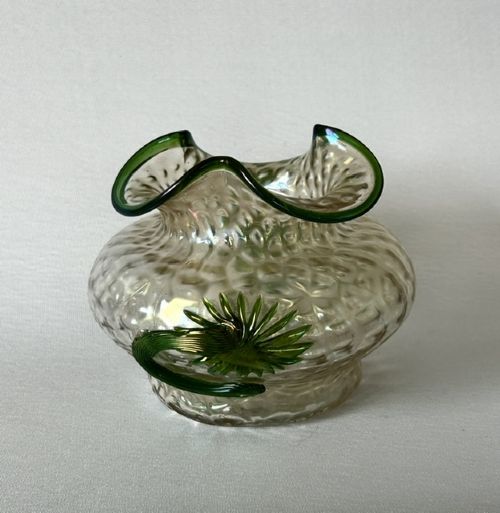
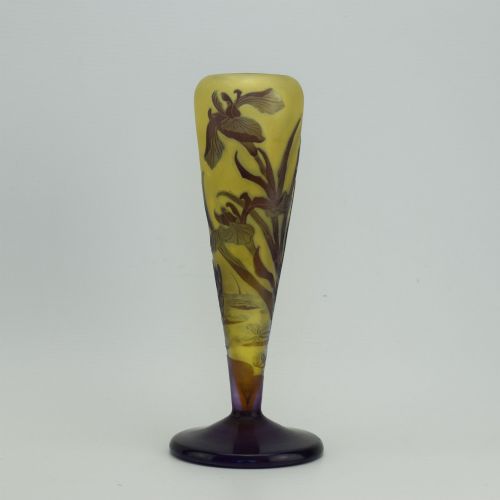
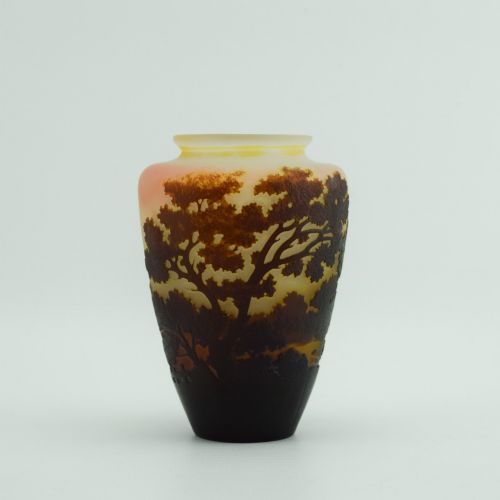
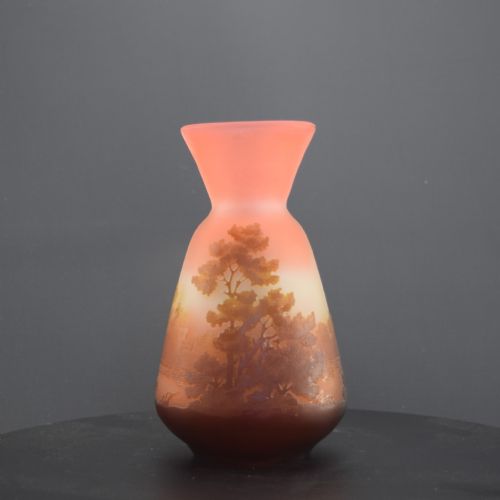
Most items you will encounter date from the 1900 and 1910 periods, alongside occasional Victorian crossover pieces. Vases dominate the offerings, spanning aquatic iris designs, landscape scenes, and iridescent organic textures.
How they were made
Maker workshops utilised sophisticated techniques such as acid-etching and cameo layering to build rich pictorial depths into the glass surface. Molten material was manipulated to catch the light, often resulting in shimmering iridescent finishes.
Mounts in brass, gilt bronze, or silver frequently frame the glass elements on items like perfume bottles and desk lamps. These metal fittings were shaped to echo the flowing plant and floral lines of the period style.
Listings feature pieces spanning the Victorian, 1900, and 1910 periods, predominantly rendered in cameo and iridescent glass.
What varies in quality
Depth of execution marks the difference between standard production and the finest output. Pieces featuring detailed multi-layer cameo work or complex iridescent decors demand greater technical skill from the glasshouse.
Integration of form and material also dictates distinction. The most successful examples unite the glass body seamlessly with metal mounts or engraved landscape motifs without losing the organic rhythm of the design.
Galle·Kralik·Loetz·Adelbert Niemeyer
The 1900s Art Glass Glossary
- Cameo Glass
- Glass vessels made with multiple layers of different coloured glass fused together and carved or acid-etched to create a raised design. This technique requires immense precision to reveal the contrasting background layers.
- Iridescent Glass
- Glass treated with metallic salts while hot to produce a shimmering, rainbow-like sheen on the surface. Loetz and Kralik famously utilised this method to mimic natural oil slicks and beetle wings.
- Jugendstil
- The German and Central European variant of Art Nouveau, prevalent around the turn of the century. It shares the same organic inspiration while often displaying a distinct regional linearity.
- Acid-Etched Glass
- Glass exposed to hydrofluoric acid to eat away the surface and form textured patterns or matte designs. It allowed makers to produce intricate low-relief scenes efficiently.
- Papillon Décor
- A specific iridescent surface treatment developed by Loetz that creates a mottled, butterfly-wing pattern across the glass. The effect shifts colours dynamically depending on the viewing angle.
1900s Art Glass: Frequently Asked Questions
What is art glass?
Art glass refers to highly decorative glassware produced primarily as sculptural or display objects rather than for purely functional dining use. Makers at the turn of the century experimented wildly with chemical formulations and cooling techniques.
This resulted in iridescent surfaces, cameo layers, and organic shapes that elevated glassblowing to a fine art form.
How do I spot Art Nouveau style?
Art Nouveau style relies heavily on asymmetrical lines, whiplash curves, and motifs drawn directly from the natural world. Look for floral patterns, insect wings, and swelling plant stems.
In glass, this translates into vessels that mimic seed pods, unfolding blossoms, and undulating water.
Where should I display these?
These pieces thrive in locations where natural light can pass directly through or bounce off their surfaces. Windowsills, mantelpieces, and dedicated display cabinets with backlighting work particularly well.
Iridescent and cameo glass shift in appearance throughout the day as sunlight changes angle across the room.
How do I tell periods apart?
Pieces from the 1900 and 1910 decades often embrace full-blown Art Nouveau abstraction or crisp Jugendstil geometry. Victorian holdovers tend to retain slightly heavier proportions and more traditional floral engraving.
Examining the mountings and signature styles helps pin down the exact decade of manufacture.