




18th Century Welsh Chair
An 18th century welsh chair brings vernacular character and honest regional craftsmanship into a room through solid native timbers.
18th Century Welsh Chair
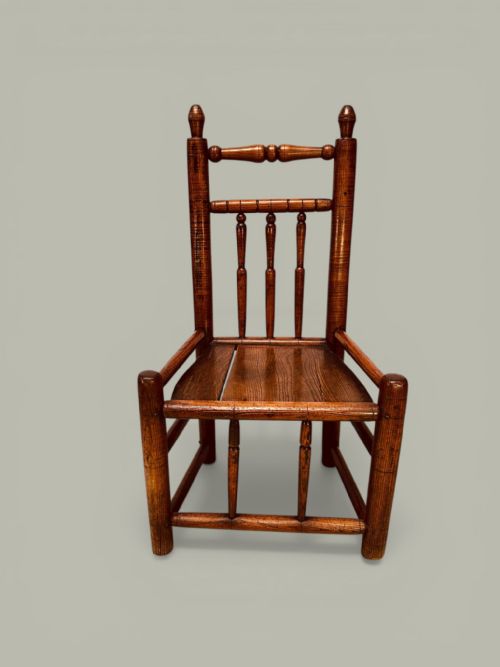
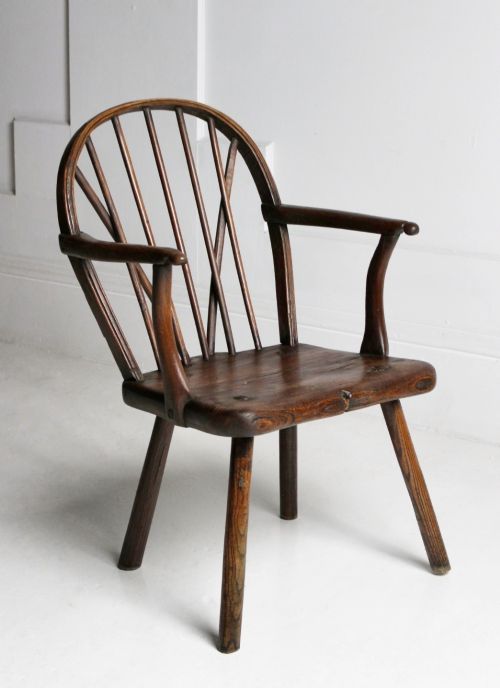
When you search for an 18th century welsh chair, you encounter robust domestic seating shaped by local makers working in oak, ash, elm and fruitwood. The selection ranges from panelled wainscot armchairs and solid backstools to stick backs, comb-backed Windsors and low children's seating.
Most examples date across the seventeen-hundreds into the early nineteenth century, reflecting provincial Georgian styles adapted for farmhouse and cottage interiors. Regional variations emerge from specific valleys and counties, such as Snowdonia, Carmarthenshire and the Swansea Valley.
Armchairs and side chairs predominate, alongside rarer forms including commode chairs, rocking chairs and low nursery seats. Each piece demonstrates the practical requirements of domestic Welsh life through sturdy construction and local timber selection.
Distinctions in standard
Quality rests upon the integrity of the timber, the balance of proportions and the originality of construction. Examples retaining untouched surface patination and genuine regional characteristics stand apart from heavily restored alternatives.
The sophistication of regional turning, the sculpting of solid elm seats and the survival of original fixings determine the standing of an individual stick chair or wainscot armchair within its category.
18th Century Welsh Chair Retail Price Guide 2026
Typical asking prices for 18th century welsh chair among the pieces listed under this phrase on Sellingantiques today, from the lower quarter to the upper quarter. They describe what is for sale here now, not the wider market.
Regional variants frequently trace back to Carmarthenshire, Snowdonia and the Swansea Valley through recorded provenance.
The 18th Century Welsh Chair Glossary
- Wainscot
- A wooden panelled armchair of sturdy proportions, originating in the seventeenth century and continuing into regional eighteenth-century production. These seats feature solid back panels and heavy arm supports.
- Stick back
- A chair constructed with individual turned spindles inserted directly into a solid wooden seat. This vernacular technique forms the basis for regional Windsor and country armchairs.
- Comb back
- A Windsor chair variant where the top rail resembles the teeth of a comb, often featuring extended spindles and carved arm bows. This form appears frequently in Welsh country seating.
- Backstool
- An early upholstered or solid-seated chair without arms, serving as a dining or side chair. They represent standard domestic seating in eighteenth-century households.
- Commode chair
- A seated piece enclosing a concealed chamber pot beneath a hinged or lift-off wooden panel. These functional items combine domestic seating with sanitation.
- Vernacular
- Objects made by local craftsmen following regional traditions rather than metropolitan academic designs. This approach prioritises utility and available native materials.
18th Century Welsh Chair: Frequently Asked Questions
How do I identify a Welsh stick chair?
Look for local timber combinations such as oak, ash and elm, alongside specific regional turning methods found in rural workshops. The construction typically integrates saddle seats with splayed legs and steam-bent arm rails.
Provenance markers often connect these pieces to specific Welsh localities like Carmarthenshire or Snowdonia, distinguishing them from English Windsor equivalents.
Where were these chairs used originally?
These pieces served as everyday domestic seating in Welsh farmhouses, cottages and rural dwellings. They stood around farmhouse hearths, at dining tables and within vernacular kitchens.
Heavier wainscot and panelled examples occupied primary positions for heads of households, while smaller stick and child chairs accommodated family members.
Can I use an 18th century chair daily?
Solid native timbers and pegged joinery provide structural stability suitable for contemporary domestic environments. Regular use requires careful placement away from direct heat sources and sudden humidity changes.
These functional objects continue to serve as practical seating while retaining their regional historic character.
What woods were used in Welsh country chairs?
Makers relied on locally available native hardwoods, primarily oak for framing, structural panels and legs. Ash and elm provided flexible material for turned spindles, bentwood arms and solid sculpted seats.
Occasional use of fruitwood and beech appears in regional side chairs, reflecting the surrounding woodland resources of specific valleys.