
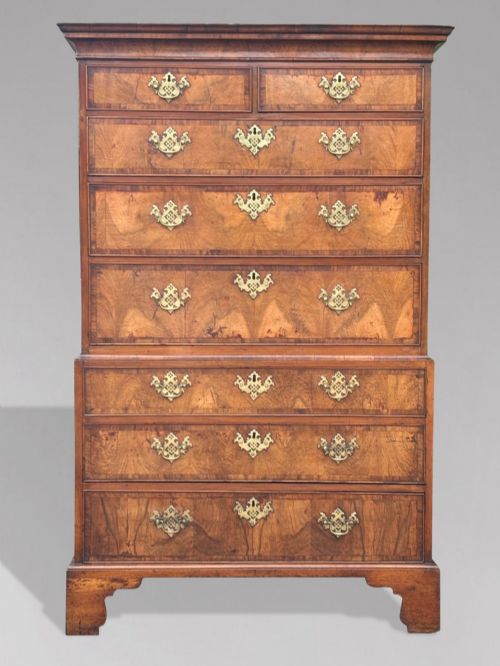
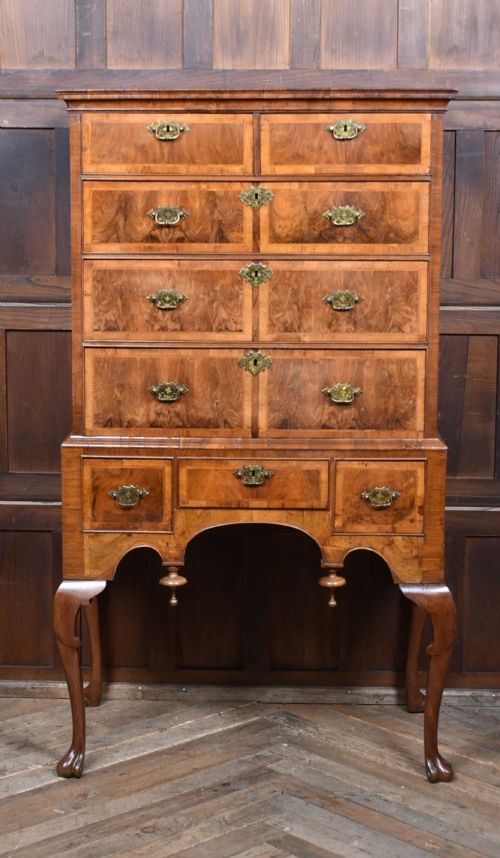
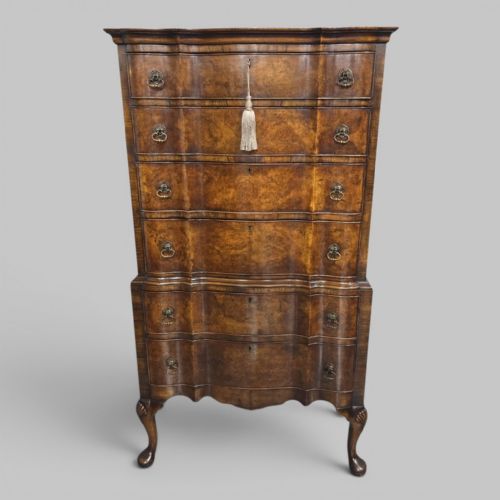


18th Century Walnut Highboy
An 18th century walnut highboy brings height, rich grain and serious presence to a room.
18th Century Walnut Highboy
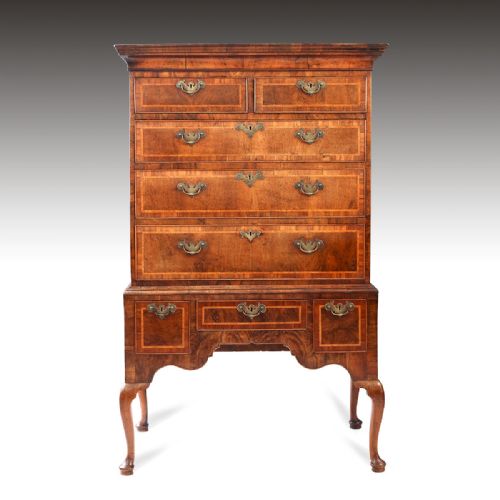
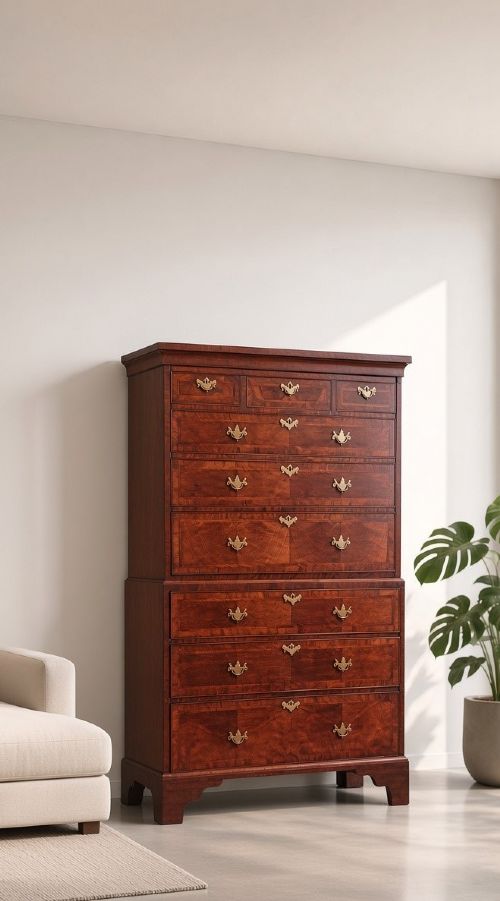
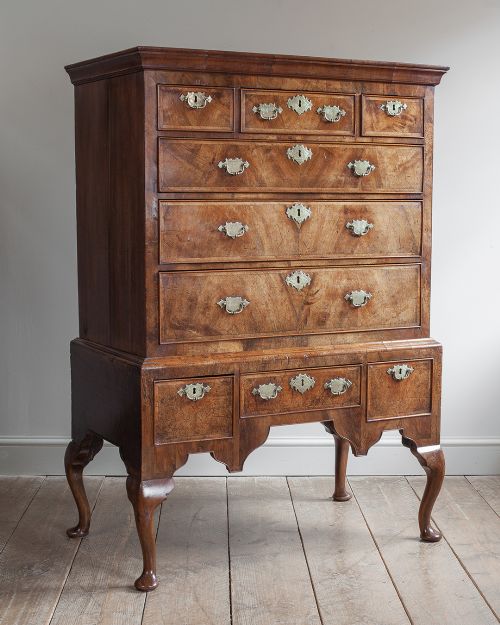
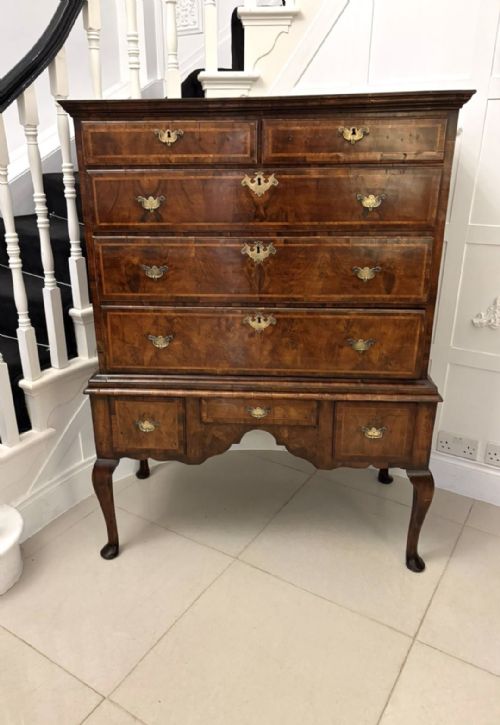
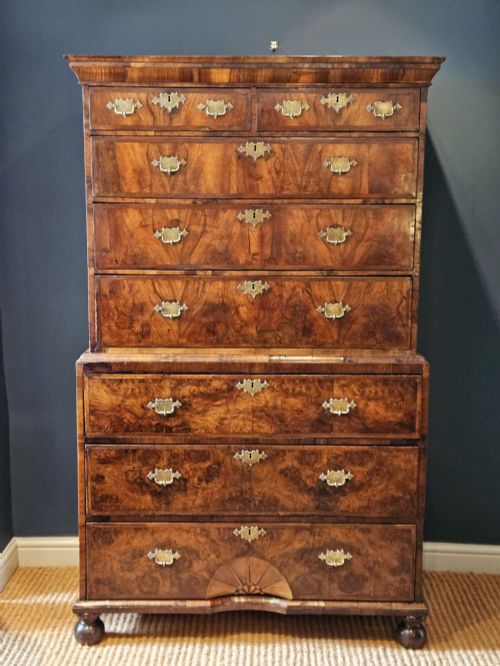
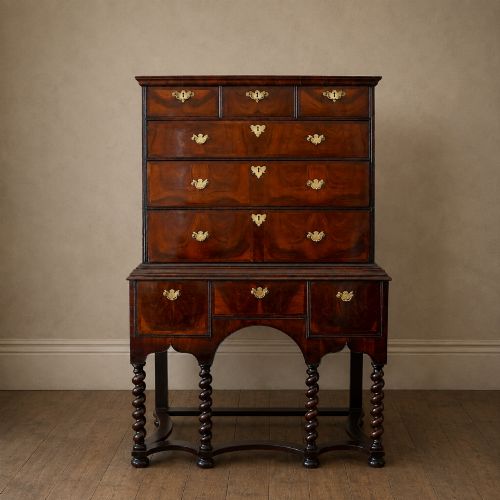
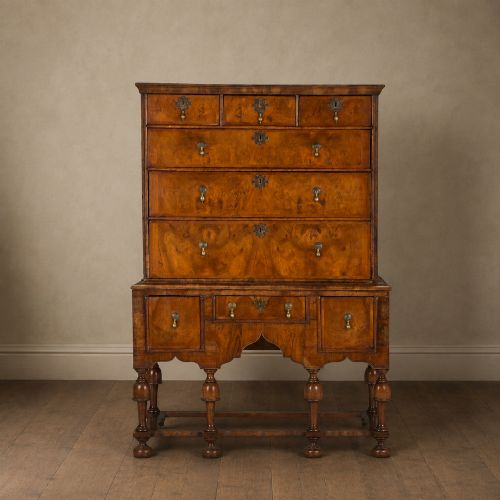
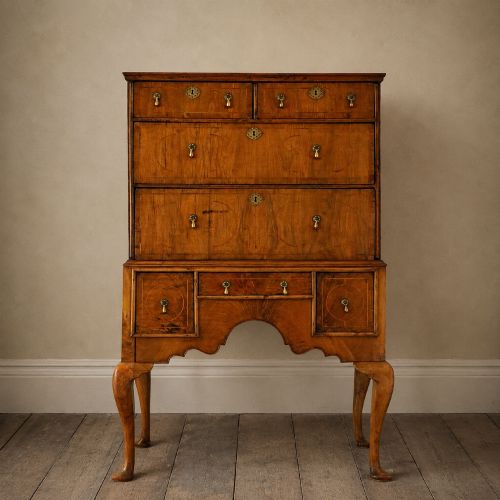
An 18th century walnut highboy stands as a tall, stacked form comprising a lower stand or base supporting a larger upper chest of drawers, often referred to as a chest on stand or chest on chest. These pieces divide naturally into two distinct sections, offering considerable storage without occupying excessive floor space.
Makers utilised native and imported timbers, arranging them in tall vertical proportions that suit bedrooms, hallways and living spaces alike. The combination of a drawer-fitted upper section raised upon legs gives these items their characteristic elevation and architectural silhouette.
What varies in quality
The choice of veneer defines much of the visual character, with deeply figured burr walnut and matched sunburst patterns sitting at the upper end of the scale compared to plainer grain. Careful alignment of the wood grain across multiple drawers shows the skill of the original cabinetmaker.
The integrity of the structural relationship between the upper chest and its lower stand matters greatly, as does the retention of original brass handles, locks and supporting feet. Pieces retaining their initial surface patina and minimal restoration command greater appreciation than those heavily refinished or altered over time.
Some early chests hide secret drawers tucked behind sunburst carvings for stashing small treasures.
The 18th Century Walnut Highboy Glossary
- Chest on stand
- A two-part furniture form where a smaller chest of drawers sits upon a separate table-like base with legs. This configuration provides elevated storage and lighter visual proportions than a standard floor chest.
- Tallboy
- A tall chest on chest where an upper chest rests directly upon a lower chest of drawers rather than an open stand. The term encompasses several similar vertical storage forms from the eighteenth century.
- Veneer
- A thin layer of figured wood applied to a secondary timber carcass to create decorative exterior patterns. Walnut veneer allowed makers to display rich grain swirls without using solid timber for the entire structure.
- Crossbanding
- A narrow strip of veneer laid around the border of a drawer front or panel with the grain running perpendicular to the centre. This decorative technique frames the main wood figure.
- Oyster veneering
- The practice of slicing small branches transversely to produce circular or oval cross-section discs that are laid side by side in decorative patterns. It creates a distinctive rippled surface texture.
18th Century Walnut Highboy: Frequently Asked Questions
What is an 18th century walnut highboy?
An 18th century walnut highboy is a tall storage furniture piece formed of a chest placed upon a separate stand or upon a second larger chest.
These pieces combine vertical capacity with decorative wood veneers, primarily walnut, burr walnut and fruitwood.
How were these tall chests used?
They served primarily for storing garments, linens and personal valuables within domestic bedchambers and dressing rooms.
The height of the design kept contents off cold floors while offering numerous drawers of varying depths for organised storage.
How do I tell Queen Anne from Georgian pieces?
Queen Anne items often feature cabriole legs on the lower stand and simpler, softer curves to the carcass and cornice.
Georgian pieces frequently incorporate bracket feet, stronger architectural mouldings, and sometimes a more elaborate double-domed top or sunburst carving.
Where should I place a highboy at home?
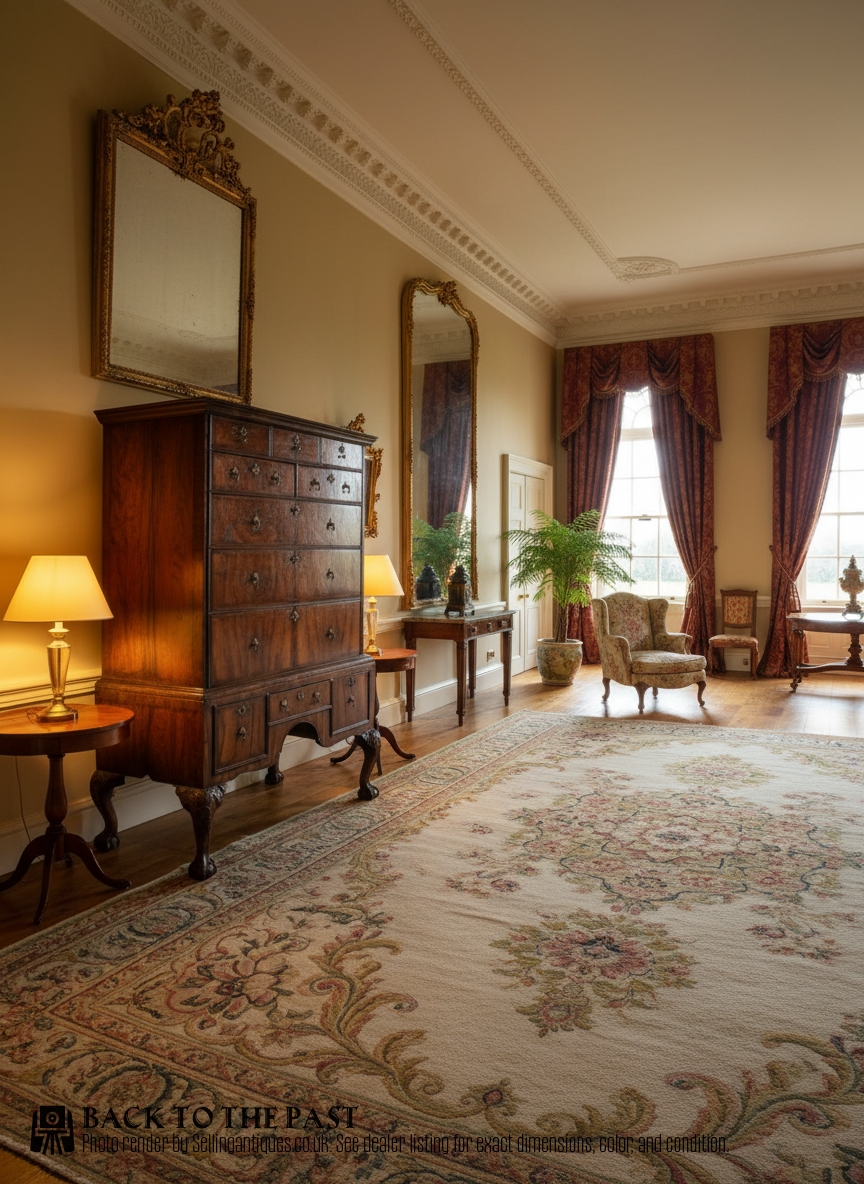
A highboy suits spaces with adequate vertical clearance, such as a master bedroom, a grand hallway or a tall landing.
Because the piece draws the eye upward, positioning it against a plain wall allows the walnut grain and proportion to stand out.