


18th Century Still Life
These 18th century still life works capture the domestic and natural world on canvas and panel, offering an enduring focus for a room.
18th Century Still Life
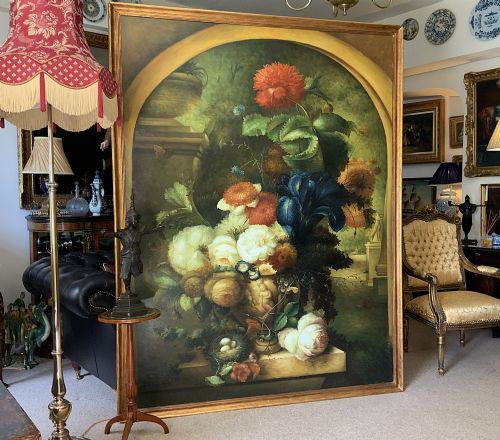
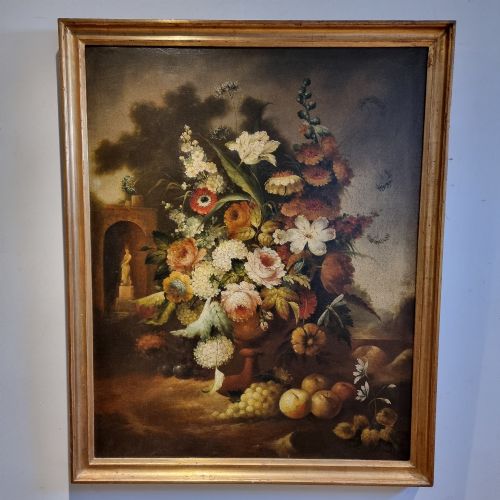
An 18th century still life brings together depictions of flora, fauna, and provisions, often arranged around central subjects like floral bouquets, fruit compositions, or game in a larder.
The pieces on this page span the primary period alongside later interpretations, including 18th century revival works and 1920s decorative paintings.
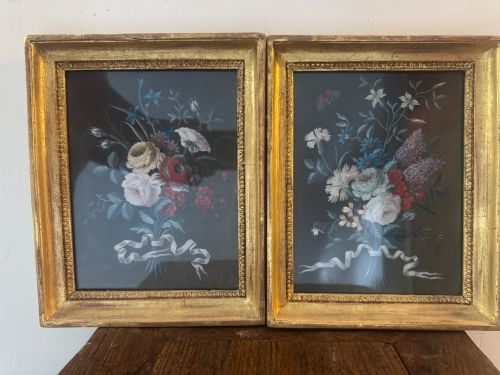
Compositions range from large pairs of oil paintings to miniature formats, executed by various European schools such as the Dutch School.
Materials and Construction
The works utilise oil paint or gouache applied to canvas, paper, or oak panels, reflecting the standard painterly techniques of their respective periods.
Many examples are housed in original or period-appropriate frames constructed from wood, giltwood, gilded wood, or finished with gold leaf.
Materials documented across the inventory include oil on canvas, oak panels, gouache, and giltwood frames.
Assessing Quality
Quality rests upon the precision of the brushwork and the depth of the composition, particularly in the rendering of complex textures like fruit skins, flower petals, and feathers.
The fidelity of the regional school and the preservation of the underlying canvas or oak panel distinguish finer historical examples from later revival pieces.
WILLIAM JONES OF BATH
The 18th Century Still Life Glossary
- Dutch School
- A designation for artists working in the Netherlands, known here for detailed depictions of floral arrangements and larder scenes. This regional grouping helps identify the origin and stylistic conventions of a painting.
- Baroque
- An artistic style characterised by dramatic lighting and rich detail, visible in several floral and fruit compositions. It provides visual intensity to the arrangement.
- Giltwood
- Wood carved and coated with gold leaf or metallic paint, frequently found on the frames surrounding these paintings. This material adds a reflective boundary to the artwork.
- Gouache
- An opaque water-based paint medium used on paper supports, seen in specific floral works. It offers a matte finish distinct from oil paints.
- Oak Panel
- A rigid wooden support used instead of canvas for certain late period paintings. It provides a stable and enduring foundation for oil pigments.
18th Century Still Life: Frequently Asked Questions
What is an 18th century still life?
These paintings depict inanimate subject matter such as flowers, fruit, game, and household objects, arranged to display natural beauty or symbolic meaning.
They reflect the artistic conventions and domestic interests of the Georgian and Baroque eras across various European schools.
How do I care for an oil painting on canvas?
Keep the canvas away from direct sunlight, damp environments, and sudden temperature shifts to protect the oil paint and underlying support.
Dust the surface gently with a soft, dry brush and avoid applying liquids or chemical cleaners directly to the pigment.
How can I distinguish an original period piece from a revival work?
Examine the physical materials, such as the weave of the canvas, the ageing of the oak panel, and the construction of the frame.
Period pigments and craquelure patterns offer physical evidence of age that later 20th century revival pieces do not replicate.