

18th Century Sterling Silver
18th century sterling silver comprises domestic tableware, flatware and personal accessories crafted during the Georgian era and earlier periods.
18th Century Sterling Silver
Buyers seeking 18th century sterling silver encounter a diverse selection of functional items designed for dining, tea service and personal use. These artefacts originate primarily from the Georgian period, encompassing reigns from Queen Anne through George III alongside distinct regional outputs.
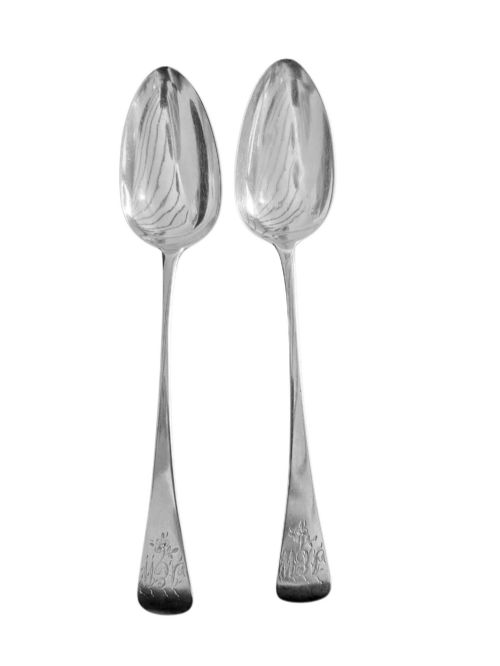
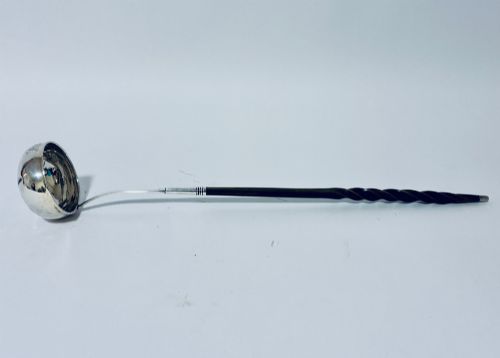
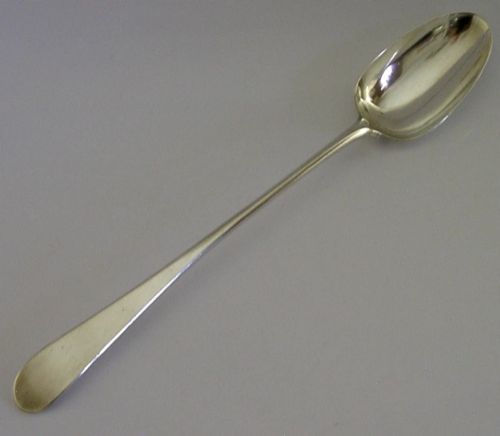
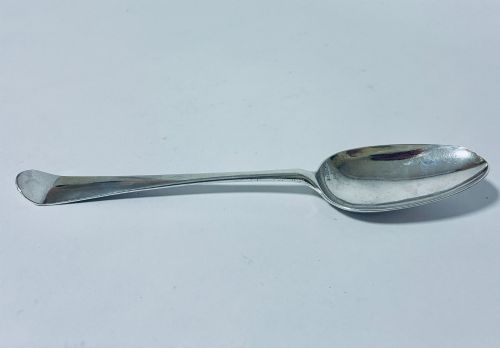
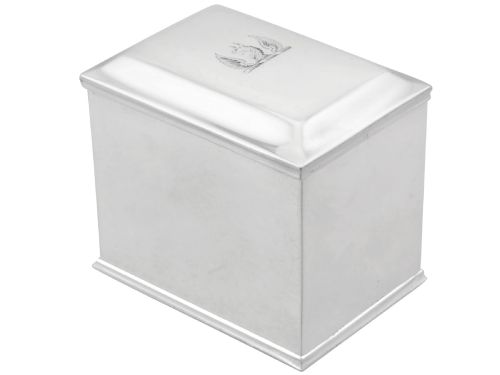
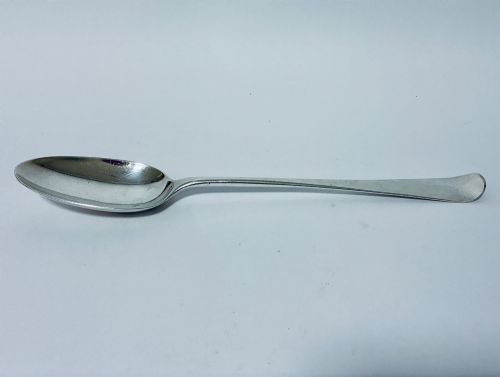
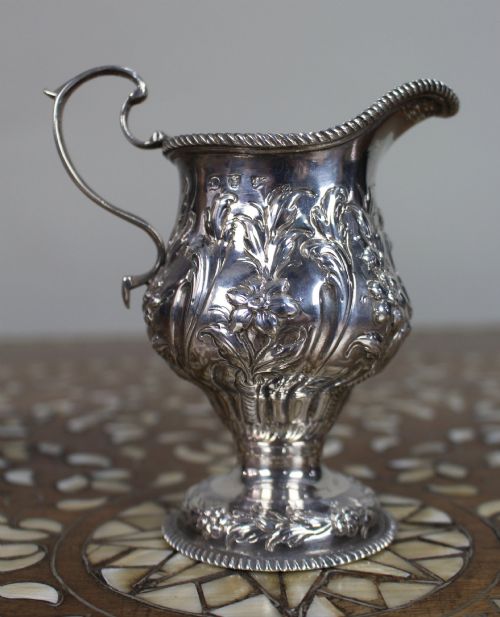
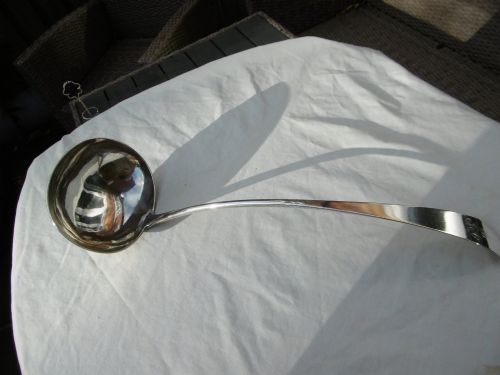
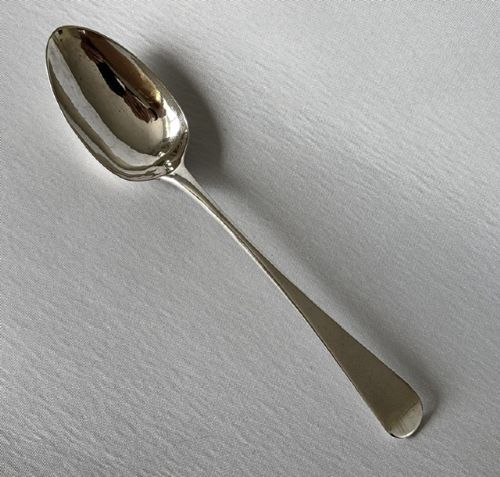
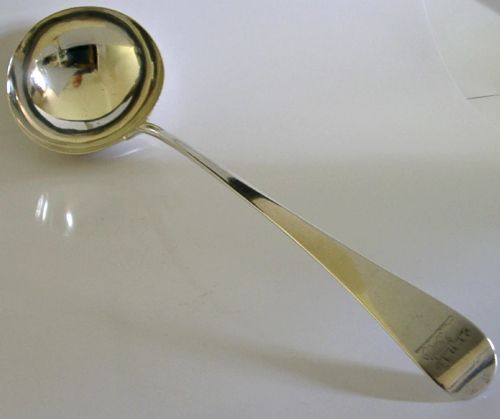
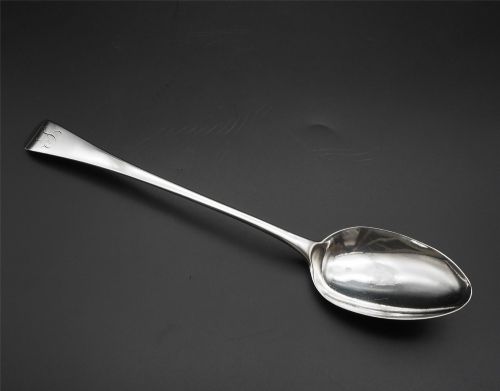
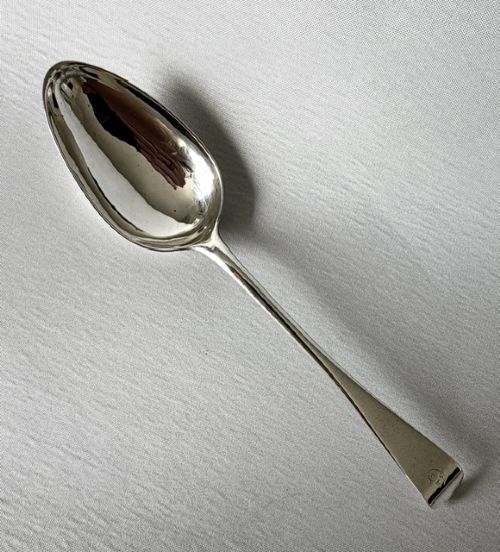
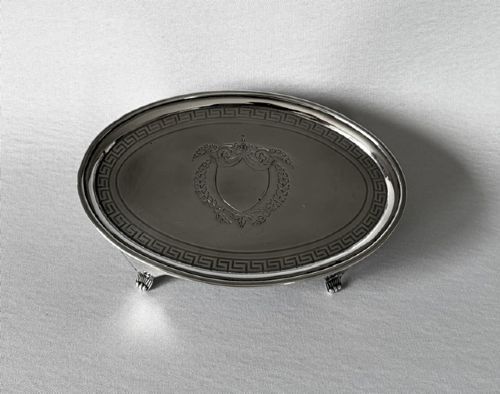
The most common survivals on this page include spoons, cream jugs, sugar baskets, salvers and tea caddies. Pieces range from provincial tablespoons to large cast coffee pots and tankards.
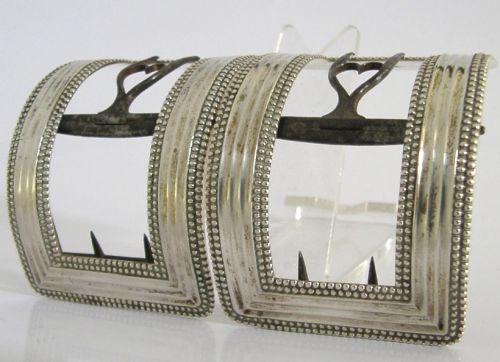
Beyond tableware, the selection includes smaller personal items such as shoe buckles, nutmeg graters, snuff boxes and pocket watches. These items reflect the domestic habits and social rituals of the period through durable metalwork.
Materials and Techniques
Silversmiths utilised solid sterling silver, frequently supplemented by silver gilt, wood, glass, ebony and bone for functional or decorative contrast. Metals were shaped through casting, hammering and raising from flat sheets into hollowware or utensils.
Decorative surface techniques included piercing, bright-cut engraving and chasing to create crests, fluting and floral motifs. Makers also incorporated cast handles, feet and rims onto body elements to add structural definition.
Listings feature items spanning the reigns of George I, George II and George III, alongside Newcastle and provincial outputs.
Factors That Determine Quality
Quality in these items depends upon the weight of the metal gauge and the crispness of the original chasing, piercing and engraving. Substantial gauge thickness ensures the object maintains its structural integrity through centuries of use.
The distinction between workshop outputs lies in the precision of assembly, where cast elements fit flush and hinges on boxes or tankards operate smoothly. Maker marks, clear hallmarks and original heraldic crests or engravings elevate the standing of a piece.
Peter and Jonathan Bateman·Hester Bateman·Andrew Archer·Stalker and Mitchison·Robert Hennell·Aldridge and Green·Cornelius Bland·William Plummer·Richard Gurney·John Craig·Robert Abercromby·John Payne·William Grundy·Thomas Daniell·Thomas Bamford·Samuel Meriton II
The 18th Century Sterling Silver Glossary
- Sterling silver
- An alloy comprising ninety-two point five percent silver and seven point five percent other metals, typically copper, standardised for durability. This composition forms the legal baseline for British silver output.
- Hallmark
- A stamped mark indicating the standard of silver purity, the assay office, the date letter and the maker's mark. These impressions provide the documentary evidence for dating a piece.
- Salver
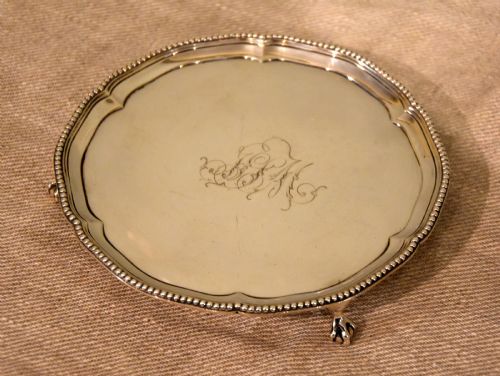
- A serving tray raised on feet, typically circular or shaped with a decorative border. They were utilised for serving beverages or presenting documents.
- Mote spoon
- A specialised spoon featuring a pierced bowl for straining tea leaves and a pointed stem for clearing teapot spouts. They appeared frequently during the early part of the century.
- Bright-cut engraving
- A technique utilising faceted cutting tools to create shallow, light-reflecting geometric or floral patterns. It was popular on flatware and small accessories during the later Georgian period.
18th Century Sterling Silver: Frequently Asked Questions
How do I clean antique silver?
Clean silver using a soft cloth and a gentle, non-abrasive silver polish formulated specifically for antique metalwork. Avoid harsh chemical dips that strip away desirable patination.
Wash the item in warm soapy water afterwards and dry it completely with a lint-free cloth to prevent tarnishing.
What do hallmarks tell us?
Hallmarks provide verifiable data regarding the assay office, the year of manufacture and the registered mark of the silversmith. These stamps protect buyers by confirming the metal standard.
Different towns maintained distinct marks, allowing researchers to trace pieces to London, Newcastle or provincial workshops.
How were caddy spoons used?
Caddy spoons were utilised to measure dry tea leaves from a caddy into the teapot during formal tea services. Their shallow bowls held precise quantities.
Silversmiths fashioned them into whimsical shapes, including shells, hands and jockey caps, making them popular collector items.
What is a marrow scoop?
A marrow scoop is a double-ended utensil featuring a narrow trough at each end designed for extracting bone marrow from roasted joints. Dining customs of the era made marrow a celebrated delicacy.
One end is typically larger than the other to accommodate different bone sizes.