
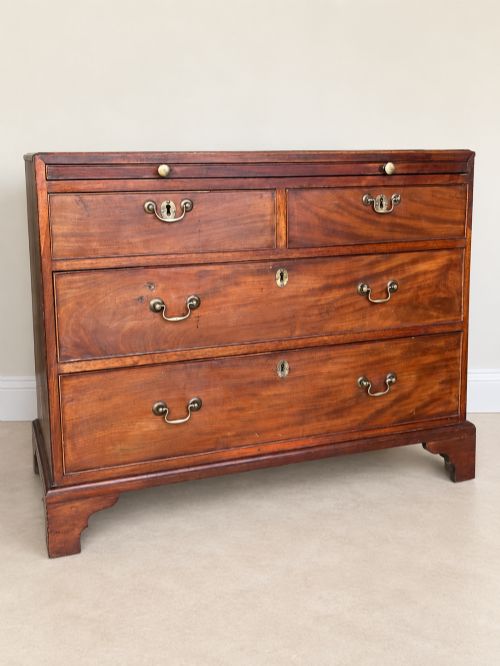
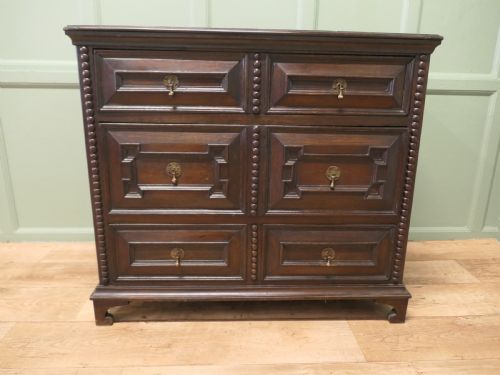
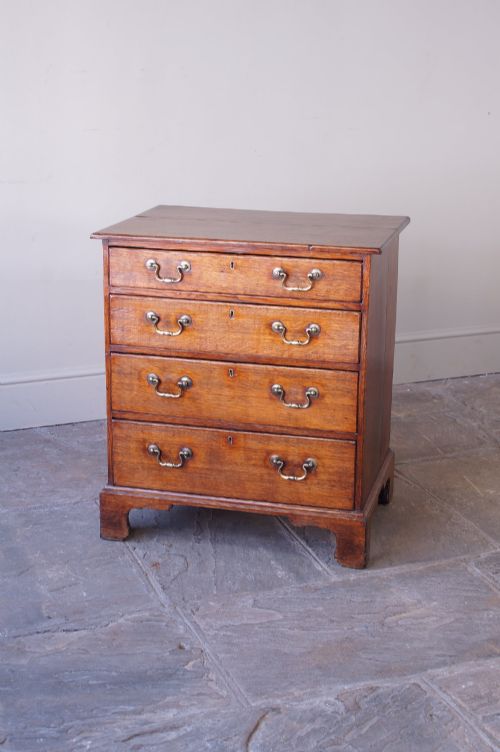
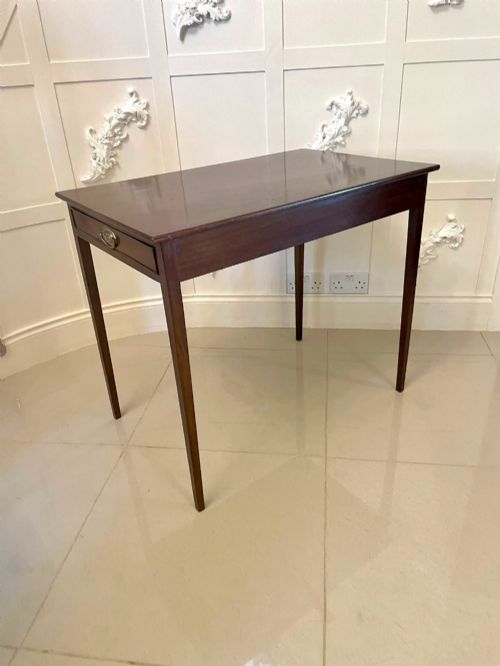
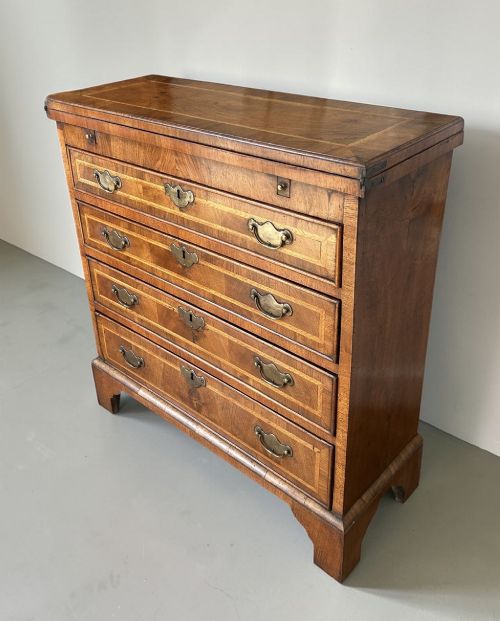
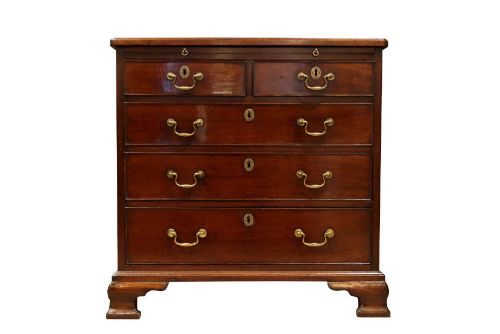
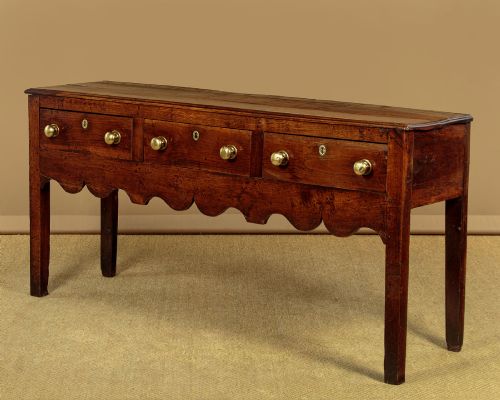


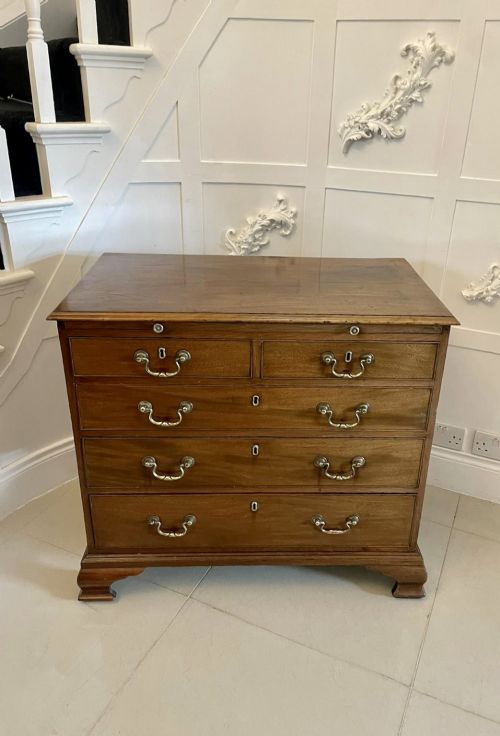
18th Century Small Drawers
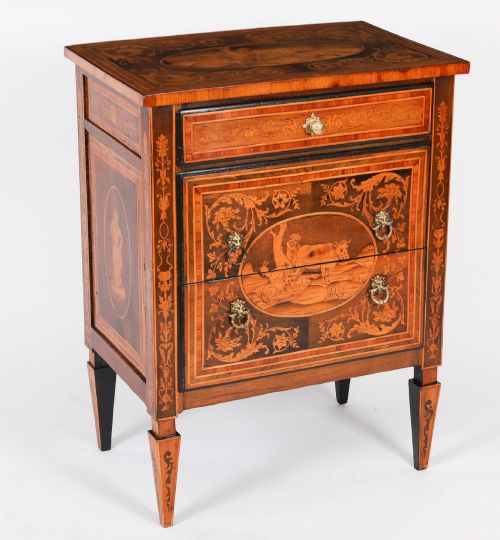
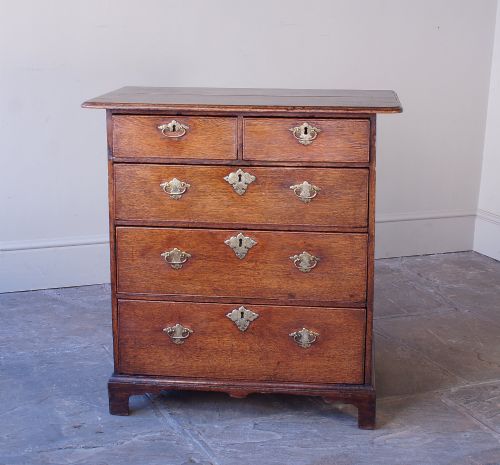
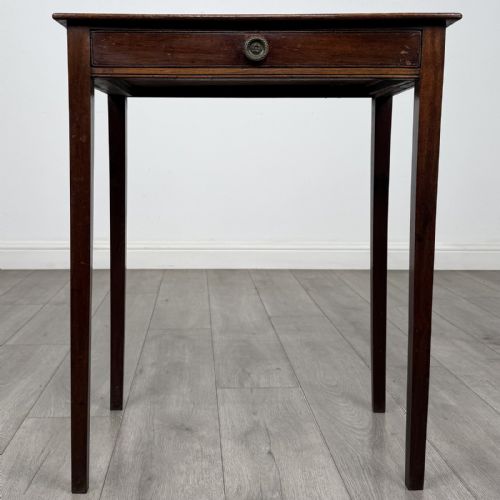
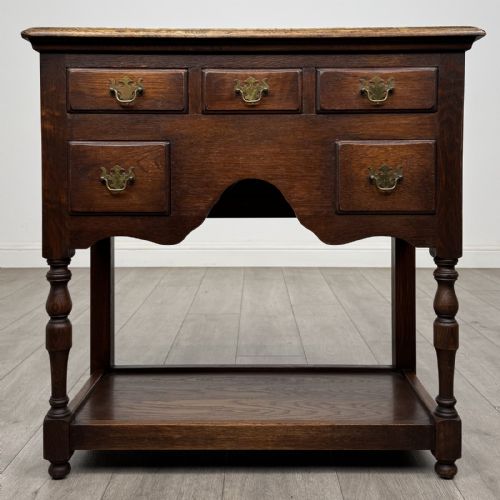
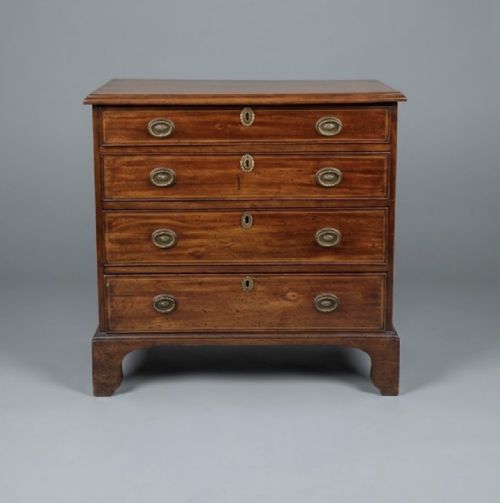
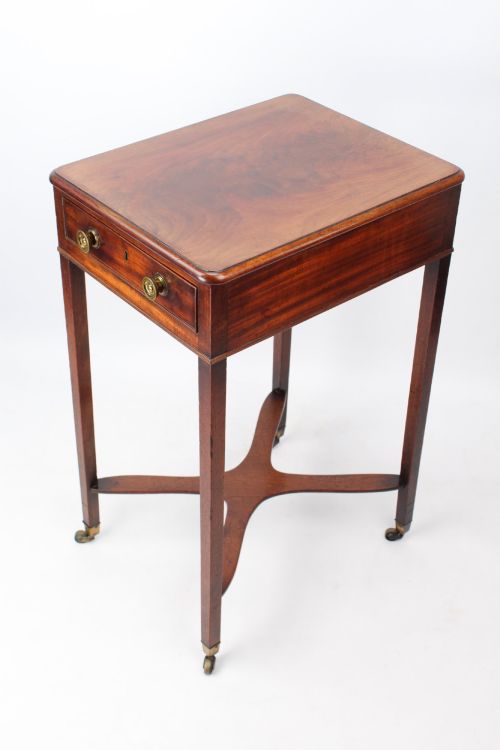
When searching for 18th century small drawers, you are looking at compact chests, lowboys and bureaus designed for intimate domestic storage.
18th Century Small Drawers
Beyond standard chests, this category includes specialist forms such as bachelor's chests equipped with brushing slides, coffer bach items originating from Wales, and serpentine commodes. The majority of surviving examples date from the mid to late eighteenth century, reflecting the prevailing domestic requirements of the period for scaled-down storage.
Regional variations also appear within the selection, ranging from English provincial oak pieces to Swedish rococo and French provincial walnut commodes. These items demonstrate how cabinetmakers adapted standard storage forms to fit restricted spatial confines while maintaining functional utility.
How they were made
Cabinetmakers constructed these pieces using dense timber frames of mahogany, oak, walnut, elm and burr walnut, frequently accented with brass handles and escutcheons. Joinery methods relied on precision dovetailing for drawer construction and sturdy mortise and tenon joints for the structural carcase.
Surface finishing involved careful polishing to bring out the natural grain and warm patina of the primary woods, sometimes incorporating decorative veneers and inlay work such as satinwood. Drawer interiors and secondary framing components typically utilised supportive secondary timbers like oak or pine to ensure long-term stability.
Several items double as disguised furniture, including close stools shaped precisely like small bedside chests.
What varies in quality
The standard of execution in 18th century small drawers depends heavily on the crispness of the timber selection, such as highly figured flame mahogany or choice burr walnut veneers. Superior examples display meticulous attention to proportion, particularly in the scaling of bracket feet, mouldings and drawer configurations.
Originality of hardware and surface finish significantly dictates the standing of a piece, with untouched patination and period brass drop handles commanding greater regard. The finesse of the internal drawer construction and the retention of original structural elements further separate standard vernacular items from master cabinetwork.
The 18th Century Small Drawers Glossary
- Brushing slide
- A pull-out shelf integrated above the top drawers, traditionally utilised for writing or grooming while standing.
- Coffer bach
- A small Welsh chest featuring a drawer or compartment in the base, historically used for linen or valuables.
- Lowboy
- A small dressing or side table featuring one or more tiers of drawers supported on four legs.
- Bureau
- A writing cabinet featuring a sloping fall-front that opens to reveal internal pigeonholes and small drawers.
- Serpentine
- A distinct undulating curved front profile shaped in a gentle wave, characteristic of finer cabinet work.
18th Century Small Drawers: Frequently Asked Questions
How do I use a bachelor's chest?
A bachelor's chest functions as a compact storage unit featuring a pull-out sliding shelf directly beneath the top surface. The sliding board provides an immediate writing or display space.
This built-in feature makes the chest practical as a bedside table or compact desk in modern rooms.
What woods were used?
Cabinetmakers primarily utilised mahogany, oak and walnut for the primary visible surfaces of these pieces. Secondary timbers like elm and pine often appeared in internal drawer construction.
Finer examples frequently incorporated decorative veneers such as burr walnut or flame mahogany to enhance the visual grain.
How do I tell periods apart?
Earlier pieces from the Queen Anne or early George II eras often display walnut construction, pad feet and flat-front proportions. Later George III items frequently shift towards mahogany, bracket feet and serpentine or bow-front shapes.
Examining the internal drawer linings, timber selection and handling of mouldings helps clarify the specific decades of manufacture.