




18th Century Satinwood Caddy
An 18th century satinwood caddy is a refined timber box made for storing precious tea leaves, prized for its golden lustre and intricate decorative work.
18th Century Satinwood Caddy
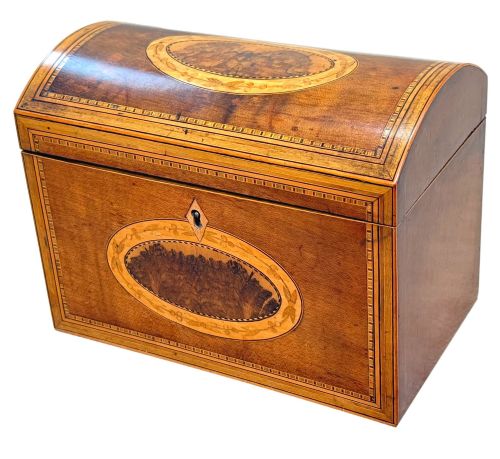
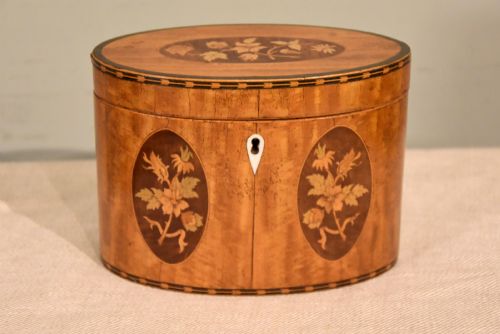
When you search for an 18th century satinwood caddy, you are looking at small, portable timber containers designed during the Georgian and George III periods to keep dry tea secure under lock and key. These pieces typically take oval, octagonal, navette, or hexagonal forms, reflecting the classical proportions favoured by Sheraton designers of the late 18th century.
The versions you are most likely to meet on this page include oval tea caddy boxes featuring contrasting stringing and shell, butterfly, or floral marquetry inlays. Alongside standard tea canisters, the selection encompasses related decorative boxes, stationery boxes, desk organisers, and occasionally fitted pieces retaining original glass bowls and mixing sticks.
How they were made
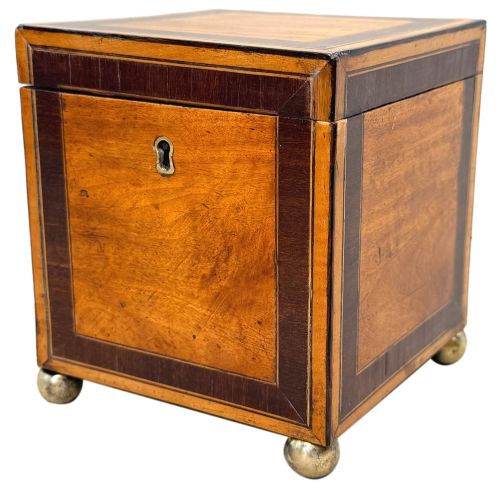
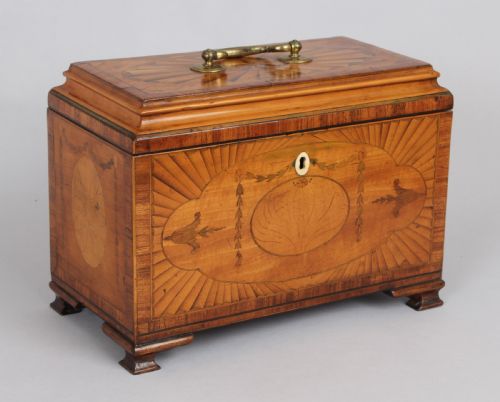
Cabinet makers constructed these vessels using a solid timber carcase overlaid with fine veneers of golden satinwood, paired with contrasting exotic woods such as harewood, boxwood, and ebony. These secondary timbers created sharp geometric borders, intricate banding, and pictorial marquetry inlays across the curved or flat surfaces.
Fine craftsmanship is evident in the delicate wood inlay work and the integration of functional elements such as brass mounts, escutcheons, and hinges. Some elaborate examples incorporated paper-scrolled quilling or calamander elements alongside the primary satinwood structure.
18th Century Satinwood Caddy Retail Price Guide 2026
Typical asking prices for 18th century satinwood caddy among the pieces listed under this phrase on Sellingantiques today, from the lower quarter to the upper quarter. They describe what is for sale here now, not the wider market.
Some tea caddies survived the centuries because their original locks proved too stubborn for greedy Victorian children.
What varies in quality
The degree of refinement in the timber figure and the complexity of the marquetry inlay largely determine the standard of a piece. Finer examples display carefully selected satinwood with a lively chatoyancy, complemented by crisp, multi-wood pictorial motifs rather than simple geometric borders.
Originality of surface finish and internal fittings also elevates a piece. Boxes that retain their original glass mixing bowls, mixing sticks, and working locks with keys command greater attention from collectors than those altered or converted later for stationery use.
The 18th Century Satinwood Caddy Glossary
- Satinwood
- A lustrous tropical timber known for its golden-yellow sheen and shimmering grain. It served as the primary veneer for high-end Georgian cabinet furniture.
- Marquetry
- Decorative patterns formed by fitting together small pieces of tinted or natural wood veneer. This technique created pictorial shell and floral motifs on box lids.
- Harewood
- Sycamore timber stained a greenish-grey hue using iron solutions. Cabinet makers utilised it alongside satinwood to provide contrasting colour in inlaid borders.
- Navette
- A pointed, boat-shaped outline popular in late 18th century design. Caddies fashioned in this curved form required specialist carpentry skill.
- Cheveret
- A small portable writing stand or table equipped with drawers and compartments. This form occasionally incorporates satinwood construction and stationery storage.
18th Century Satinwood Caddy: Frequently Asked Questions
What is an 18th century satinwood caddy?
It is a small, decorative timber box built during the Georgian period to store expensive loose tea leaves safely. These containers often feature fine veneers and elaborate inlays.
Cabinet makers designed them in various shapes, including oval, octagonal, and navette forms, to sit prominently in a refined drawing room or parlour.
How were these boxes used?
Owners used them to keep valuable black and green teas secure under lock and key. Tea was a costly commodity in the 18th century, strictly managed by the head of the household.
Inside, compartments separated different tea varieties, and some boxes included glass bowls used for blending leaves before brewing.
How do I live with one today?
These boxes function well as decorative objects on side tables, mantelpieces, or desks. Their warm golden tones complement both period and contemporary interiors.
They also provide practical storage for small keepsakes, jewellery, or modern stationery, provided they are kept away from direct sunlight and excessive heat.
How can I tell Sheraton style from other periods?
Sheraton style pieces from the late 18th century typically exhibit classical symmetry, precise geometric stringing, and delicate contrasting wood inlays. They favour lighter timbers like satinwood and harewood.
Earlier Georgian items often display heavier proportions and different carving techniques, while Victorian pieces may show variations in construction methods and secondary woods.