

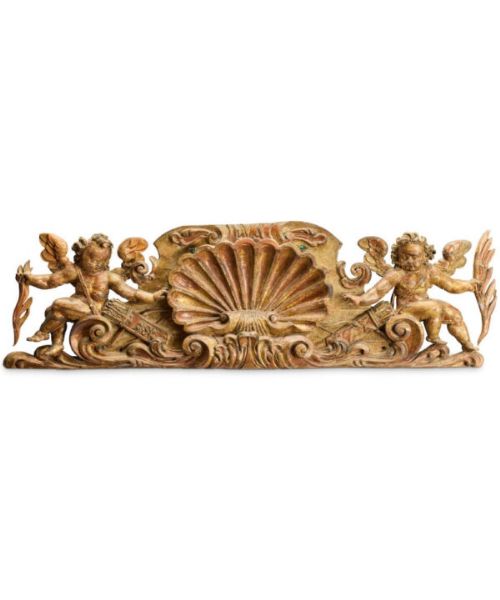


18th Century Putto
An 18th century putto brings the spirited energy of Baroque and Rococo design into a room through classical figural art.
18th Century Putto
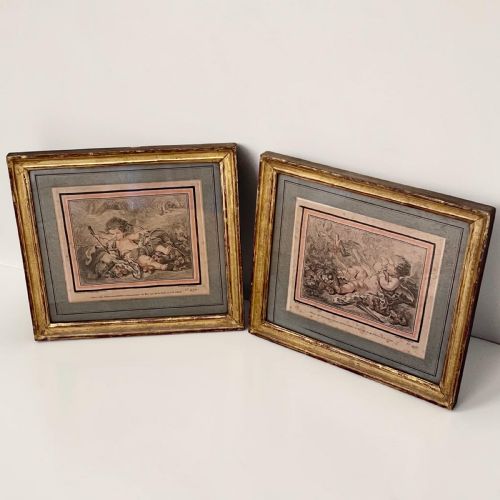
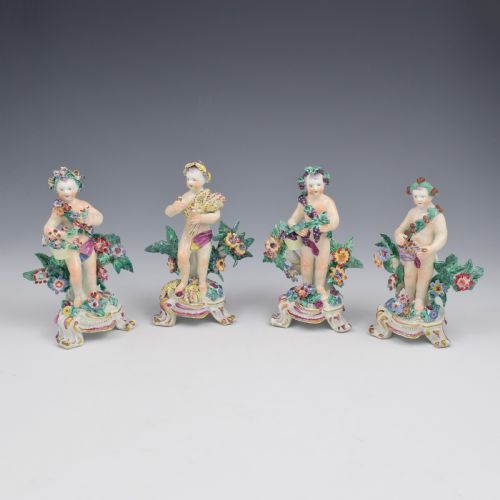
An 18th century putto encompasses sculptural figures, porcelain figurines, paintings, and decorative mounts depicting winged cherubs or cupids. When searching for an 18th century putto, buyers encounter works originating from English, French, German, and Italian workshops spanning the Baroque, Rococo, and Neoclassical styles.
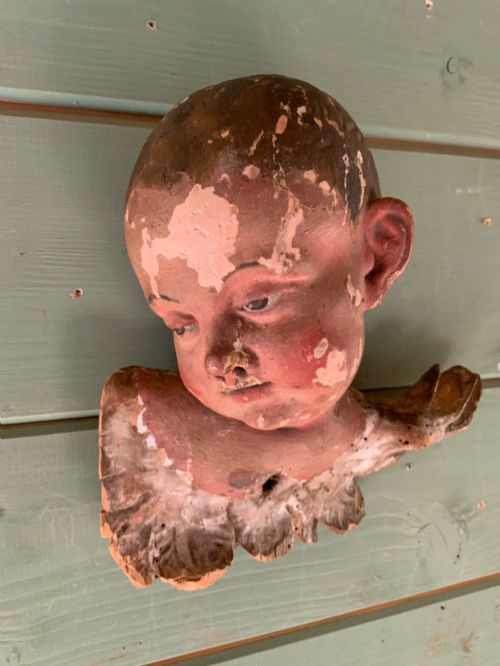
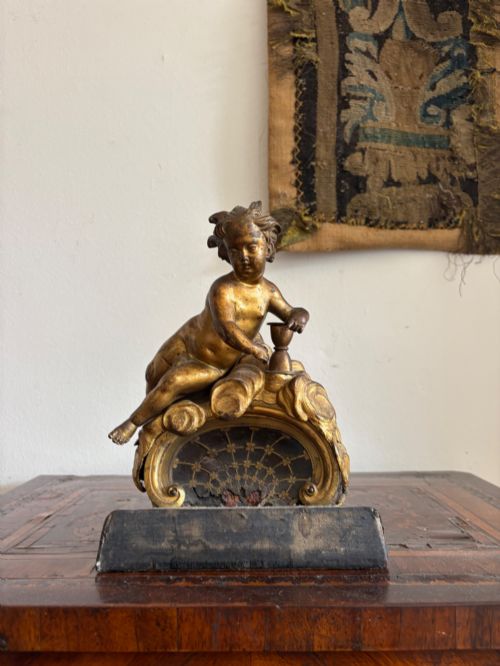
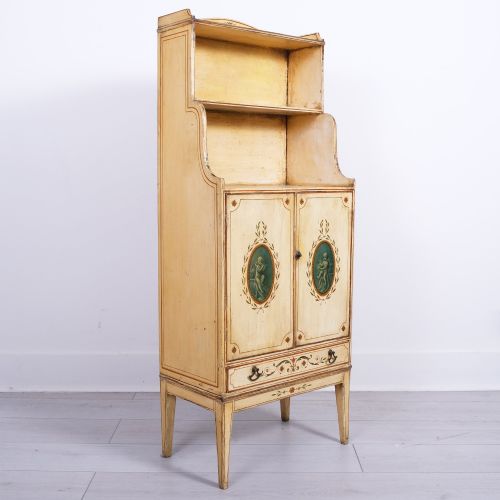
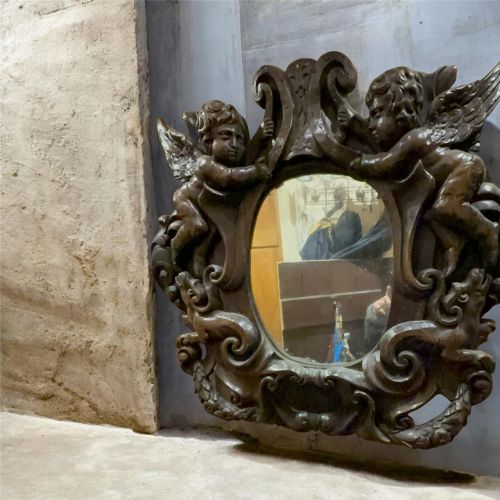
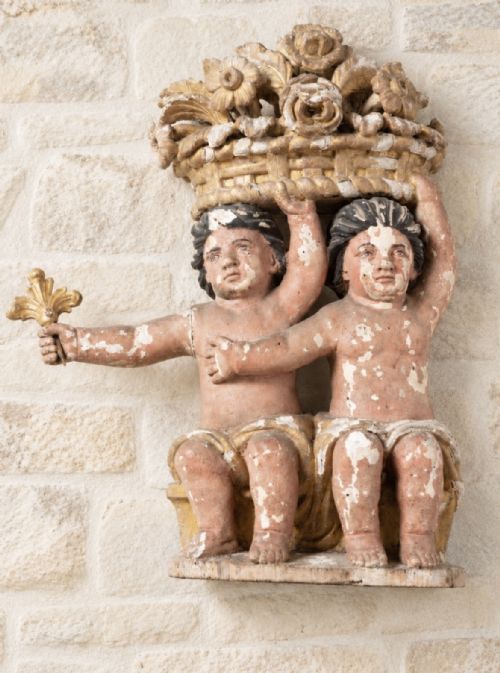
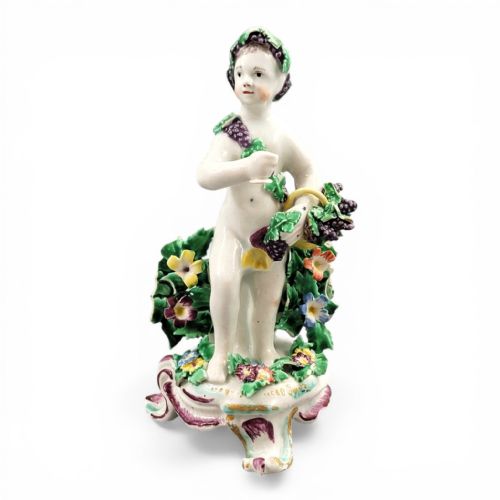
The versions met most frequently on this page range from carved wood wall ornaments and gilt bronze mounts to soft-paste porcelain figures from factories such as Bow, Chelsea, and Meissen. These representations appear across mirrors, furniture pediments, clocks, and standalone sculptures.
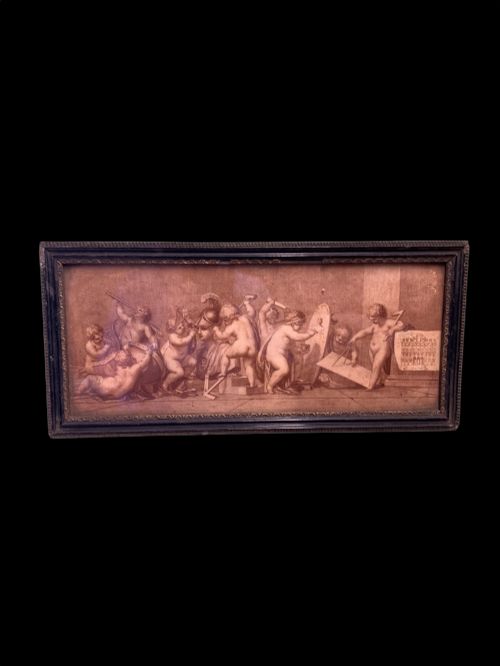
Makers and artists of the period rendered these infant figures in media as varied as oil paint, faience, lead, and plaster, reflecting the versatile decorative role of the putto in 18th-century interiors.
How They Were Made
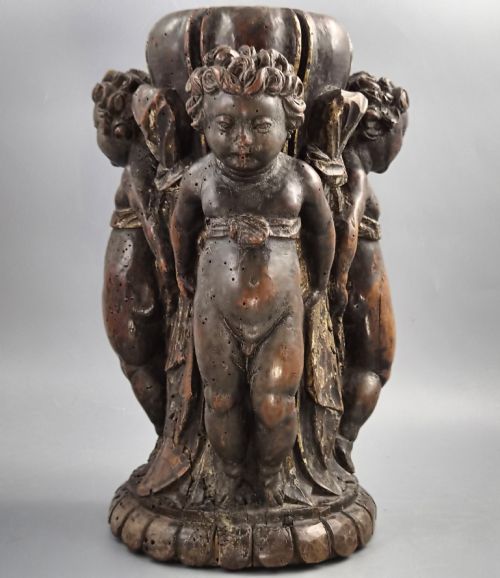
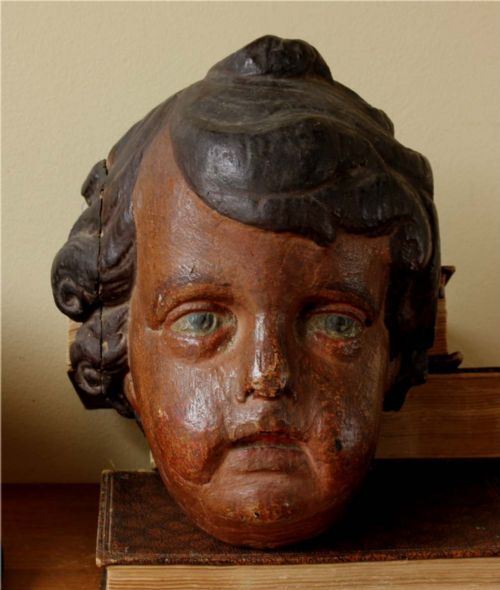
Carved wood examples utilise traditional joinery and hand-carving techniques, frequently finished with gesso, gold leaf, or polychrome paint to accentuate the contours of the figures. Artisans shaped these pieces from oak, walnut, and other timbers for architectural pediments, mirror frames, and torchiere bases.
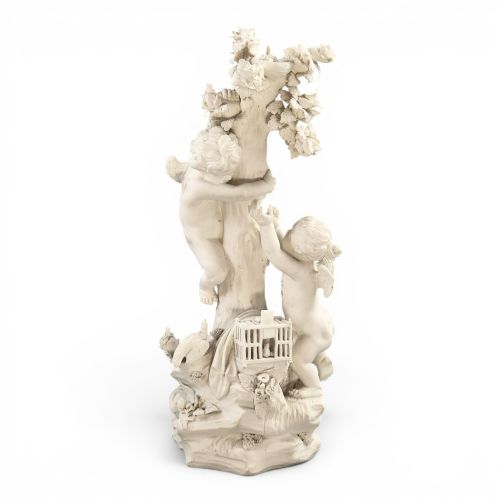
Ceramic figures rely on soft-paste porcelain or faience production methods, shaped in moulds and hand-painted with detailed enamels. Factories utilised biscuit porcelain for unglazed matte finishes, as seen in specific English and continental figures.
Metalwork pieces involve bronze casting and ormolu fire-gilding, creating decorative mounts, fireplace friezes, and clock ornaments with durable metallic detail.
Listings feature items spanning the 17th, 18th, and 19th centuries, executed in carved wood, bronze, porcelain, oil paint, and lead.
What Varies in Quality
The preservation of original surface treatments, such as polychrome pigments, gilding, or enamel work, significantly influences the integrity of the piece. Traces of period finishing provide authentic tactile character that later restorations often obscure.
Demarteau·Grinling Gibbons·Veuve Perrin·Johann Joachim Kändler
The 18th Century Putto Glossary
- Putto
- A representation of a human infant, usually winged, derived from classical art and prominent in Renaissance and Baroque decorative schemes. Plural putti.
- Ormolu
- Finely ground high-carat gold applied to a bronze base using a mercury amalgamation technique, creating a durable golden finish on 18th-century mounts and hardware.
- Soft-Paste Porcelain
- A vitreous ceramic composition developed in Europe as an alternative to Chinese hard-paste porcelain, fired at lower temperatures and utilised by factories like Bow and Chelsea.
- Faience
- Tin-glazed earthenware produced widely in continental Europe during the 17th and 18th centuries, offering an opaque white surface for hand-painted enamel decoration.
- Torchiere
- A tall stand or pedestal designed to support a light source, frequently featuring carved wood figures such as putti in its structural base.
18th Century Putto: Frequently Asked Questions
What is an 18th century putto?
An 18th century putto is a depiction of a plump, often winged infant figure used in decorative arts, paintings, and sculptures across Europe. These figures draw on classical mythology and religious iconography.
Craftsmen integrated these motifs into mirrors, furniture, clocks, and porcelain table settings during the Georgian and continental periods.
How were putti used in 18th century interiors?
Putti served as decorative elements on architectural woodwork, fireplace friezes, and wall mounts, adding movement and classical allusion to domestic spaces. They also appeared as standalone porcelain table ornaments.
Wealthy patrons displayed these items to demonstrate cultural fluency and an appreciation for Baroque and Rococo aesthetics.
How do I care for wooden putti?
Wooden putti require stable indoor humidity and protection from direct sunlight to preserve painted surfaces, gesso, and gold leaf. Dusting should be done gently with a dry, soft cloth.
Avoiding harsh cleaning agents ensures the original historic finishes remain intact over time.
How can I distinguish porcelain periods?
Porcelain pieces often display factory marks, distinct glaze characteristics, and specific modelling styles associated with makers like Meissen, Bow, or Chelsea. Soft-paste porcelain from this era typically exhibits a warmer tone and distinctive translucency.
Comparing the modelling quality to documented examples helps establish the approximate production decade.