


18th Century Pencil Drawing
These 18th century pencil drawing pieces offer intimate historical portraits and coastal scenes executed on paper and vellum.
18th Century Pencil Drawing
When you search for an 18th century pencil drawing, you encounter delicate works capturing portraits, family groups, and architectural studies. These pieces originate primarily from the Georgian period and the year 1800.
The versions you are most likely to meet on this page include portrait drawings and framed artwork. Artists of the era recorded notable figures, royal figures such as Queen Marie Leczinska, and private family friends.
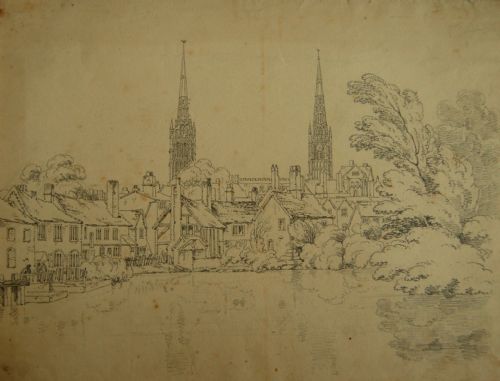
Beyond portraits, the category encompasses sketches of coastal scenes and city skylines like Rouen. These works provide a direct window into the draughtsmanship of the Georgian era.
How these works were created
Makers utilised graphite, chalk, and pencil on paper or vellum as the primary medium for these drawings. Plumbago, an early form of graphite, was frequently employed for highly detailed miniature portraits.
Many surviving examples are housed in wood frames, occasionally complemented by glass and gold leaf accents. The physical support relies heavily on aged paper stocks that absorb the fine carbon lines.
18th Century Pencil Drawing Retail Price Guide 2026
Typical asking prices for 18th century pencil drawing among the pieces listed under this phrase on Sellingantiques today, from the lower quarter to the upper quarter. They describe what is for sale here now, not the wider market.
Listings feature works spanning the 18th century, the Georgian era, and the year 1800, utilising paper, vellum, graphite, and chalk.
What separates the finest examples
The distinction between standard sketches and premier works rests upon the precision of the draughtsmanship and the known identity of the sitter or artist. Attributions to documented hands elevate the historical importance of the sheet.
Condition of the paper and the clarity of the graphite lines determine visual appeal. Finer pieces retain crisp contrast without excessive foxing or heavy fading across the vellum or paper surface.
John Taylor·James Ferguson·Ozias Humphry·Sir Nathaniel Dance-Holland·Henry Edridge·William Henry Hunt
The 18th Century Pencil Drawing Glossary
- Plumbago
- An early term for graphite used in drawing, derived from the Latin for lead ore. Plumbago portraits are known for their fine, meticulous detail.
- Vellum
- A fine parchment made from prepared calfskin, providing a smooth surface for detailed ink and pencil work. It was often utilised for miniature portraits.
- Georgian
- The period spanning the reigns of the Hanoverian kings from 1714 to 1830. Much of the work in this category falls squarely within this aesthetic and historical span.
- Neoclassical
- A style drawing inspiration from the classical art and culture of ancient Greece and Rome. French Neoclassical examples appear among these portrait drawings.
- Portrait Miniature
- A small, highly detailed painting or drawing of a person popular during the period. These were often framed for intimate display.
18th Century Pencil Drawing: Frequently Asked Questions
What is an 18th century pencil drawing?
These works are original graphic pieces executed in graphite, chalk, or plumbago on paper and vellum during the Georgian era. They primarily feature portraiture, architectural views, and coastal scenes.
Collectors prize them for their immediacy and the direct touch of the artist's hand. Each piece captures historical likenesses and scenes from daily life centuries ago.
How should I frame an old drawing?
Paper and vellum require conservation framing to protect them from environmental damage. Acid-free mounts and UV-filtered glass prevent fading and degradation of the graphite.
Keep these artworks away from direct sunlight and damp conditions. Proper framing ensures the fragile paper support survives for future generations.
Are these drawings signed by the artists?
Some pieces bear direct signatures or contemporary inscriptions naming the artist and the sitter. Others are attributed based on stylistic comparison and archival provenance.
Attributions connect anonymous sheets to documented practitioners of the era. Provenance records often link works to notable collections and former ownership.
What subjects are common in these sketches?
Human subjects dominate the category, ranging from family friends and royalty to historical figures. Portrait drawings and miniature portraits represent the core of surviving output.
Landscape and topographical studies also appear, including coastal scenes and city skylines. These diverse subjects reflect the wide observational interests of Georgian artists.