



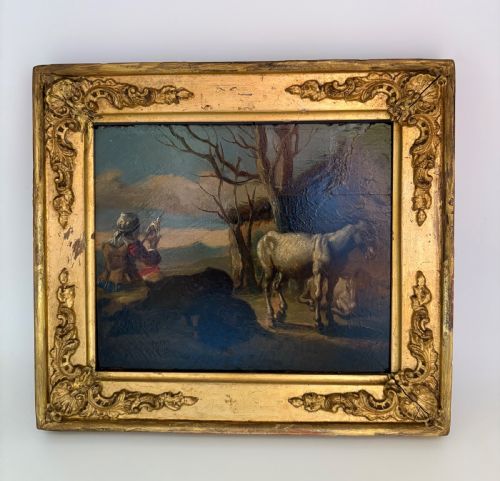


18th Century Oil Panel
When examining an 18th century oil panel, collectors acquire portable historic artworks rendered directly onto rigid wooden supports.
18th Century Oil Panel
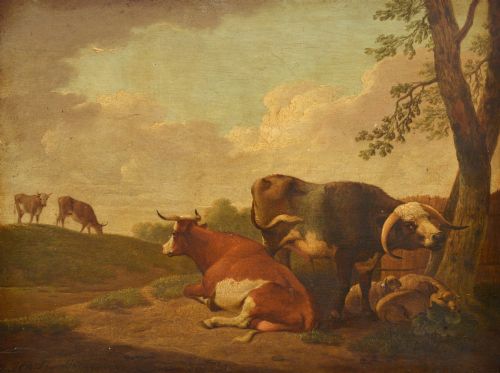
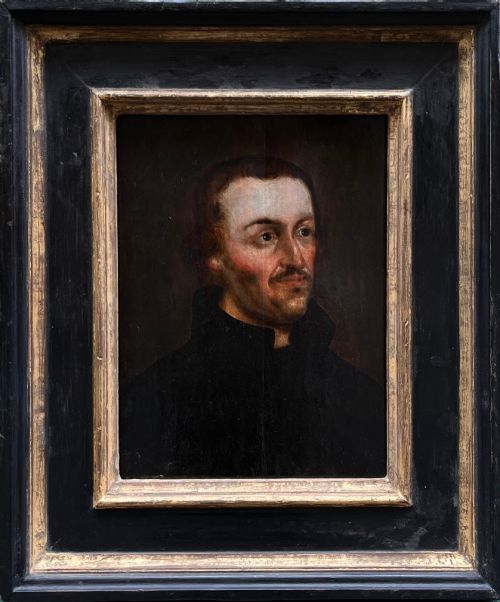
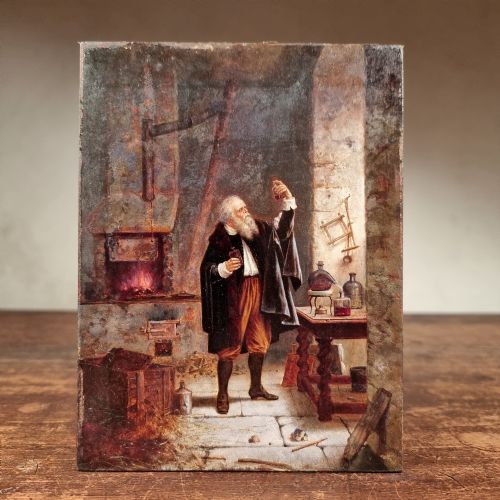
The 18th century oil panel category encompasses a diverse array of fine art, ranging from intimate portraits and Dutch-inspired still lifes to sweeping pastoral landscapes and heraldic coach panels. Buyers searching for an 18th century oil panel encounter works originating from various European schools, including British, Dutch, French, and Italian traditions.
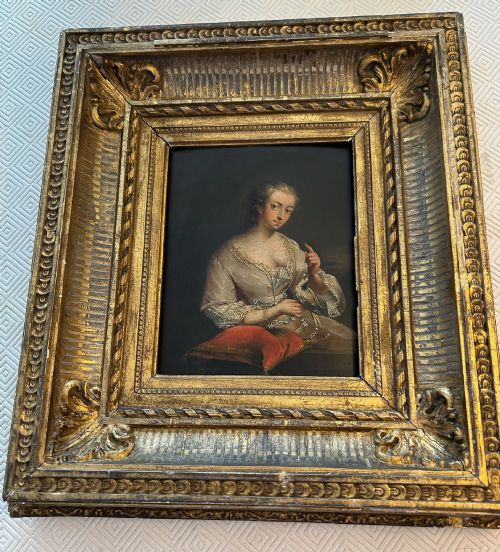
Portraits of gentlemen, ladies, and notable figures dominate the selections alongside architectural scenes, genre paintings, and topographical views. These pieces frequently manifest on oak, pine, or general wood panels, housed within period frames such as giltwood or baroque designs.
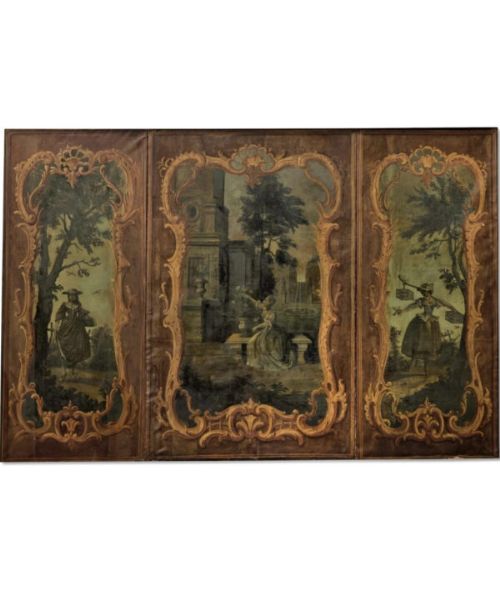
Smaller cabinet paintings and miniature works share space with larger overdoor decorative panels and triptychs. The prevailing formats reflect the domestic and architectural tastes of the Georgian and Regency eras, offering direct visual links to eighteenth-century life.
Quality factors in historic panels
The distinction between standard works and master-level execution lies in the finesse of the brushwork, the anatomical accuracy of portrait subjects, and the atmospheric depth of landscapes. Finer examples display confident draughtsmanship and nuanced handling of light and shadow, particularly in clothing folds, facial expressions, and foliage.
The integrity of the wooden substrate and the preservation of the original paint layer heavily influence the standard of a piece. Works retaining their untouched surface with minimal overpainting command greater appreciation among collectors than heavily restored examples.
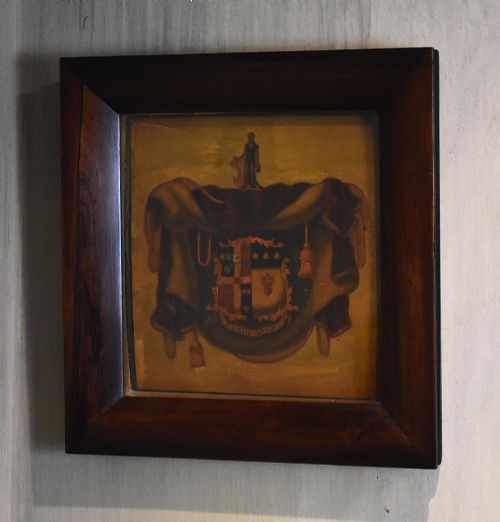
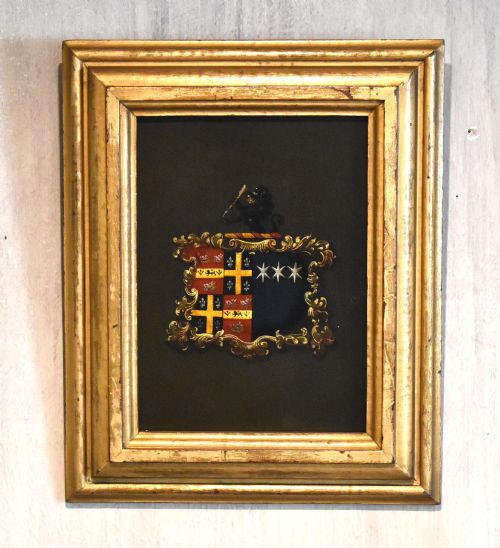
A painted coach panel once travelled the muddy lanes of Scotland, carrying heraldry rather than canvas.
Hendrik Willem Schweickhardt·Benjamin Eugene Fichel·William Williams·George Lambert·Francesco Renaldi
The 18th Century Oil Panel Glossary
- Oil on panel
- A painting technique where oil-based pigments are applied directly to a rigid wooden board rather than a flexible canvas. This method was widely favoured by Northern European artists for its smooth surface and durability.
- Giltwood
- Wood carved and coated with a thin layer of gold leaf or gilt powder. It is frequently seen on the ornate frames housing period paintings.
- Genre painting
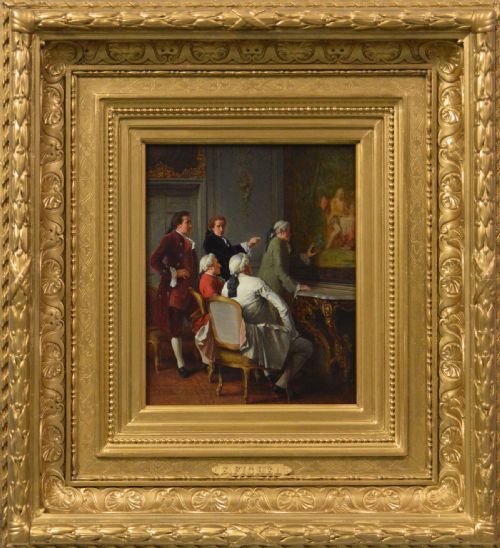
- Artwork depicting scenes from everyday life, ordinary people, and domestic interiors rather than grand historical or mythological narratives. These compositions offer insights into past social customs.
- Overdoor panel
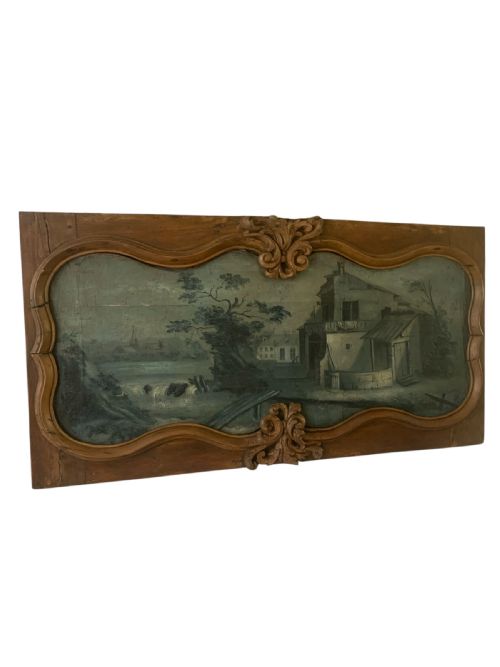
- A decorative painting specifically created to fit into the architectural space directly above a doorway. These panels often feature landscapes, heraldry, or allegorical subjects.
- Grisaille
- A painting executed entirely in monochrome shades of grey, neutral grey, or low saturation. It creates a sculptural effect mimicking stone or relief carving.
18th Century Oil Panel: Frequently Asked Questions
How do I care for a wooden panel painting?
Maintain stable room temperatures and avoid hanging the artwork in direct sunlight or near heat sources, as extreme fluctuations cause timber to warp and paint layers to crack.
Clean the surface only with a soft, dry cloth and consult a professional conservator for any structural repairs or deep cleaning.
How can I tell oak panels from pine panels?
Oak panels typically display distinctive medullary rays, visible as short flecks or streaks in the grain, and possess a heavier, denser weight.
Pine panels feature softer, more uniform grain patterns with resin streaks and generally feel lighter when handled.
What is a coaching panel?
Coaching panels are decorative or heraldic paintings executed on wood that were originally mounted onto the exterior doors of horse-drawn carriages and coaches.
They frequently display family crests, coats of arms, or topographical views commissioned by aristocratic owners to denote status during travel.
How do I distinguish British school from Dutch school works?
British school paintings often focus on portraiture, sporting subjects, and specific regional landscapes associated with Georgian society.
Dutch school works frequently lean towards domestic genre scenes, flower still lifes, and atmospheric landscapes influenced by seventeenth-century traditions.