


18th Century Leather Armchair
An 18th century leather armchair offers deep traditional comfort, bringing authentic period character and rich tactile warmth to a room.
18th Century Leather Armchair
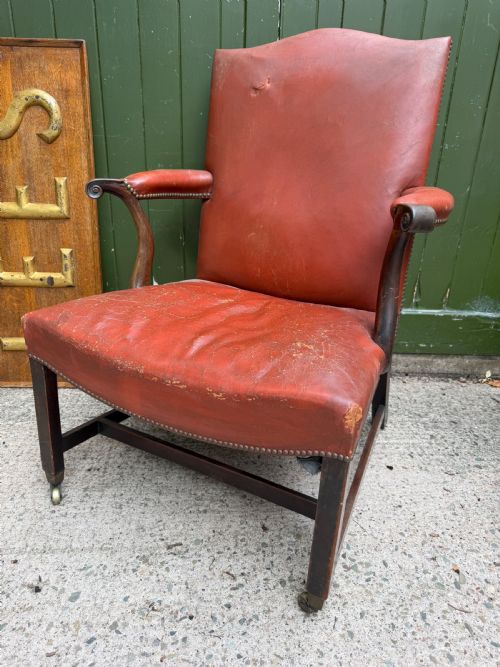
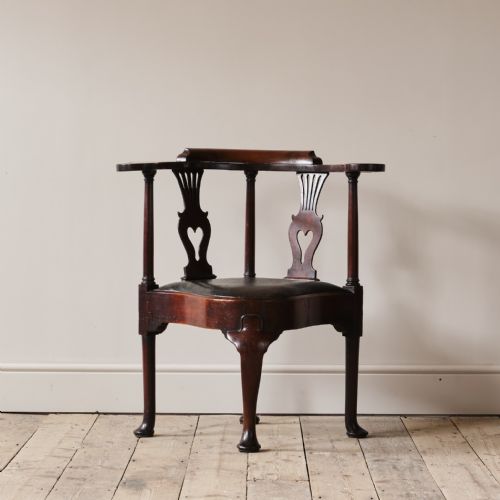
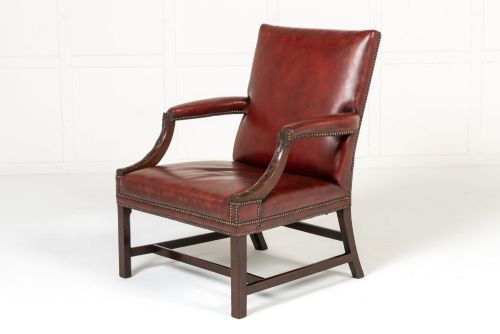
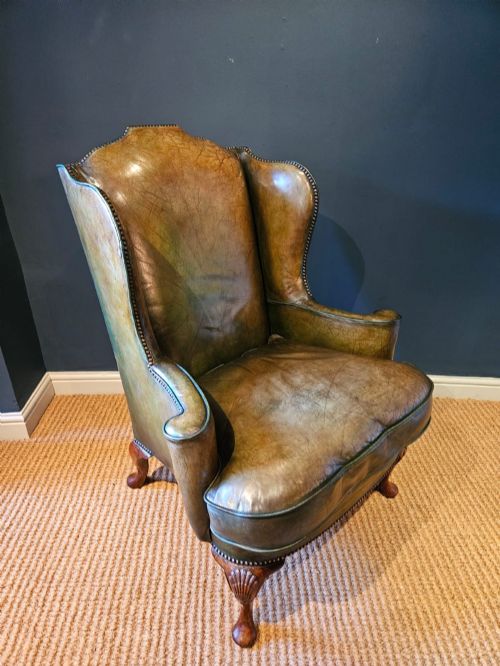
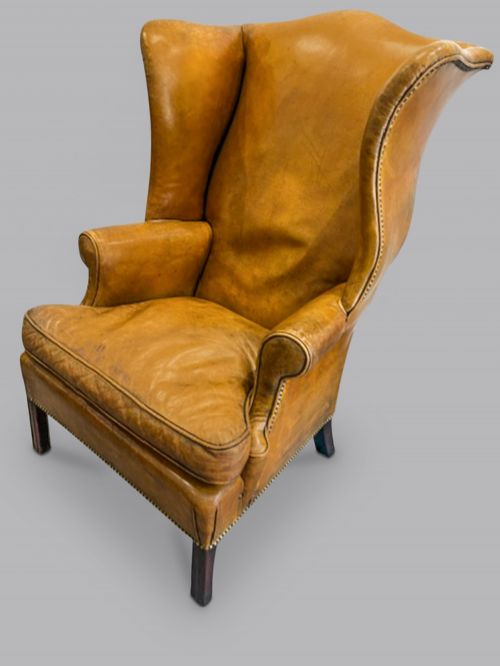
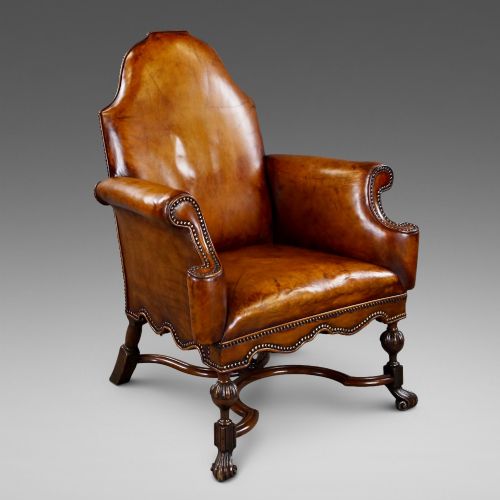
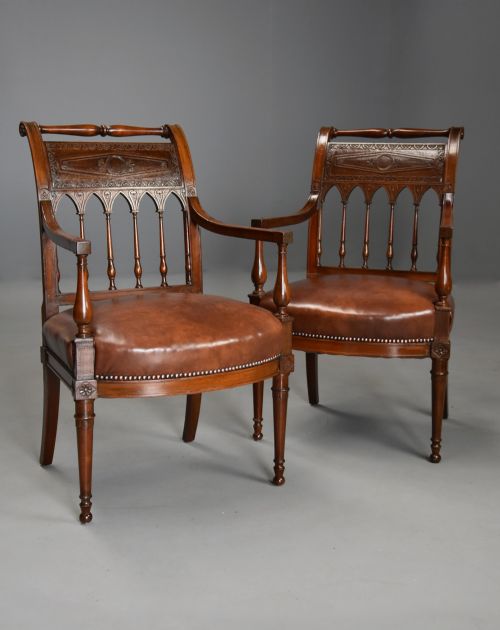
An 18th century leather armchair encompasses several distinct seating forms designed for comfort and library use during the Georgian era. Buyers searching this phrase most frequently encounter mahogany-framed Gainsborough chairs, wingback library armchairs, and occasional corner chairs.
The materials and styles span George II and George III periods, alongside later revival pieces from the late 19th century. Frames range from substantial mahogany and walnut to country elm, upholstered in red, green, or brown leather.
Materials and construction
The structural frames rely predominantly on dense timbers such as mahogany, walnut, and elm, shaped into cabriole legs or straight supports. Cabinetmakers utilised traditional joinery methods to ensure the stability required for heavy daily use.
Leather upholstery is secured to the frames using individual brass tacks, often complemented by hand-dyed finishes in traditional shades. The pairing of robust timber with supple leather defines the durable construction of these period seats.
Some chairs retain the minor ink stains and scuffs of centuries of library use, telling silent stories of past readers.
Judging the execution
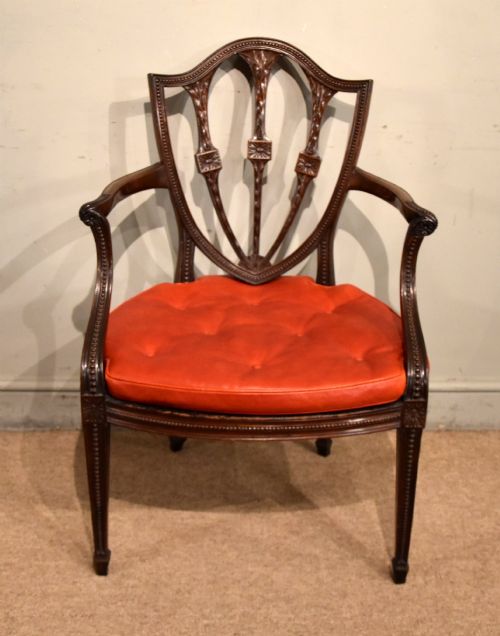
The refinement of the timber carving sets individual examples apart, particularly on the arms, cabriole legs, and crest rails of Chippendale and George III designs. Crisp detail in the woodwork indicates a higher standard of workshop production.
The proportion and scale of the frame relative to the upholstery dictate the visual balance of the piece. Superior examples maintain harmonious lines between the supportive wings or open arms and the sturdy wooden chassis below.
George Hepplewhite
The 18th Century Leather Armchair Glossary
- Gainsborough chair
- A wide, open-armed library armchair with a padded seat and back, standing on four legs. This form originated in the mid-18th century for domestic study use.
- Wingback chair
- An upholstered armchair with side panels attached to the back, designed to shield the sitter from drafts. These chairs frequently feature deep leather upholstery and substantial wooden frames.
- Cabriole leg
- A furniture leg that curves out in a convex shape at the top and curves inward in a concave shape below, typically ending in a pad or claw foot. This form is common on Georgian seating.
- Carver chair
- An armchair designed to match a set of smaller dining chairs, usually placed at the head of a table. These items appear in mahogany and walnut across the 18th century.
- Corner chair
- A seating form designed to fit into the corner of a room, featuring a curved backrest supported by multiple upright spindles and legs. Examples are found in elm, mahogany, and walnut.
18th Century Leather Armchair: Frequently Asked Questions
What is a Gainsborough armchair?
A Gainsborough armchair is a wide, upholstered seat with open wooden arms designed during the mid-18th century for libraries and studies.
These pieces combine sturdy mahogany frames with leather upholstery, offering an accessible silhouette that predates the enclosed wingback design.
How do I identify a George III chair?
George III pieces date from the reign spanning the second half of the 18th century into the early 19th century. They frequently display mahogany frames, straight or cabriole legs, and structured leather upholstery.
Characteristics vary from plain structural members to elaborate Chippendale carving on the arms and back rails.
Were these chairs used for dining?
Armchairs during this period served multiple domestic functions, including dining, reading, and relaxing in parlours. Sturdier carver chairs accompanied sets of dining chairs around large tables.
Smaller corner chairs and open armchairs were positioned in corners or beside desks rather than strictly at the dining table.
What timber was used for these frames?
Cabinetmakers primarily selected mahogany and walnut for formal urban seating throughout the 18th century. These dense woods permitted intricate carving on legs and arm supports.
Regional makers utilised native timbers such as elm for simpler country pieces and corner chairs.