

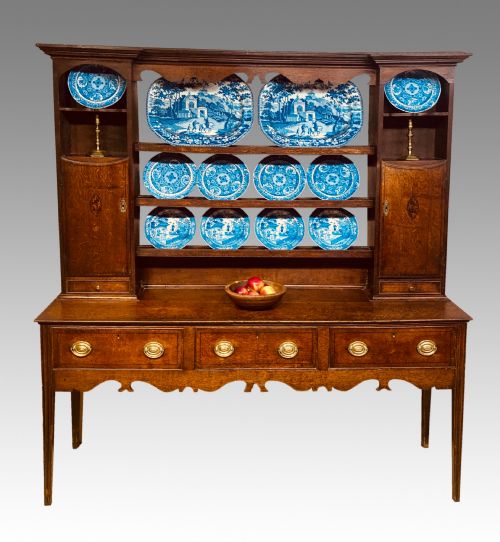


18th Century Kitchen Sideboard
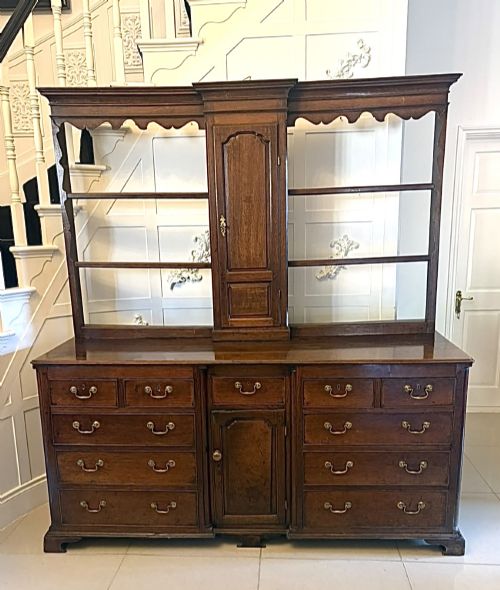
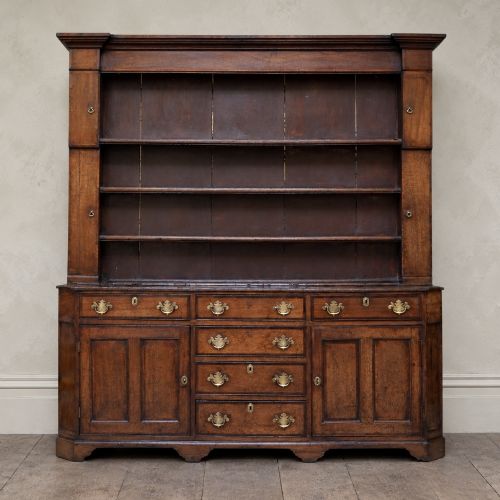
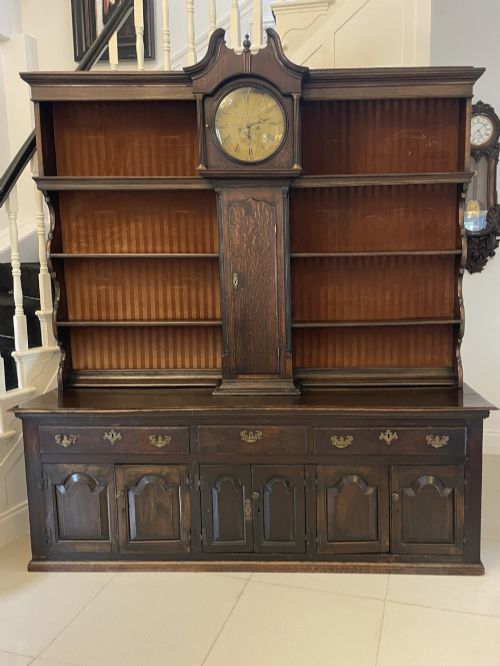
An 18th century kitchen sideboard is a working country storage piece built for daily domestic life, offering open shelving and deep base cupboards.
18th Century Kitchen Sideboard
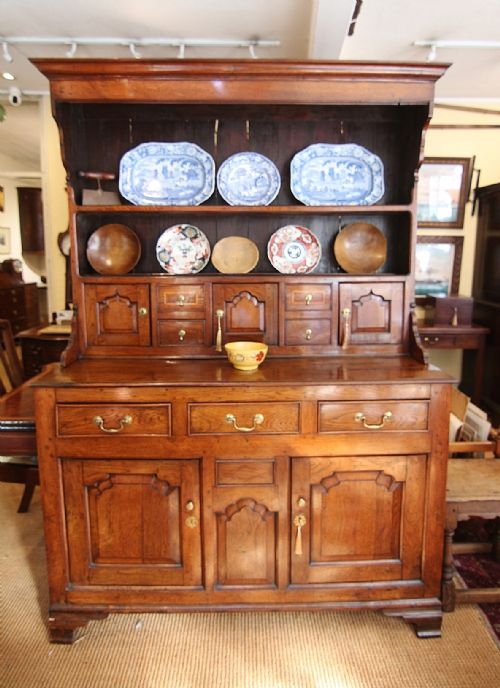
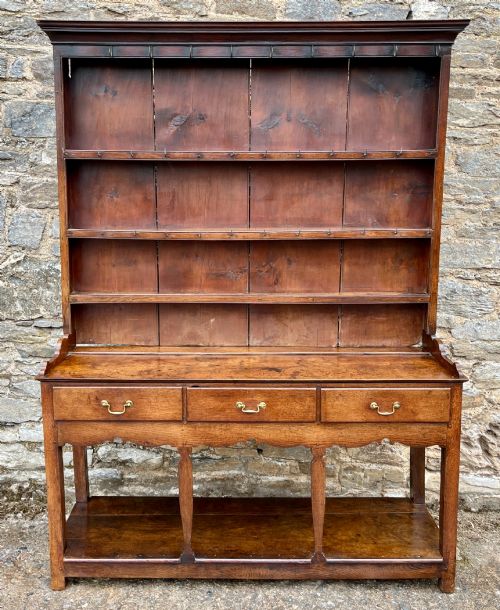
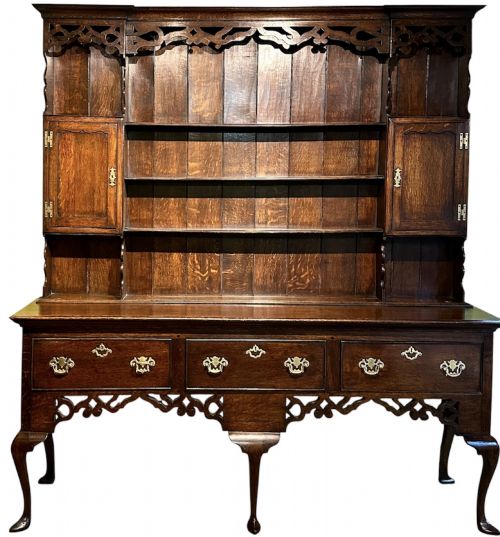
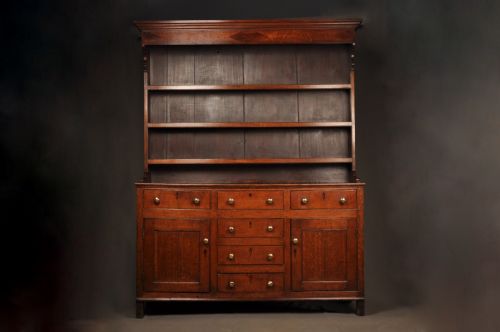
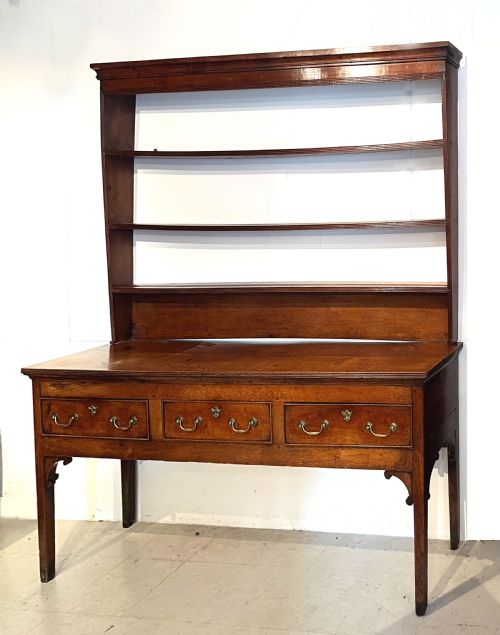
When you search for an 18th century kitchen sideboard, you encounter heavy utilitarian furniture primarily recorded as dressers, potboard bases, and serving tables. These items originate from regional British and French traditions, including Welsh, Shropshire, and Snowdonia variations built to serve domestic households.
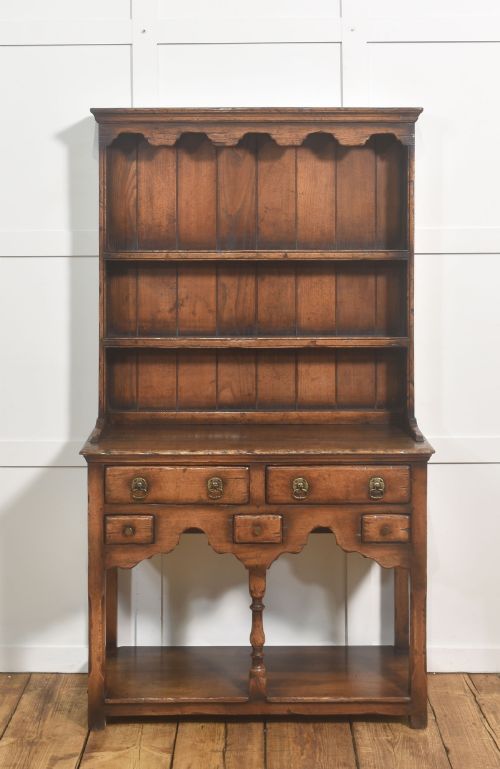
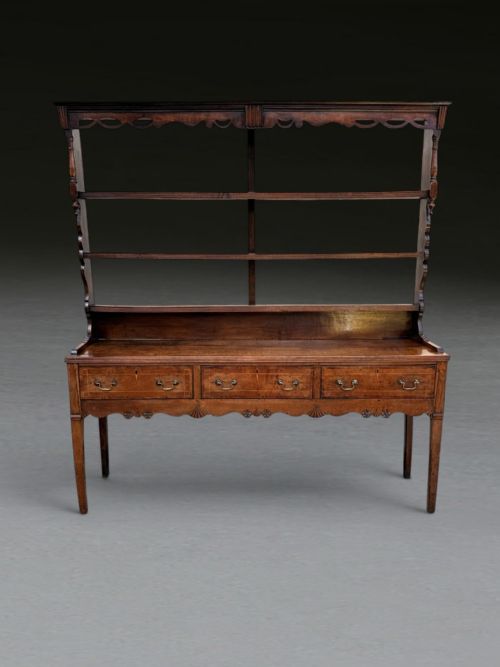
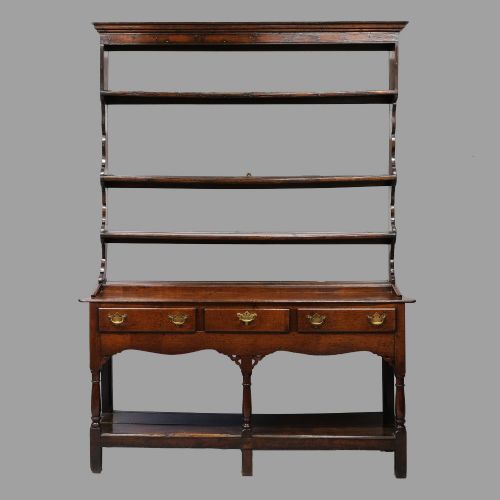
The pieces on this page mostly divide into two distinct structural types: open-backed plate rack dressers designed for display and storage, and lower potboard bases or serving tables built with open lower shelves. Regional styles such as the Llanrwst bread and cheese design and French provincial buffets appear among the oak and ash examples.
How they were made
Makers relied predominantly on solid oak, supplemented by pine, elm, ash, and mahogany, utilising crossbanding and inlay wood for surface definition. Brass hardware appears on drawer pulls, while iron fittings secure structural joints on these utilitarian forms.
Construction techniques focus on practical endurance, pairing planked timber tops with potboard lower tiers or enclosed cabinetry. Plate racks are often integrated directly into the upper section or built as separate open-backed shelving units to hold domestic ceramics.
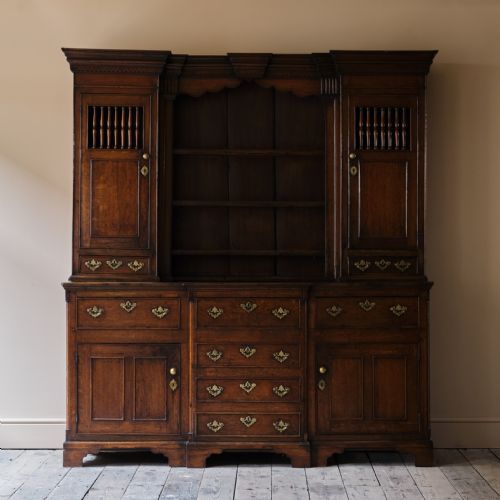
Bread and cheese dressers featured slatted cupboard doors designed specifically to keep farmhouse cheddar breathing and safe from mice.
What varies in quality
Quality rests on the integrity of the timber selection and whether original components like plate racks, potboards, and brass handles remain intact. Regional crispness in carving, such as the detail found on Snowdonia or Llanrwst pieces, separates standard workshop output from finer country cabinet work.
Proportion and surface patination dictate visual success, with mellow waxed oak surfaces showing depth from age rather than heavy modern restoration. The balance between the base cabinet and the upper rack reveals the skill of the original country joiner.
The 18th Century Kitchen Sideboard Glossary
- Potboard
- A lower open shelf positioned between the legs of a dresser base, traditionally used for storing pots and pans. This platform elevates the main body off damp stone floors.
- Plate Rack
- An upper shelving superstructure featuring vertical slats or grooves designed to display ceramic plates safely. Many surviving examples retain their original racks.
- Crossbanding
- A decorative border technique where thin strips of veneer are laid across the grain of the primary wood. This method frames drawer fronts and tabletops.
- Bread and Cheese Dresser
- A regional Welsh form featuring pierced or slatted doors designed for ventilating food storage. These cabinets reflect specific domestic requirements of rural households.
- Buffet Deux Corps
- A tall two-section French storage piece combining a lower cabinet with an upper cupboard. These items provide enclosed storage compared to open British dressers.
18th Century Kitchen Sideboard: Frequently Asked Questions
What is a potboard dresser?
A potboard dresser is a base cabinet featuring an open lower shelf positioned close to the floor between the legs.
This platform was built to hold heavy kitchen pots and domestic utensils away from damp flagstone floors.
Are plate racks original to these dressers?
Many surviving pieces retain their original plate racks, though upper sections were frequently separated or lost over centuries of use.
Matching timber species, wear patterns, and construction joints help determine if the rack and base started together.
Where were these kitchen sideboards made?
These pieces originate from rural workshops across Britain and France, with strong regional traditions identified in Welsh counties like Snowdonia and Llanrwst.
Local timber supplies, such as oak, ash, and elm, dictated the regional appearance of each piece.
How do I care for an old oak sideboard?
Keep wooden surfaces away from direct heat sources and sudden humidity changes to prevent timber splitting or warping.
Apply traditional beeswax occasionally to nourish the dry grain and maintain the natural finish.