


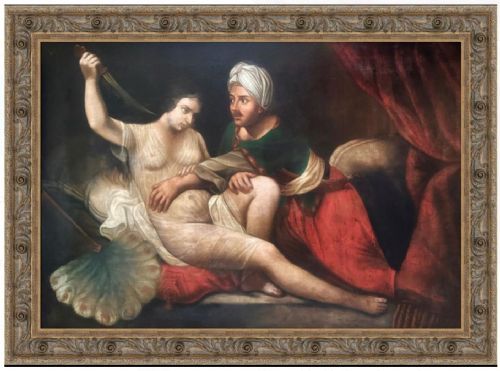

18th Century Italian School
These 18th century italian school works bring centuries of continental history and religious devotion straight to your wall.
18th Century Italian School
When you search for an 18th century italian school piece, you encounter centuries-old canvases, panels, and works on paper that capture the religious devotion, portraiture, and landscapes of southern Europe. These artworks reflect regional traditions from Venetian and Emilian workshops, echoing the grand manner of earlier masters.
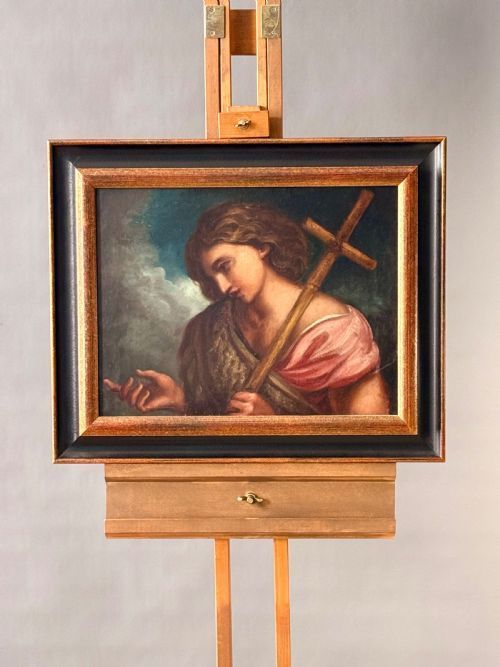
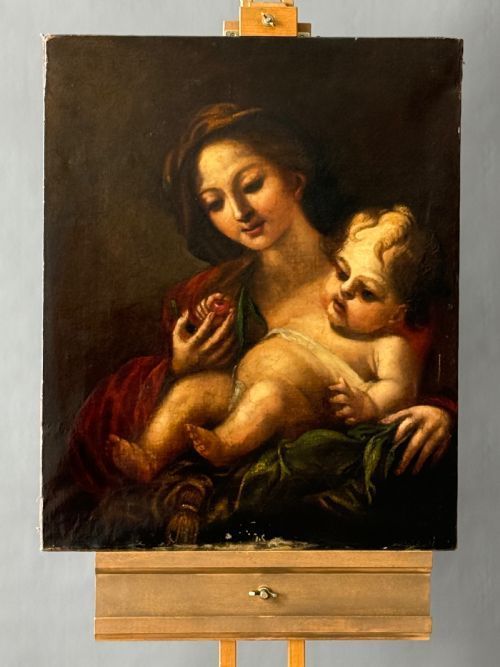
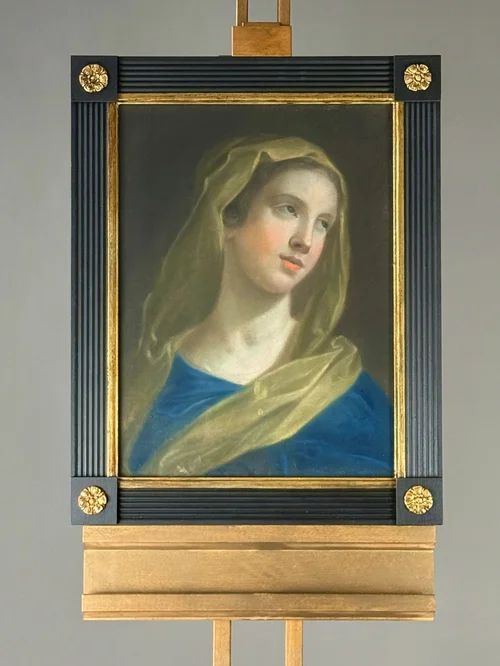
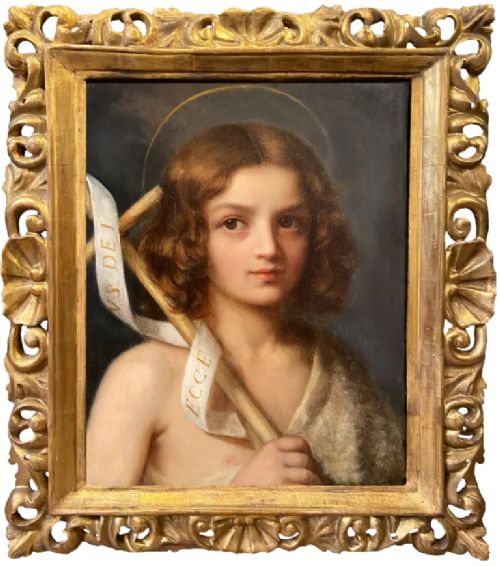
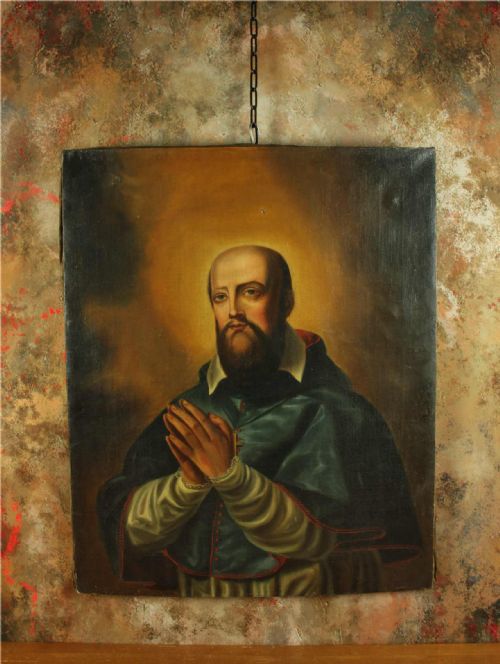
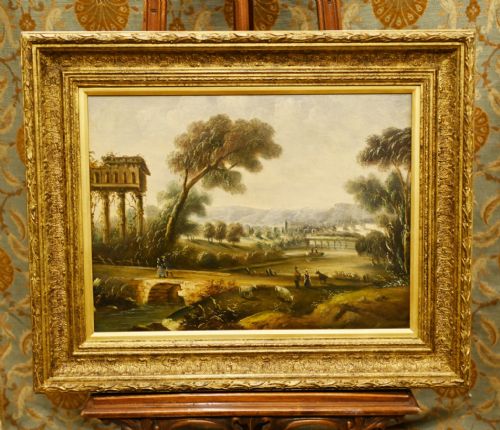
You are most likely to meet religious subjects on this page, including depictions of the Madonna, Saint John the Baptist, and various saints rendered in oil or pastel. Alongside sacred themes, landscape paintings, architectural capriccios, and pastoral scenes record the visual tastes of the period.
Materials and construction
Painters of this period typically applied oil paint or tempera onto prepared canvas, wood panels, or paper supports. Ground layers and pigments were handled by hand, resulting in textured surfaces that occasionally reveal pentimenti where the artist changed composition.
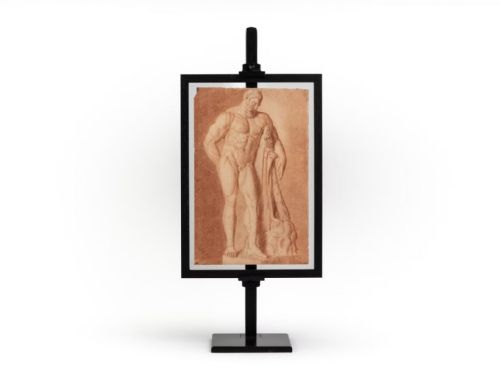
Works are frequently housed in period frames of giltwood, adding structural depth and decorative weight to the artwork. Drawings on paper employ media such as red chalk, capturing preparatory studies and academic exercises.
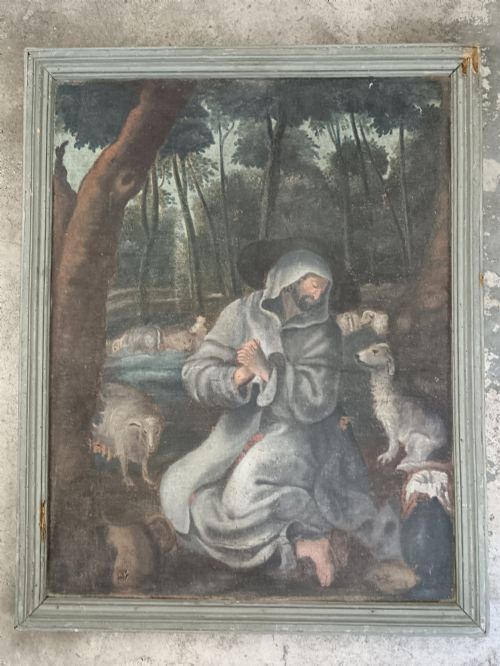
Saint Francis occasionally shares canvas space with woodland creatures and quiet architectural ruins, proving even saints appreciate a good view.
Distinctions in quality
The standard of execution varies between primary hand-painted works by skilled regional hands and more naive or derivative pieces produced by followers. Stronger works demonstrate confident brushwork, anatomical proportion, and nuanced facial expressions.
Condition and originality dictate much of the standing within this field, distinguishing works with intact original surfaces and minimal overpaint from those with heavy restoration. The presence of discernible draughtsmanship and compositional energy separates masterworks from routine workshop output.
Benedetto Luti·Raffaello Sanzio Da Urbino·Bartolomeo Schedoni·Antonio Allegri Correggio·Antonio Tempesta·Andrea Celesti·Orsola Maddalena Caccia·Giacomo Nani
The 18th Century Italian School Glossary
- Pentimento
- An alteration in a painting, evidenced by previous strokes or shapes showing through, revealing the artist's changing thoughts during composition. This occurrence often authenticates an older work.
- Capriccio
- An architectural fantasy placing together buildings, archaeological ruins, and other architectural elements in a fictitious and pleasing combination. Artists used this genre to display imaginative composition.
- Tempera
- A permanent, fast-drying painting medium consisting of coloured pigment mixed with a water-binder agent, commonly egg yolk. It produces a flat, matte surface finish.
- Recto and Verso
- Terms used to describe the front and the back of a sheet of paper or panel. Drawings sometimes occupy both sides of a single sheet.
- Old Master
- A term for a European painter of skill born before about eighteen hundred. These artists worked within established regional traditions.
18th Century Italian School: Frequently Asked Questions
How do I identify an 18th century italian school painting?
Look for stylistic markers typical of regional European traditions, such as dramatic lighting, classical subject matter, and traditional religious iconography. Pigment analysis and canvas examination also help determine age.
Brushwork and preparation methods provide further clues, connecting the piece to period workshops and distinct geographical schools across Italy.
What subjects are most common in these paintings?
Religious figures and biblical scenes dominate the selection, featuring saints, the Holy Family, and devotional narratives. Portraits, landscapes, and architectural capriccios also appear frequently.
These themes reflect the widespread patronage of the church and the cultural interests of travellers undertaking the Grand Tour.
How should I care for an antique oil painting?
Keep the artwork away from direct sunlight, high humidity, and rapid temperature fluctuations to protect the canvas and wood panel. Avoid touching the painted surface directly with bare hands.
Dust the frame and canvas gently with a soft, dry brush without applying pressure. Professional conservation should be sought for cleaning or structural repairs.
What is a grand tour painting?
Grand tour paintings were landscape and architectural views created for wealthy travellers visiting European cultural centres during the eighteenth and nineteenth centuries. These works served as tangible memories of foreign travel.
Artists catered to this demand by depicting notable ruins, pastoral vistas, and picturesque Italian landscapes.