





18th Century Executive Desk
An 18th century executive desk offers substantial presence and generous writing surfaces, combining period craftsmanship with practical workspace utility.
18th Century Executive Desk
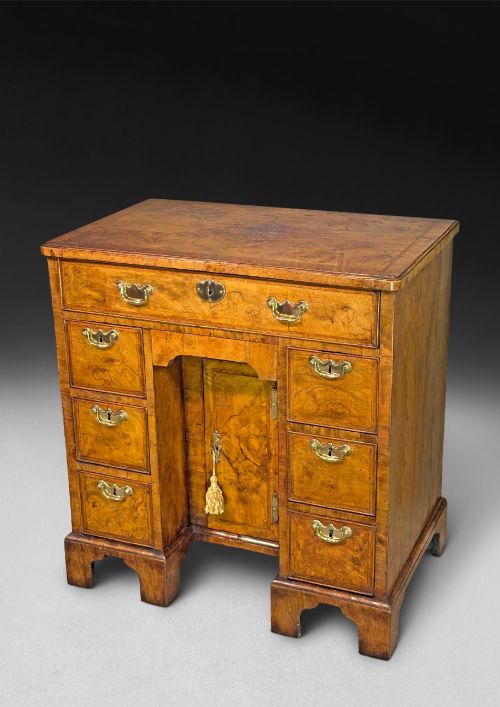
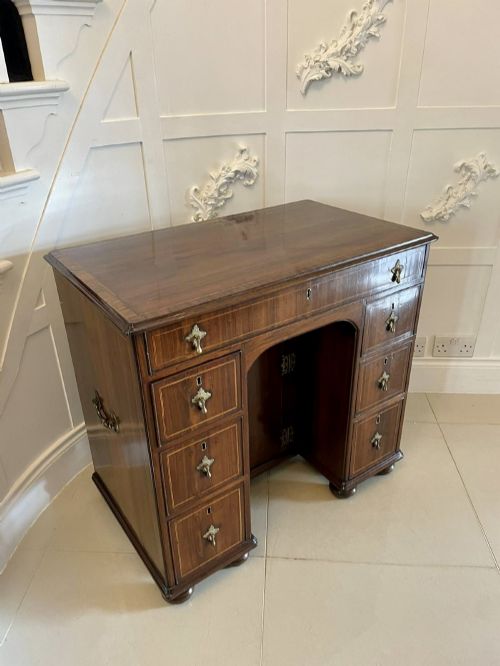
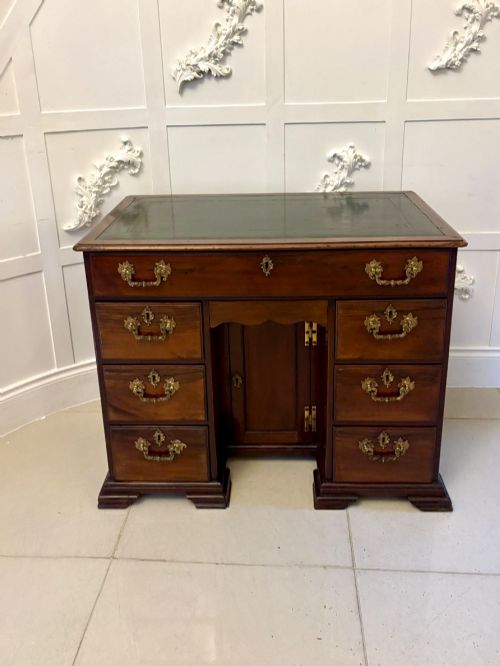
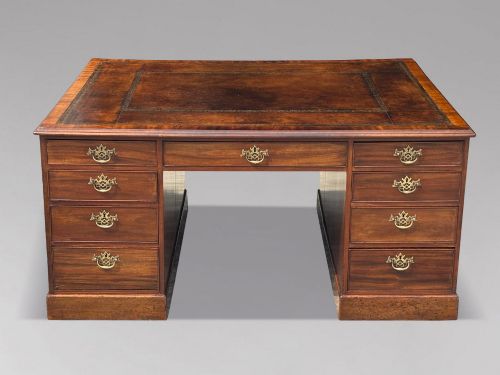
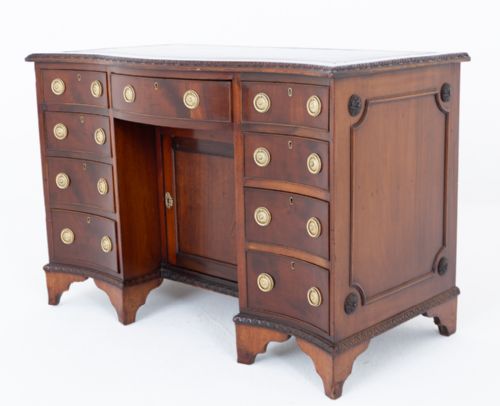
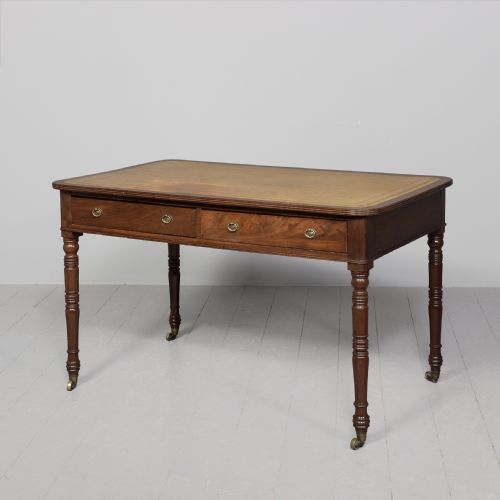
When searching for an 18th century executive desk, buyers encounter robust freestanding library tables, partners desks, and compact kneehole configurations designed for serious clerical work. These pieces derive primarily from the Georgian, George III, and George II periods, utilising substantial timbers suited for central room placement.
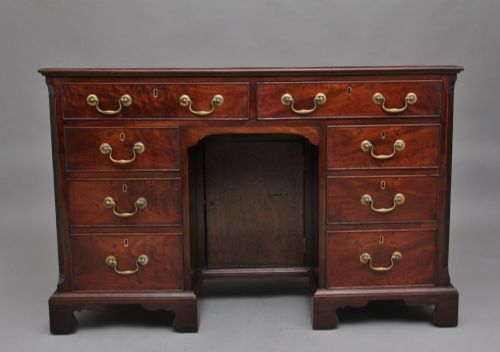
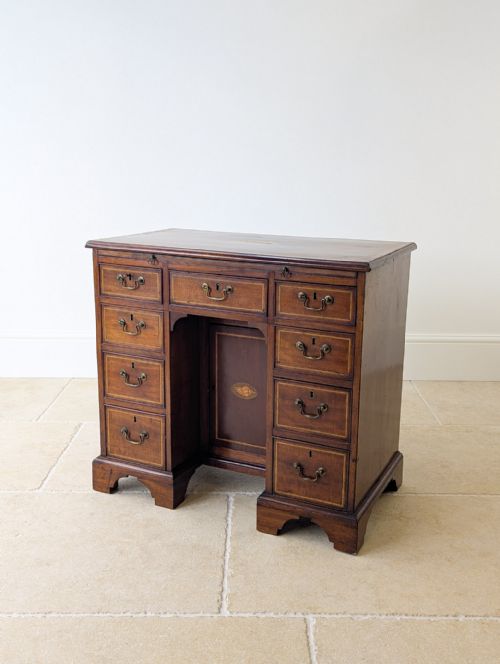
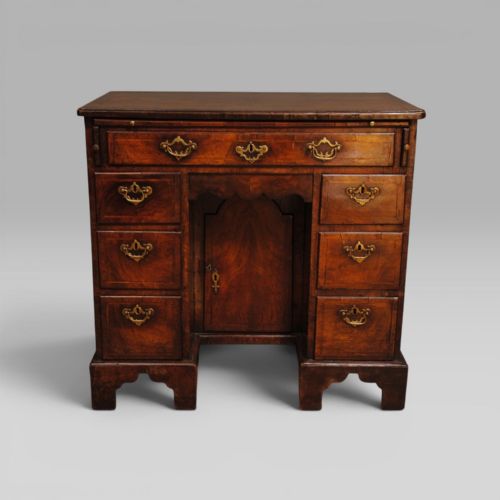
The most prevalent forms on this page include mahogany and walnut kneehole desks alongside double-sided partners desks and library tables. Examples range from structured pedestal designs to serpentine fronts and bureau plat variations.
Origins span English workshops alongside occasional continental pieces, reflecting the international trade in fine cabinet timbers during the Georgian era. Buyers select these desks to anchor studies or libraries with period authenticity.
Materials and construction methods
Cabinet makers utilised dense native and imported timbers including mahogany, walnut, oak, and yew, often applied as veneers over sturdy secondary woods. Marquetry inlay, featherbanding, and burr walnut veneers decorated prominent surfaces, supported by structural elements of solid oak.
Hardware typically involved cast brass handles and key escutcheons, occasionally complemented by ormolu mounts on continental pieces. Writing surfaces frequently incorporated inset leather panels, whilst specialised drawers utilised dovetailed joints and oak linings.
Postmasters sorting desks survive because sorting mail required remarkably sturdy mahogany surfaces that could withstand decades of flying correspondence.
Distinctions in quality and execution
Quality rests upon the selection of timber figures, such as highly figured walnut or dense Cuban mahogany, and the precision of the cabinet work. Superior examples exhibit continuous grain matching across drawer fronts and immaculate dovetailing within internal drawer construction.
The sophistication of secondary details, including original brass hardware, finely executed featherbanding, and well-preserved leather inserts, elevates finer pieces above standard utilitarian examples. Proportion and structural integrity during double-sided use further separate master workshops from provincial production.
Gillows of Lancaster
The 18th Century Executive Desk Glossary
- Kneehole desk
- A freestanding desk featuring a central recessed space for the user's legs, flanked by pedestals containing multiple small drawers.
- Partners desk
- A large double-sided desk designed for two people to work opposite one another, featuring drawers and cupboards on both faces.
- Featherbanding
- A decorative inlay technique using veneer strips arranged diagonally to create a herringbone pattern around drawer edges or panel borders.
- Bureau plat
- A flat-topped writing table, often French in origin, featuring cabriole legs and elaborate ormolu mounts.
- Serpentine front
- A furniture front characterised by a curving contour that bulges outward in the centre and recedes toward the ends.
18th Century Executive Desk: Frequently Asked Questions
How do I use an antique desk today?
Living with an antique desk involves balancing historical appreciation with daily computer or writing use. Many owners place them centrally in a room to showcase finished backs and double-sided drawer configurations.
Careful placement away from direct heat sources and sunlight protects fragile wood veneers and historic leather writing surfaces. Using protective pads beneath modern equipment preserves the original timber finishes.
How do I distinguish George III from George II desks?
George II desks generally exhibit heavier proportions, bolder walnut veneers, and architectural influences such as cabriole legs or carved bracket feet. They often feature rich figure work and early hardware styles.
George III pieces frequently transition toward lighter mahogany timbers, refined bracket or tapering feet, and neoclassical decorative details like satinwood crossbanding. The introduction of serpentine fronts and more complex interior fittings also characterises the later reign.
What is the difference between a kneehole and partners desk?
A kneehole desk is designed for a single user facing one direction, with a recessed central space beneath a single bank of top drawers flanked by vertical pedestals. These suit placement against a wall or within a smaller study.
Partners desks provide working space and drawer access from both sides simultaneously, allowing two individuals to sit opposite each other. Their larger dimensions and double-sided construction make them ideal for centre-room placement.