





18th Century Court Cupboard
An 18th century court cupboard is a robust, timber-framed storage piece offering tiered shelving and enclosed compartments that anchors a traditional room.
18th Century Court Cupboard
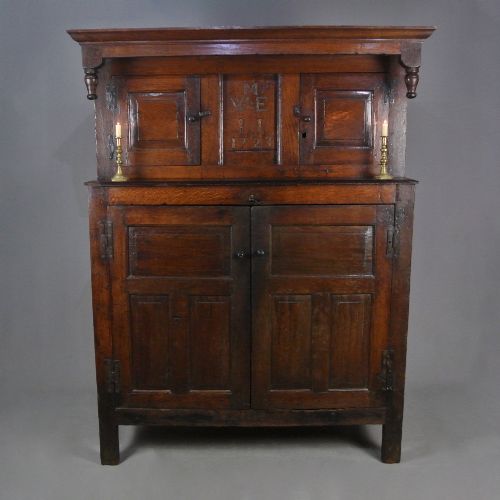
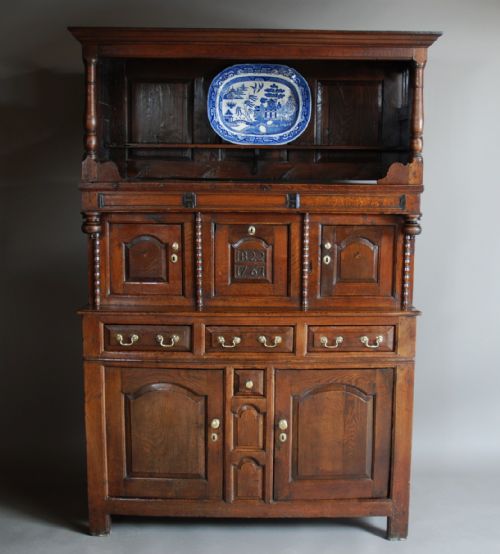
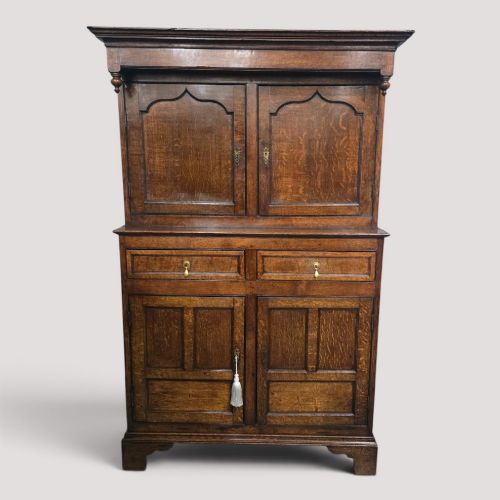
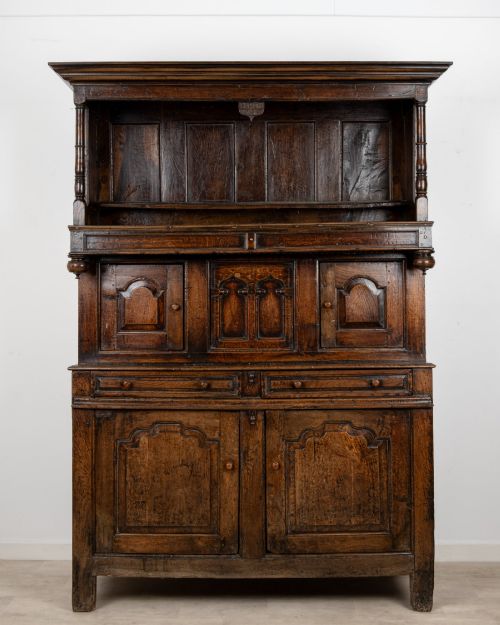
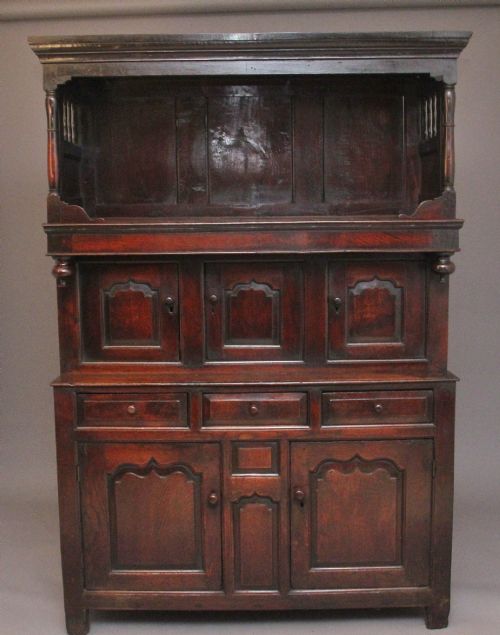
An 18th century court cupboard encompasses regional British and European forms designed for displaying and storing household provisions, most notably appearing here as Welsh cwpwrdd tridarn and deuddarn variants alongside English vernacular examples.
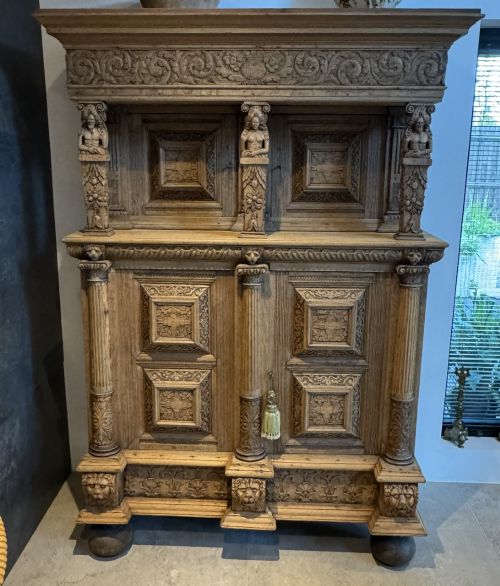
The pieces listed on this page span the 18th century and Georgian periods, showcasing regional styles from Snowdonia and the broader Welsh countryside alongside English country oak and Flemish Baroque influences.
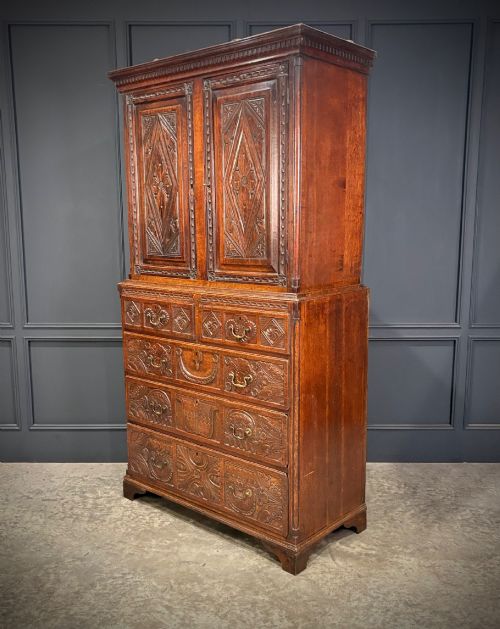
Buyers will encounter two-part and three-part structural configurations, ranging from miniature furniture and small country cupboards to large, heavily carved housekeepers and livery cabinets.
What varies in quality
The distinction between tiers of quality rests upon the depth and crispness of hand-carving, the structural integrity of the original joinery, and the presence of regional architectural details such as canopy columns or turned pendants.
Surface appearance is heavily dictated by the depth of the timber's natural patina, ranging from dry, untouched surfaces to polished or darkened finishes acquired over centuries of domestic use.
Certain late 18th century period oak cupboards include a secret compartment designed for hiding away family valuables or parish documents.
The 18th Century Court Cupboard Glossary
- Cwpwrdd tridarn
- A traditional Welsh three-part cupboard featuring an enclosed upper section, an open middle display stage, and a base cabinet. This regional form often originates from areas like Snowdonia.
- Cwpwrdd deuddarn
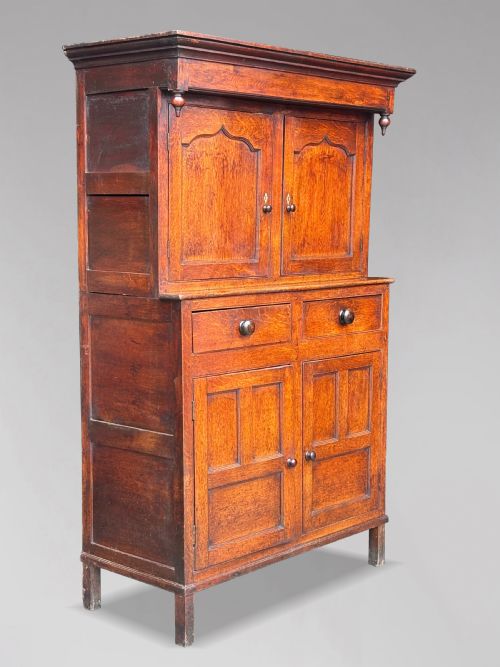
- A two-part Welsh cupboard comprising an upper enclosed cabinet set upon a larger base section. It lacks the third upper tier found on the tridarn.
- Livery cupboard
- An early storage form traditionally used for keeping food and candles ventilated behind pierced or panelled doors. These pieces predate standard domestic wardrobes.
- Vernacular
- Furniture built by regional craftsmen following local traditions rather than metropolitan court fashions. These objects utilise native timbers such as oak, elm, and yew.
- Patina
- The surface sheen and colour acquired by timber through decades of handling, waxing, and ageing. A desirable finish shows depth and warmth rather than flat artificial gloss.
18th Century Court Cupboard: Frequently Asked Questions
What is a court cupboard?
A court cupboard is a traditional wooden storage unit featuring enclosed cabinets and open display tiers used for domestic provisions.
These pieces developed into distinct regional forms across Britain and Europe during the eighteenth century.
How do I tell a tridarn from a deuddarn?
A tridarn is a three-part structure incorporating an upper canopy section above an open middle tier and a lower cupboard.
A deuddarn is a two-part version that omits the uppermost canopy tier, consisting solely of an upper and lower cabinet.
Where were these cupboards made?
The pieces originate primarily from Welsh country workshops, English rural joiners, and continental European makers.
Specific regional variations frequently point to workshops in Snowdonia and other distinct rural districts.
What wood are they made from?
Solid oak is the predominant timber utilised by makers of these regional storage pieces.
Selected examples also incorporate alternative native woods including elm, yew, and occasional inlaid contrasting timbers.